Within Tennessee Monsters
Was the Tennessee Wildman Early Bigfoot Lore?
The Tennessee Wildman links an 1871 McNairy County newspaper scare to later East Tennessee Bigfoot-style encounters.
On this page
- The 1871 Mc Nairy County report
- How the wildman moved east
- Evidence, hoax and misidentification questions
Page outline Jump by section
Introduction
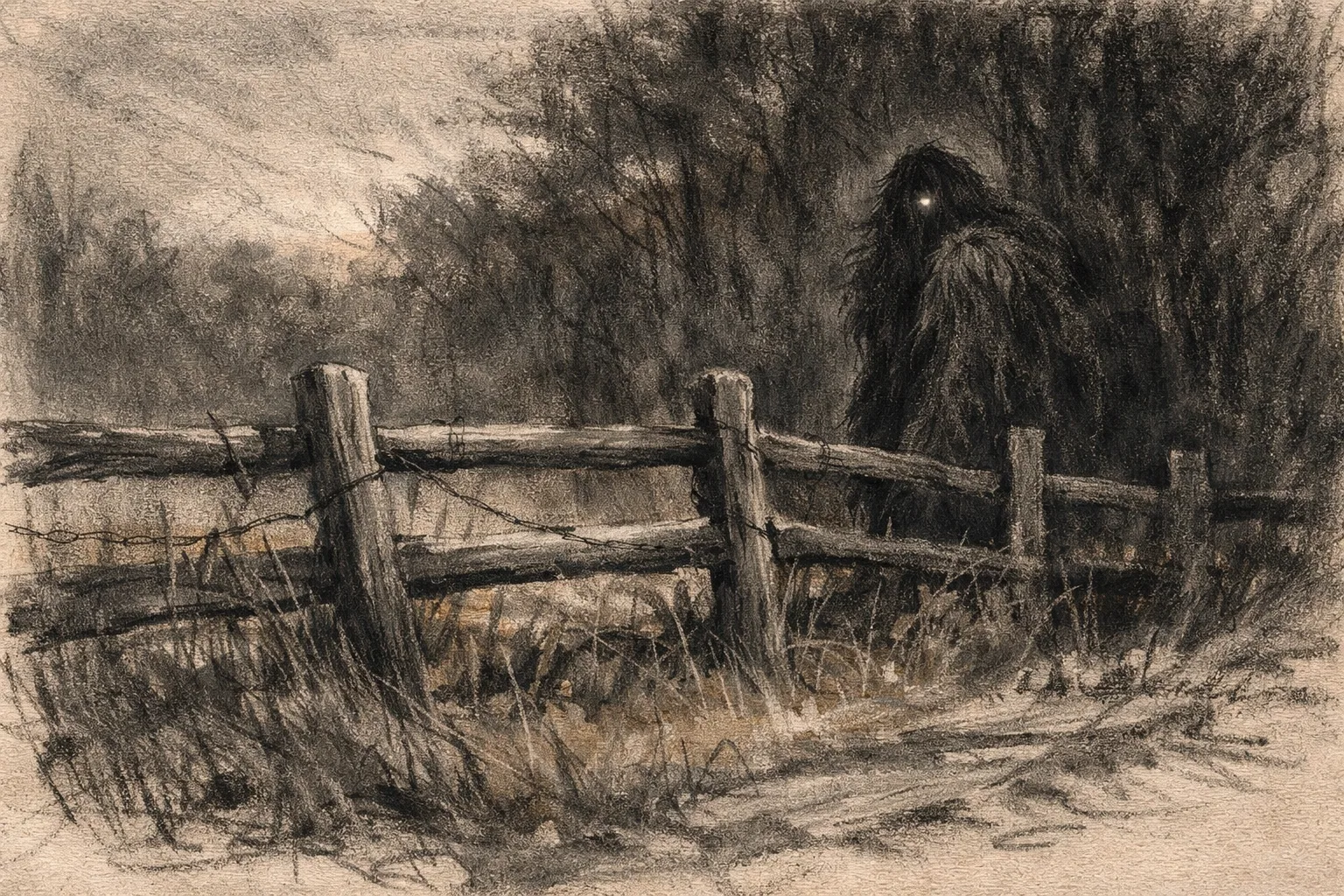
The Tennessee Wildman is best read as an early newspaper “wild man” scare that later found a second life inside Bigfoot culture. Its strongest historical anchor is an 1871 report, reprinted outside Tennessee, about a hairy, red-eyed, seven-foot figure seen between Sobby and Crainsville, on Piney, in or near McNairy County. That report does not prove an unknown animal existed. It does show that Tennessee had a hairy-man legend in print nearly ninety years before “Bigfoot” became a national name in 1958. The modern afterlife of the story is mostly East Tennessee: Carter County, Bee Cliff, Elizabethton, Roane County, the Smokies, and Bigfoot sighting databases. The result is a legend with two lives: a West Tennessee newspaper monster from 1871, and an Appalachian Bigfoot cousin retold through local press, cryptid sites, television, and sighting culture.[tngenweb.org]tngenweb.orgOpen source on tngenweb.org.
The 1871 McNairy County report
The core Tennessee Wildman story comes from a short but vivid newspaper item preserved in McNairy County genealogy records. The item is headed “Wild Men” and dated 4 May 1871 in the Weekly Eastern Argus of Maine, which itself says it is quoting the Jackson Whig. That detail matters: the surviving trail is not simply “a Tennessee paper reported a monster”; it is a Tennessee item that travelled through the nineteenth-century reprint network, where local curiosities were copied, condensed and embellished by other newspapers.[TNGenWeb]tngenweb.orgOpen source on tngenweb.org.
The report says a “strange and frightful being” had been observed for several weeks between Sobby and Crainsville, on Piney. It describes him as about seven feet high, powerfully built, with unusually large fiery red eyes, tangled black hair hanging below the waist, a long beard, and hair covering the body. The behaviour is as important as the appearance: he supposedly avoided men, approached unaccompanied women with terrifying screams, came cautiously near houses, leapt fences “with the ease of a deer”, outran men and dogs, and alarmed the district enough that citizens began scouring the woods.[TNGenWeb]tngenweb.orgOpen source on tngenweb.org.
That description is why the case survives in cryptid writing. It has the ingredients later readers associate with Bigfoot or Sasquatch: great height, hairiness, speed, strength, red eyes, wild terrain and failed pursuit. But the 1871 language is not modern Bigfoot language. The figure is called a “wild man”, not an ape, Sasquatch or unknown primate. He is frightening because he is placed between categories: partly human in beard, hair and desire to carry off women; partly animal in speed, strength and body hair; partly newspaper melodrama in the theatrical red eyes and screaming attacks.
There is also a small geographical caution. The McNairy County page preserving the item includes a note that the named places may actually belong in Hardeman County rather than McNairy County. That does not erase the report, but it warns against treating the location as a precise modern sighting pin. The older report’s value is strongest as a newspaper and folklore document, not as a clean field record with verifiable co-ordinates.[TNGenWeb]tngenweb.orgOpen source on tngenweb.org.

Why an old “wild man” item is not the same as a Bigfoot sighting
The 1871 story is tempting because it looks like Bigfoot before Bigfoot. That is partly true, but only if handled carefully. In the nineteenth century, American newspapers often carried “wild man of the woods” items: shaggy fugitives, hermits, mentally ill men, tall tales, escaped performers, frontier jokes, racialised fears, and outright hoaxes could all be pressed into the same mould. A useful historical discussion of the wider “wild man of the woods” pattern notes that such figures were often imagined as people who had left civilisation and become beast-like, rather than as a separate species.[The Southern Highlander]thesouthernhighlander.orgOpen source on thesouthernhighlander.org.
That wider newspaper habit changes the Tennessee case. The report may record a rumour about a real person living rough, a misidentified animal, a prank, a copied tall tale, or a local scare inflated by print. The “citizens scouring the woods” ending is a classic newspaper-monster beat: it gives the reader drama and urgency while avoiding a resolution. No body, tracks, photographs, follow-up capture report or physical evidence appears in the commonly cited trail.
The Bigfoot label arrived much later. Smithsonian’s account of the modern Bigfoot boom traces the popular name to 1958, when the Humboldt Times in northern California reported giant humanlike footprints found by a road construction crew and helped attach the name “Bigfoot” to the mystery. That does not mean nobody told hairy-man stories before 1958. It means the Tennessee Wildman began in a different storytelling system and was later reclassified by readers who already knew Bigfoot.[Smithsonian Magazine]smithsonianmag.comOpen source on smithsonianmag.com.
So the best answer to “Was the Tennessee Wildman early Bigfoot lore?” is: it was early hairy wildman lore that now functions as Bigfoot prehistory. The distinction is useful. Calling it “proof of Bigfoot in 1871” overstates the evidence. Calling it “irrelevant because Bigfoot was named later” misses how modern cryptid traditions build family trees from older newspaper monsters.
How the Wildman moved east
The original newspaper trail points to West Tennessee, but the modern Wildman imagination has drifted towards East Tennessee and Appalachia. The shift makes cultural sense. East Tennessee has the mountains, hollows, cliffs, forests and tourist-road atmosphere that modern Bigfoot stories favour. It also has a living black bear landscape, outdoor recreation culture, and local appetite for creature lore. Tennessee’s wildlife agency says black bears are regularly seen in East Tennessee and are less common, though increasingly possible, in middle and western parts of the state.[Tennessee State Government]tn.govOpen source on tn.gov.
The best-known modern Wildman retelling is Robb Phillips’s account near Bee Cliff in Carter County, reported by the Elizabethton Star in January 2015 before an episode of Monsters and Mysteries in America. Phillips said he had not told many people because he expected disbelief. The article links his experience to nineteenth-century Wildman references and presents it as part of a Tennessee creature tradition rather than a detached hiking anecdote.[Elizabethton Star]elizabethton.comlocal man recounts encounter with tennessee wildman for tv showlocal man recounts encounter with tennessee wildman for tv show
In later summaries of the Phillips story, the encounter takes the recognisable shape of a Bigfoot-style night scare: a hike near Bee Cliff, sudden silence in the woods, snapping twigs, a scream, flight, a close view of a large red-eyed figure, and a powerful smell. Those details do not verify the event, but they show how the Wildman has been translated into the modern sensory grammar of Sasquatch reports: smell, sound, darkness, upright size and a witness left shaken.[Cryptid Wiki]cryptidz.fandom.comCryptid Wiki Tennessee WildmanCryptid Wiki Tennessee Wildman
Bee Cliff itself helps the story stick. It is a prominent limestone feature above the Watauga River near Elizabethton, with cliffs, caves and steep terrain. A creature story set there has built-in atmosphere: an exposed rock face, river corridor, woods and a local landmark people can picture. Even without accepting the Wildman as a real animal, the place gives the legend a believable stage.[Wikipedia]WikipediaBee Cliff (TennesseeBee Cliff (Tennessee
The Bigfoot afterlife
Once the Tennessee Wildman was folded into Bigfoot culture, the story changed in three main ways. First, it became part of a claimed long chronology: 1871 was treated as evidence that Tennessee had hairy giant reports long before the national Bigfoot craze. Second, the creature’s geography widened from McNairy County to East Tennessee. Third, the old newspaper figure became more animal-like, more cryptid-like and less like the nineteenth-century “wild man” who might be a terrifying human outsider.
The Bigfoot Field Researchers Organization’s Tennessee database illustrates the modern framework. It lists Tennessee reports by county, with 111 total listings at the time accessed, and includes Carter County reports from 1984 and 2002, a Roane County report near Harriman from 2012, and multiple eastern counties with reported activity. BFRO is a sightings database and advocacy organisation, not a scientific confirmation body, but it is useful for seeing where modern Bigfoot claims cluster and what kinds of details witnesses submit.[BFRO]bfro.netstate listing.aspstate listing.asp
This database afterlife also affects how readers interpret the 1871 item. A nineteenth-century newspaper monster becomes a “case” in a longer Tennessee Bigfoot file. Details that might once have marked the figure as a dangerous feral man — beard, hair, attacks on women, avoidance of men — are reweighted as possible Sasquatch traits. Red eyes become “eyeshine”; screams become vocalisations; fence-leaping becomes unusual agility; failure to catch him becomes evidence of elusiveness.
Television strengthened that reclassification. The Elizabethton Star reported that Phillips’s account would feature on Monsters and Mysteries in America, and streaming listings identify a January 2015 episode titled “Tennessee Wildman, Subterranean Reptoid”. Once a local account is packaged for national monster television, the Wildman stops being just a clipping and becomes a character: a named Tennessee cryptid with an origin story, a look, a behaviour pattern and a media footprint.[Elizabethton Star]elizabethton.comlocal man recounts encounter with tennessee wildman for tv showlocal man recounts encounter with tennessee wildman for tv show
Separating the record from the legend of Wildman
The Tennessee Wildman has a better historical hook than many state cryptids because there is a specific old newspaper text to discuss. But the quality of evidence is still thin. The 1871 account is hearsay in a reprinted newspaper item. It gives no named witnesses, no physical trace, no captured animal, no medical examination, no official investigation and no reliable follow-up. The modern East Tennessee accounts are witness narratives and media retellings, not zoological evidence.
Several ordinary explanations remain plausible, and more than one could be true across different versions of the story.
Newspaper sensationalism: Nineteenth-century papers often printed colourful curiosities. The Wildman item’s structure — strange creature, terrified countryside, men and dogs unable to catch it — reads like a compact folk-horror anecdote shaped for circulation.
A human outsider or fugitive: The older “wild man” category often meant a person living outside normal society, sometimes described in animalising terms. A bearded, ragged, frightening man in the woods could become more monstrous with each retelling.[The Southern Highlander]thesouthernhighlander.orgOpen source on thesouthernhighlander.org.
Misidentified wildlife: In East Tennessee especially, black bears are a serious candidate for some large, dark, upright, sudden woodland sightings. Great Smoky Mountains National Park says black bears inhabit all elevations of the park and estimates roughly 1,900 bears there; adult males average around six feet in length and can become much heavier before winter. Bears are not Bigfoot, but a brief, frightened glimpse of a bear standing, climbing, moving through brush or crossing a road can produce a powerful “huge dark figure” memory.[National Park Service]nps.govNational Park Service Black BearsNational Park Service Black Bears
Story inheritance: Once a place has a Wildman tradition, later experiences can be interpreted through it. A scream in the woods, a foul smell, a dark form in a tree or a strange silence before movement may be remembered not as “something startled me”, but as “I encountered the Wildman”.
Hoax and performance: Bigfoot history contains famous hoax elements, especially around tracks. The modern name’s 1958 rise involved reported giant footprints, and later discussion of the Bluff Creek story has been shaped by allegations of planted wooden-foot tracks. That does not automatically explain Tennessee’s 1871 report, but it shows why physical evidence and provenance matter so much in hairy-man claims.[Smithsonian Magazine]smithsonianmag.comOpen source on smithsonianmag.com.
None of these explanations is as exciting as a hidden species, but they fit the evidence better. The Wildman is strongest as a legend with a documentable print ancestor and a modern cryptid afterlife, not as a confirmed animal.

Why this story belongs to Tennessee
The Tennessee Wildman endures because it connects two Tennessees that often feel different on the map. The old report belongs to the west: rural communities, post-Civil War newspaper culture, local alarm and a half-human figure on Piney. The afterlife belongs largely to the east: Carter County cliffs, Appalachian woods, Smoky Mountain bear country, Bigfoot databases and television-friendly creature encounters.
That west-to-east movement is not a clean migration of a real animal trail. It is a migration of meaning. The name “Tennessee Wildman” lets later tellers stitch scattered hairy-man claims into one state-level creature. McNairy County supplies age and newspaper credibility. East Tennessee supplies terrain and atmosphere. Bigfoot culture supplies the interpretive frame.
The result is more interesting than a simple “real or fake” question. The 1871 Wildman shows how a short newspaper scare can survive by being useful to later readers. To sceptics, it is a lesson in how old journalism, folklore and misidentification become cryptid evidence. To believers, it is a tantalising pre-Bigfoot report with familiar details. To everyone else, it is one of Tennessee’s best examples of a monster story changing clothes: first a wild man of the woods, then a local newspaper oddity, then an Appalachian Bigfoot relative with red eyes, screams and a long shadow.
Amazon book picks
Further Reading
Books and field guides related to Was the Tennessee Wildman Early Bigfoot Lore?. Use these as the next step if you want deeper reading beyond the article.
Sasquatch: Legend Meets Science
Helps readers compare old wildman reports with modern Bigfoot evidence debates.
Cryptozoology A To Z
Gives readers broader terminology and context for wildmen, Sasquatch and cryptid classification.
Monsters of the Midwest
Keeps the Tennessee Wildman inside a regional Southern monster-lore lane.
Bigfoot!: The True Story of Apes in America
Connects old American wildman reports to the later Bigfoot/Sasquatch tradition.
eBay marketplace picks
Marketplace Samples
Live-tested eBay searches with available results related to this page.

Endnotes
1.
Source: tngenweb.org
Link:https://www.tngenweb.org/mcnairy/miscmcarticles21_33.html
2.
Source: elizabethton.com
Title: local man recounts encounter with tennessee wildman for tv show
Link:https://elizabethton.com/2015/01/15/local-man-recounts-encounter-with-tennessee-wildman-for-tv-show/
3.
Source: Wikipedia
Title: Bee Cliff (Tennessee)
Link:https://en.wikipedia.org/wiki/Bee_Cliff_%28Tennessee%29
4.
Source: bfro.net
Title: state listing.asp
Link:https://www.bfro.net/GDB/state_listing.asp?state=tn
5.
Source: bfro.net
Title: show county reports.asp
Link:https://www.bfro.net/GDB/show_county_reports.asp?county=Carter&state=TN
6.
Source: bfro.net
Title: show report.asp
Link:https://www.bfro.net/gdb/show_report.asp?id=35914
7.
Source: bfro.net
Link:https://www.bfro.net/gdb/
8.
Source: bfro.net
Title: show report.asp
Link:https://www.bfro.net/GDB/show_report.asp?id=1850
9.
Source: Wikipedia
Title: Monsters and Mysteries in America
Link:https://en.wikipedia.org/wiki/Monsters_and_Mysteries_in_America
10.
Source: Wikipedia
Title: Andrew Jackson
Link:https://en.wikipedia.org/wiki/Andrew_Jackson
11.
Source: Wikipedia
Link:https://en.wikipedia.org/wiki/Bigfoot
12.
Source: Wikipedia
Title: Wild man
Link:https://en.wikipedia.org/wiki/Wild_man
13.
Source: newspapers.com
Title: Pic of Jerry Crew Holding Plaster Cast CAN IT BE REAL?
Link:https://www.newspapers.com/article/daily-independent-journal-pic-of-jerry-c/132946143/?locale=en-GB
14.
Source: digitalcommons.humboldt.edu
Link:https://digitalcommons.humboldt.edu/cgi/viewcontent.cgi?article=1029&context=barnum
15.
Source: smithsonianmag.com
Link:https://www.smithsonianmag.com/history/why-so-many-people-still-believe-in-bigfoot-180970045/
16.
Source: thesouthernhighlander.org
Link:https://www.thesouthernhighlander.org/wild-man-of-the-woods
17.
Source: tn.gov
Link:https://www.tn.gov/twra/wildlife/mammals/large/black-bears.html
18.
Source: cryptidz.fandom.com
Title: Cryptid Wiki Tennessee Wildman
Link:https://cryptidz.fandom.com/wiki/Tennessee_Wildman
19.
Source: nps.gov
Title: National Park Service Black Bears
Link:https://www.nps.gov/grsm/learn/nature/black-bears.htm
20.
Source: easttennessean.com
Title: the tennessee wildman
Link:https://easttennessean.com/2025/09/25/the-tennessee-wildman/
21.
Source: imdb.com
Title: Tennessee Wildman
Link:https://www.imdb.com/title/tt4364108/
22.
Source: nps.gov
Link:https://www.nps.gov/grsm/learn/news/great-smoky-mountains-national-park-reminds-visitors-that-feeding-bears-is-illegal-and-dangerous.htm
23.
Source: cryptidz.fandom.com
Title: Monsters and Mysteries in America
Link:https://cryptidz.fandom.com/wiki/Monsters_and_Mysteries_in_America
24.
Source: folkbestiary.com
Link:https://folkbestiary.com/tennessee/
25.
Source: tn.gov
Link:https://www.tn.gov/twra/hunting/big-game/bear.html
26.
Source: play.google.com
Title: Monsters and Mysteries in America
Link:https://play.google.com/store/tv/show/Monsters_and_Mysteries_in_America?hl=en&id=gVpIZA3UoV0
Additional References
27.
Source: youtube.com
Link:https://www.youtube.com/watch?v=l-EdJxzpSpM
Source snippet
Bigfoot Encounters in Tennessee with Elijah Henderson...
28.
Source: youtube.com
Title: Terrifying Creatures Sighted In Tennessee Deep Woods
Link:https://www.youtube.com/watch?v=Iute6bBrxTI
Source snippet
Top 5 Tennessee Bigfoot Sightings! Smoky Mountains Hide a Massive Secret Among The Foggy Hills...
29.
Source: youtube.com
Title: Bigfoot Encounters in Tennessee with Elijah Henderson
Link:https://www.youtube.com/watch?v=Ea3M0SCeBoQ
Source snippet
Tennessee Wildman 1871 cryptid The TENNESSEE WILDMAN Mystery of the Great Smoky Mountains...
30.
Source: youtube.com
Title: Binge Worthy Documentaries
Link:https://www.youtube.com/watch?v=T__P21-uDSI&list=PLIFXdXr74YvOGKMHWBNbZLBsMEpqpdBdO&index=3
Source snippet
Tennessee Bigfoot sightings history Top 5 Tennessee Bigfoot Sightings! Smoky Mountains Hide a Massive Secret Among The Foggy Hills...
31.
Source: facebook.com
Link:https://www.facebook.com/CountryRoadsMag/posts/for-whatever-reason-reports-of-feral-humans-were-somewhat-common-in-the-nineteen/10155555784628402/
32.
Source: facebook.com
Link:https://www.facebook.com/groups/KnoxAreaGardeningTips/posts/2432214980175874/
33.
Source: instagram.com
Link:https://www.instagram.com/p/DNa23q6O_S1/
34.
Source: friendsofthesmokies.org
Link:https://friendsofthesmokies.org/the-park/bears/
35.
Source: facebook.com
Link:https://www.facebook.com/groups/cadescovegreatsmokies/posts/10163655864792334/
36.
Source: instagram.com
Link:https://www.instagram.com/p/DYSXAh7lHGF/
Topic Tree