Within Arkansas Monsters
Did Arkansas Really Protect a River Monster?
Whitey turned muddy river sightings near Newport into one of America's strangest official monster-protection stories.
On this page
- Early Newport sightings and the 1937 flap
- Nets, divers, horns and three toed tracks
- The 1973 White River Monster Refuge
Page outline Jump by section
Introduction
Arkansas did, in a wonderfully odd way, protect a monster. The White River Monster, usually nicknamed Whitey, is the state’s best-known water-beast legend: a grey, bulky creature reported in the White River near Newport and Jacksonport, especially during the 1937 and 1971 sighting waves. The evidence is not proof of an unknown animal. It is a patchwork of newspaper reports, local testimony, failed capture attempts, alleged tracks, a hazy photograph, and later sceptical explanations involving big fish, manatees, seals, river debris, and publicity. What makes Whitey stand out is not just the sightings, but the official response: in 1973, the Arkansas General Assembly passed Senate Resolution 23, sponsored by Senator Bob Harvey, creating the White River Monster Refuge between Old Grand Glaize and Rosie. Inside that folklore sanctuary, the monster was not to be harmed.[Encyclopedia of Arkansas]encyclopediaofarkansas.netEncyclopedia of Arkansas White River MonsterEncyclopedia of Arkansas White River Monster
That refuge turned a muddy local river mystery into one of America’s strangest monster-protection stories. It also changed the tone of the legend. Whitey was no longer only something people claimed to see in an eddy south of Newport. It became a protected local character, part joke, part civic mascot, part unresolved animal story, and part Arkansas river folklore.
Why Whitey belongs to the White River
The White River Monster is not a vague “somewhere in Arkansas” creature. Its home ground is the White River around Newport in Jackson County, with later associations around Jacksonport, Towhead Island, Old Grand Glaize and Rosie. The place matters because the story depends on a river that is broad, silty, changeable and historically busy. Newport and Jacksonport sat in a landscape of river traffic, fishing, farming, floodplain vegetation and deep eddies where a brief surface disturbance could become hard to interpret.[Encyclopedia of Arkansas]encyclopediaofarkansas.netEncyclopedia of Arkansas White River MonsterEncyclopedia of Arkansas White River Monster
Jacksonport itself was once a significant river port. Arkansas State Parks notes that steamboats made Jacksonport a thriving settlement in the 1800s, and that Confederate and Union forces occupied the town during the Civil War because of its location at the confluence of the White and Black rivers. That does not verify old monster tales about Civil War boats, but it explains why this stretch of water had enough traffic, memory and local storytelling power to support a river legend.[Arkansas.com]arkansas.comJacksonport State Park | Arkansas.comJacksonport State Park | Arkansas.com
The area around Grand Glaise adds another useful piece of texture. The Encyclopedia of Arkansas describes Grand Glaise as a former White River community shaped by river commerce, freshwater pearls, mussel shells and later decline; it also notes that excitement came to the area in 1937 when the so-called White River Monster was sighted nearby. In 1973, the legislature placed the later refuge between Old Grand Glaize and Rosie, turning those local place names into part of the monster’s official geography.[Encyclopedia of Arkansas]encyclopediaofarkansas.netEncyclopedia of Arkansas Grand Glaise (Jackson CountyEncyclopedia of Arkansas Grand Glaise (Jackson County

Early Newport sightings and the 1937 flap
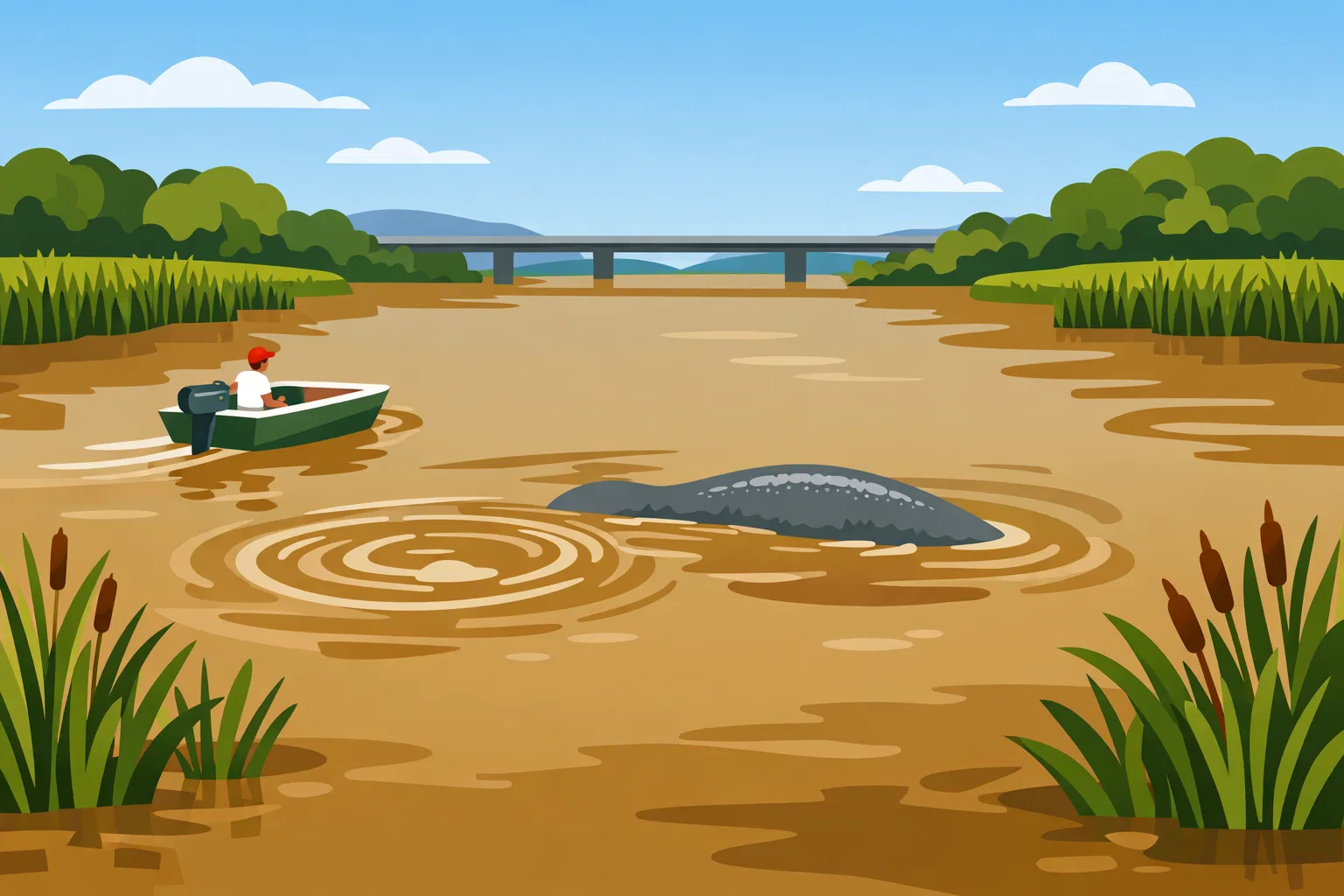
Reports of Whitey are commonly traced to 1915, but the legend did not truly become a public event until 1937. The Encyclopedia of Arkansas says sightings began in 1915 but were sporadic until July 1, 1937, when plantation owner Bramlett Bateman reported seeing a grey creature “as wide as a car and three cars long” near the river.[Encyclopedia of Arkansas]encyclopediaofarkansas.netEncyclopedia of Arkansas White River MonsterEncyclopedia of Arkansas White River Monster
The 1937 episode is the White River Monster’s key origin moment because it moved the story from local claim to public spectacle. Later retellings describe sharecroppers Dee and Sylvia Wyatt as the first people in that flap to notice a strange disturbance, at first thinking it looked like a drowning horse thrashing in the water. When the commotion continued, Bateman went to look and then reported a huge, slick, elephant-skinned thing in the White River. A dozen or so witnesses, reportedly including a Jackson County deputy sheriff, were said to support the basic claim that something unusual was being seen.[AY Magazine]aymag.comAY Magazine Arkansas Backstories: White River MonsterAY Magazine Arkansas Backstories: White River Monster
The story spread because it was perfectly suited to 1930s newspaper culture. The reported viewing site was about six miles south of Newport, down an awkward road, but crowds still gathered along the riverbank. Press photographers did not capture the monster, yet newspapers around the country carried the tale. Time treated the episode with amused fascination, saying Newport’s creature might be the “monster-of-the-year” and reporting that Bateman and the Newport Chamber of Commerce fenced the viewing spot, charged 25 cents admission, and put up signs directing visitors to the White River Monster.[Time]time.comOpen source on time.com.
That mixture of testimony, excitement and commerce is important. The 1937 Whitey was not only a reported animal; it was also a roadside attraction before modern cryptid tourism had a name. Armed locals watched the river, visitors arrived, food and drinks were sold, and a diver was brought in. The carnival atmosphere does not automatically make the sighting a hoax, but it does show how quickly an ambiguous river event can become a local economic opportunity.[Time]time.comOpen source on time.com.
Nets, divers, horns and three-toed tracks
The White River Monster reports are memorable because they include attempts to do something about the creature. After the 1937 claims spread, locals began building a large rope net, hoping to trap Whitey in the eddy where it had been seen. A diver was also brought in to search the river, but the monster was not found, and the net project stopped because of limited money and materials.[Encyclopedia of Arkansas]encyclopediaofarkansas.netEncyclopedia of Arkansas White River MonsterEncyclopedia of Arkansas White River Monster
The diver story gives the legend one of its best sceptical moments. Time reported that Memphis diver Charles B. Brown was hired to investigate and that, after speaking with the witnesses, he thought the creature might be nothing more than a large fish, perhaps a catfish. The same article listed other explanations being discussed at the time, including an alligator gar, a waterlogged tree trunk, a sunken barge, gas disturbing leaves, a sturgeon, or a legendary giant catfish.[Time]time.comOpen source on time.com.
Whitey then quietened down until the early 1970s. In 1971, reports began again, but the creature had acquired new features. One account described a grey animal with a horn sticking from its forehead. Others described a spiny back about twenty feet long. Later, three-toed, fourteen-inch prints were reportedly found in the White River area, along with crushed vegetation and broken trees, and locals assumed the trail belonged to Whitey.[Encyclopedia of Arkansas]encyclopediaofarkansas.netEncyclopedia of Arkansas White River MonsterEncyclopedia of Arkansas White River Monster
This is where the legend becomes harder to treat as a single consistent animal report. The 1937 creature was wide, grey, slick, legless and elephant-skinned. The 1971 version could have a horn, spines, huge eyes or strange tracks. KAIT’s 2024 local report, drawing on Newport Chamber of Commerce records and interviews, notes that the chamber preserves clippings and documents about the monster, and that later accounts included footprints, a claimed photograph, and a final sighting around 1974 when residents saw tracks on the riverbank.[https://www.kait8.com]kait8.comOpen source on kait8.com.
For a cryptid story, that inconsistency cuts both ways. Believers can argue that frightened witnesses saw different parts of a large animal in poor conditions. Sceptics can point out that the details changed in ways that make Whitey look more like a growing legend than a stable biological description.
The 1973 White River Monster Refuge
The strangest part of the White River Monster story is the official refuge. In 1973, after the renewed 1971 sightings, the Arkansas General Assembly passed Senate Resolution 23, sponsored by Senator Bob Harvey, creating the White River Monster Refuge. The protected stretch was described as running between the southern point on the river known as Old Grand Glaize and a northern point known as Rosie.[Encyclopedia of Arkansas]encyclopediaofarkansas.netEncyclopedia of Arkansas White River MonsterEncyclopedia of Arkansas White River Monster
The resolution made it illegal to harm the monster inside the refuge. Sources differ slightly in wording depending on the retelling, but the core idea is consistent: Whitey was not to be killed, molested, trampled or harmed while in its native refuge.[Encyclopedia of Arkansas]encyclopediaofarkansas.netEncyclopedia of Arkansas White River MonsterEncyclopedia of Arkansas White River Monster
As governance, this was not normal wildlife policy. It was a playful legislative act responding to a local legend, not a biological protection plan for a verified species. Yet that is exactly why it matters. The refuge gave official shape to folklore without requiring the state to prove the monster existed. It let Arkansas protect a story, protect a tourist curiosity, and perhaps protect the riverbank spectacle from armed outsiders hoping to shoot or capture whatever people thought they had seen.
The refuge also softened the monster. Many cryptid stories are built around fear: something stalking a road, screaming in the woods, or attacking a farmhouse. Whitey became, in law and memory, something closer to a local resident. The protected monster could still be mysterious, but it was also cherished. Newport continues to embrace the legend through clippings, local promotion, festivals and tourism tie-ins, even though recent confirmed sightings have not materialised.[https://www.kait8.com]kait8.comOpen source on kait8.com.
What might witnesses have seen?
No mainstream evidence confirms a new species in the White River, so the most useful question is not “Was Whitey real?” but “What real things could have produced some of the reports?” The best explanations do not all fit every detail, but they help sort the legend into plausible ingredients.
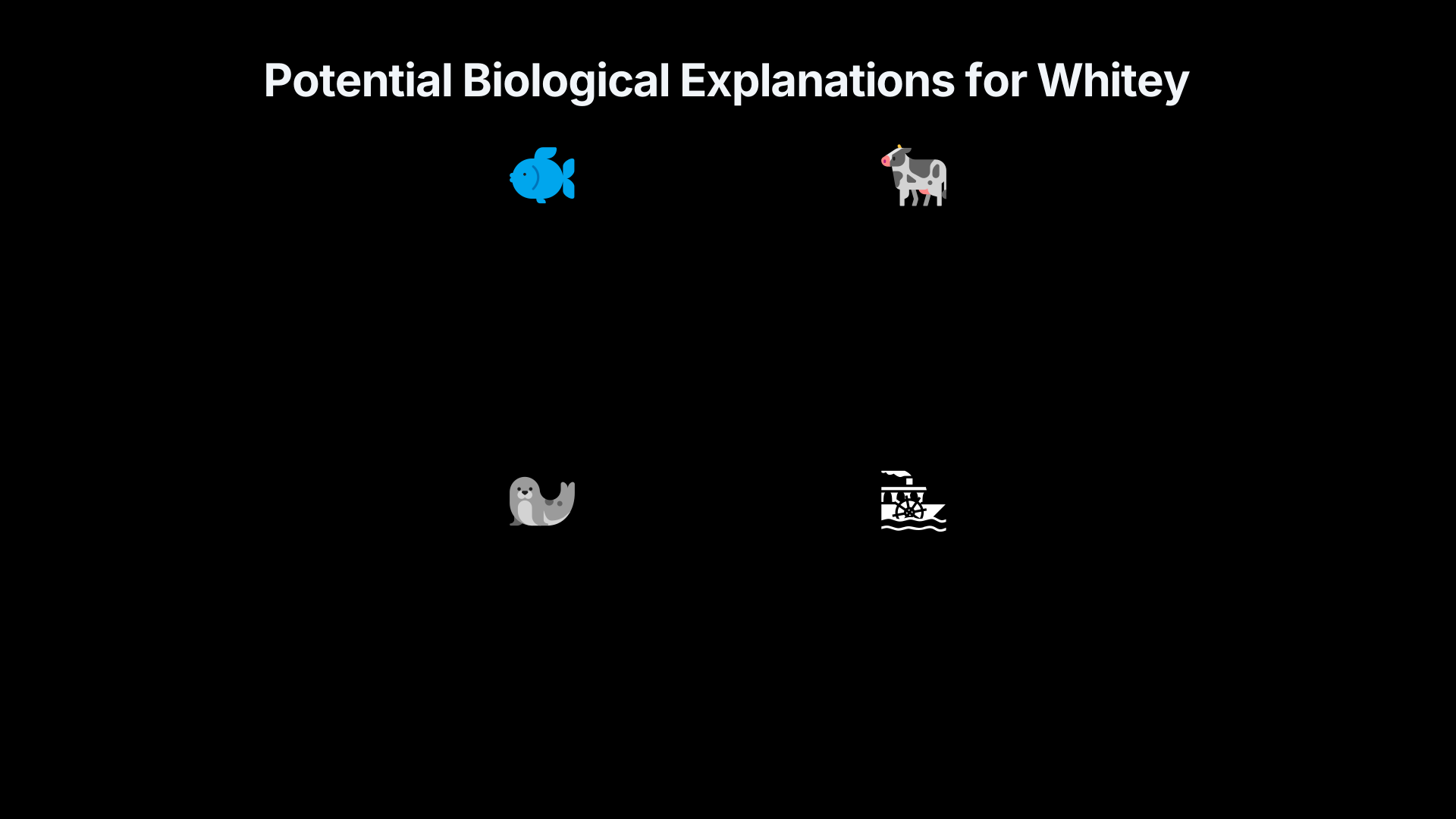
Alligator gar or other large fish are the most grounded local possibility. The Arkansas Game and Fish Commission says the alligator gar is Arkansas’s largest fish species and the largest freshwater fish in the south-eastern United States, with the biggest individuals weighing more than 300 pounds. It also notes that White River alligator gar populations attracted anglers from around the world in the 1940s and 1950s. A huge gar surfacing in muddy water could explain a startling, armour-plated, prehistoric-looking glimpse, especially to someone already primed by rumours.[Arkansas Game & Fish Commission]agfc.comOpen source on agfc.com.
The gar explanation has limits. Even a very large alligator gar is much smaller than some of the most extravagant Whitey descriptions, and it does not explain horns, spines, elephant skin or three-toed tracks unless those details came from misperception, exaggeration, mixed reports or unrelated marks on the bank. Still, as a known Arkansas animal with genuine size and a river-monster appearance, it deserves more weight than prehistoric-survivor theories.[Arkansas Game & Fish Commission]agfc.comOpen source on agfc.com.
A manatee has also been suggested, most notably in sceptical discussion. The Florida Fish and Wildlife Conservation Commission describes Florida manatees as inhabiting coastal waters, rivers and springs, with warm-season travel up the Atlantic coast and occasional Gulf records as far west as Texas. A stray manatee entering the Mississippi system and reaching the White River would be unusual, but the basic animal has features that echo some reports: grey skin, bulk, a rounded body, surface breathing, and an odd appearance to observers unfamiliar with it.[FWC]myfwc.comFWCFlorida Manatee Facts and Information | FWCFWCFlorida Manatee Facts and Information | FWC
The manatee theory is attractive because it can make Whitey “real” without making it a monster. Its weakness is geography and repetition. A stray animal might explain one summer flap better than a century of scattered reports, and cold-season survival would be a major problem for a warm-water mammal.[FWC]myfwc.comFWCFlorida Manatee Facts and Information | FWCFWCFlorida Manatee Facts and Information | FWC
An elephant seal has been proposed in cryptozoological writing, partly because moulting male elephant seals can look grey, peeling and massive. A 1971 report described skin that looked as if it was peeling, which helps explain why the idea caught on. But an elephant seal in inland Arkansas would require an extraordinary journey far outside its usual range, and it would not comfortably explain repeated appearances across decades.[AY Magazine]aymag.comAY Magazine Arkansas Backstories: White River MonsterAY Magazine Arkansas Backstories: White River Monster
River effects, debris and publicity may explain the rest. A submerged barge, waterlogged tree, gas disturbance, fish activity, flood debris or large animal carcass could create a monster-like disturbance in a muddy eddy. Once newspapers, crowds and admission fees entered the story, later witnesses were no longer looking at neutral water. They were looking at a famous monster site.[Time]time.comOpen source on time.com.

Why the legend survived after the sightings faded
The White River Monster has lasted because it has three things many local legends lack: a defined place, a dramatic media moment, and an official government hook. The 1937 flap gave Whitey a classic newspaper-era birth. The 1971 sightings refreshed the story with stranger details: horn, spines, tracks and a possible photograph. The 1973 refuge then froze the legend into civic memory.[Encyclopedia of Arkansas]encyclopediaofarkansas.netEncyclopedia of Arkansas White River MonsterEncyclopedia of Arkansas White River Monster
It also helps that Whitey is easy to like. The Fouke Monster is frightening because it belongs to dark roads and swampy woods. Whitey is stranger but gentler: a hidden river resident, rarely seen, usually glimpsed as a shape, ripple, back or track. The official refuge reinforces that mood. Arkansas did not organise a monster hunt. It created a sanctuary.
That does not mean the story should be treated as proven zoology. The strongest reading is that Whitey is a folklore-and-witness tradition built around real river conditions, real local wildlife, real publicity and possibly one or more unusual animal encounters. It is a monster story with unusually good civic paperwork.
What the refuge really protected
The White River Monster Refuge protected more than a creature. It protected a local identity. It turned a puzzling set of sightings into a shared Arkansas joke with enough affection behind it to become semi-official. It also quietly shifted the question from “How do we catch this thing?” to “Why not leave it alone?”
That is the most distinctive feature of Whitey within Arkansas cryptid history. The state’s major river monster was not just chased with nets and searched for by divers; it was eventually granted a safe stretch of river in public imagination and legislative language. Whether Whitey was a huge fish, a wandering mammal, a trick of muddy water, a publicity engine, or several stories braided together, the refuge made the legend durable. It gave Arkansas a monster that belongs not only to rumour, but to place, paperwork and local pride.
eBay marketplace picks
Marketplace Samples
Live-tested eBay searches with available results related to this page.




Endnotes
1.
Source: arkansas.com
Title: Jacksonport State Park | Arkansas.com
Link:https://www.arkansas.com/state-parks/explore/parks/jacksonport-state-park
2.
Source: time.com
Link:https://time.com/archive/6768313/science-newports-monster/
3.
Source: kait8.com
Link:https://www.kait8.com/2024/10/11/legend-white-river-monster/
4.
Source: myfwc.com
Title: FWCFlorida Manatee Facts and Information | FWC
Link:https://myfwc.com/education/wildlife/manatee/facts-and-information/
5.
Source: kait8.com
Title: the legend of the white river monster
Link:https://www.kait8.com/story/38545649/the-legend-of-the-white-river-monster/
6.
Source: encyclopediaofarkansas.net
Title: Encyclopedia of Arkansas White River Monster
Link:https://encyclopediaofarkansas.net/entries/white-river-monster-2790/
7.
Source: encyclopediaofarkansas.net
Title: Encyclopedia of Arkansas Grand Glaise (Jackson County)
Link:https://encyclopediaofarkansas.net/entries/grand-glaise-jackson-county-6417/
8.
Source: aymag.com
Title: AY Magazine Arkansas Backstories: White River Monster
Link:https://aymag.com/arkansas-backstories-white-river-monster/
9.
Source: agfc.com
Link:https://www.agfc.com/education/history-of-the-alligator-gar-in-arkansas/
10.
Source: Wikipedia
Title: White River Monster
Link:https://en.wikipedia.org/wiki/White_River_Monster
11.
Source: cryptozoologycryptids.fandom.com
Title: White River Monster
Link:https://cryptozoologycryptids.fandom.com/wiki/White_River_Monster
12.
Source: naturerules1.fandom.com
Title: White River Monster
Link:https://naturerules1.fandom.com/wiki/White_River_Monster
13.
Source: exploresouthernhistory.com
Title: White River Monster
Link:https://www.exploresouthernhistory.com/whiteriver1.html
14.
Source: encyclopediaofarkansas.net
Link:https://encyclopediaofarkansas.net/media/white-river-monster-refuge-8572/
15.
Source: ecos.fws.gov
Link:https://ecos.fws.gov/ecp/species/4469
16.
Source: jacksonhistory.net
Title: white river monster
Link:https://jacksonhistory.net/white-river-monster/
Additional References
17.
Source: fws.gov
Link:https://www.fws.gov/refuge/dale-bumpers-white-river
18.
Source: mmc.gov
Link:https://www.mmc.gov/priority-topics/species-of-concern/florida-manatee/
19.
Source: youtube.com
Title: The White River Monster of Arkansas | The Legend of Whitey
Link:https://www.youtube.com/watch?v=2Nu6BQTIHow
Source snippet
Once Upon A Time In Arkansas: White River Monster...
20.
Source: youtube.com
Title: Once Upon A Time In Arkansas: White River Monster
Link:https://www.youtube.com/watch?v=0C99h14LQx8
Source snippet
Terrifying Monsters That May Still Lurk in The Arkansas Ozarks...
21.
Source: academia.edu
Link:https://www.academia.edu/129392527/Pleistocene_or_Post_Pleistocene_Manatees_in_the_Mississippi_and_Ohio_River_Valleys
22.
Source: facebook.com
Link:https://www.facebook.com/ArkansasSenate/posts/the-arkansas-senate-once-protected-a-river-monster-reallythe-legend-began-in-jul/1442872741209317/
23.
Source: pocketmags.com
Link:https://pocketmags.com/us/skeptical-inquirer-magazine/novdec-2018/articles/458348/arkansas-s-white-river-monster-very-real-but-what-was-it?srsltid=AfmBOopV-e5wRdi3qJ_uYf4C0hC-0sziWCYVoEsrHFGkukTXaUJ1YnDp
24.
Source: facebook.com
Link:https://www.facebook.com/groups/jpphistory/posts/307608595123837/
25.
Source: facebook.com
Link:https://www.facebook.com/deermeatfordinner/posts/i-didnt-even-know-alligator-gar-could-get-that-big/602241375239489/
26.
Source: facebook.com
Link:https://www.facebook.com/arredhead73/posts/i-still-do-stuff-like-this-jack-and-i-have-spent-many-hours-assembling-random-an/10163264929292326/
Topic Tree