Why California Became Bigfoot Country
California’s cryptid tradition is not one monster story but a whole landscape of them: Bigfoot in the redwood country, lake serpents in Tahoe and Elizabeth Lake, shadowy Watchers on the Santa Lucia ridges, “phantom panthers” in parks and suburbs, and the internet-age Fresno Nightcrawler.
Page outline Jump by section
Why California became Bigfoot country
Modern Bigfoot culture has older roots in North American “wild man” and Sasquatch traditions, but California gave the creature one of its defining public moments. In 1958, bulldozer operator Jerry Crew reported large, human-like tracks near Bluff Creek in Humboldt County; the story was taken up by the Humboldt press, spread through news wires, and helped popularise the name “Bigfoot”. A University of Chicago Press excerpt from Joshua Blu Buhs’s history of the legend places Crew’s discovery in the logging country of Northern California, while later summaries of the episode note the 16-inch casts and the sudden national attention that followed.[uchicago.edu]press.uchicago.eduOpen source on uchicago.edu.
That origin story also shows why California Bigfoot has always sat between evidence and performance. The tracks were treated as startling physical clues, but the 2002 revelation that Ray Wallace’s family possessed carved wooden feet linked to old Bigfoot track-making pushed many sceptics to see the Bluff Creek print tradition as at least partly shaped by hoaxing. The legend did not collapse, because by then the creature had become more than a set of footprints. It had become a regional identity for the North Coast: an emblem of logging roads, dense forest, unexplained noises, campfire stories and the possibility that the wilderness might still be hiding something large.[Wikipedia]WikipediaOpen source on wikipedia.org.
Willow Creek, in Humboldt County, is the clearest example of that transformation. Tourism pages for Humboldt County openly market the town as Bigfoot’s “old stomping grounds”, and the Willow Creek–China Flat Museum is promoted for its Bigfoot artefacts, footprint casts, photographs, sighting maps and newspaper material. This is not proof of a species, but it is proof of cultural durability: Bigfoot has become a way for a small mountain town to tell visitors where they are and why the place feels different.[visitredwoods.com]visitredwoods.comVisit Redwoods China Flat MuseumVisit Redwoods China Flat Museum
Bluff Creek and the film that still defines the argument
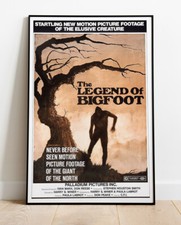
The single most famous California cryptid claim remains the Patterson–Gimlin film, shot in October 1967 near Bluff Creek in Northern California. Roger Patterson and Bob Gimlin said they filmed a large, hairy, bipedal figure walking away through a creek bed; the clip runs for roughly a minute and has been debated ever since. Its importance is not just that believers cite it as evidence. It is that the film gave Bigfoot a body language, a silhouette and a public face: the turning head, the swinging arms and the dark figure moving across pale sand.[Wikipedia]WikipediaPatterson–Gimlin filmPatterson–Gimlin film
For supporters, the film’s value lies in its setting, timing and apparent anatomy. It was made in an area already charged with large-track reports, and the figure in the footage has been treated by enthusiasts as more convincing than most later photographs or videos. For sceptics, the same film is vulnerable because it comes from a world of Bigfoot hunting, publicity, costume claims and ambiguous visual evidence. A 2026 report about the documentary Capturing Bigfoot described new claims that the film was staged, including alleged rehearsal footage and renewed testimony around the supposed suit; those claims are themselves part of the continuing afterlife of the film rather than a settled scientific finding.[People.com]people.comfamous 1967 bigfoot film was staged says director of new doc 11926085Evans traced Johnson’s connection to the original filmmakers and discovered interviews with key figures, including Bob Heironimus, who ad…
The careful position is this: the Patterson–Gimlin film is historically central but biologically unproven. It has never produced a verified body, DNA sample or living population. It remains a cultural artefact with unusual staying power, not accepted zoological evidence. That distinction matters because it lets the story stay strange without turning a disputed film into a confirmed animal.[nationalgeographic.com]nationalgeographic.comforensic expert says bigfoot is realforensic expert says bigfoot is real

What the science does, and does not, support
Mainstream science has not confirmed Bigfoot as a real North American ape or hominid. The strongest problem is not that every witness must be lying; it is that a breeding population of large primates should leave repeated, testable evidence: bodies, bones, clear DNA, consistent tracks, ecological signs and reliable images. National Geographic has summarised the basic evidential gap bluntly: sightings exist, but clear photographs, bones and hard biological evidence have not followed.[National Geographic]nationalgeographic.comforensic expert says bigfoot is realforensic expert says bigfoot is real
Genetic testing has been particularly important because it gives cryptid claims a fair route to confirmation. In a 2014 Proceedings of the Royal Society B study, Bryan Sykes and colleagues tested 30 hair samples attributed to “anomalous primates”, including Bigfoot and Yeti-type claims. The study did not identify an unknown primate; most samples came from known animals, while two Himalayan samples matched bear lineages. PubMed’s abstract records the same central result: after mitochondrial DNA testing, the samples were assigned to known species rather than a new ape.[Royal Society Publishing]royalsocietypublishing.orgOpen source on royalsocietypublishing.org.
For California, that does not make Bigfoot folklore uninteresting. It changes the question from “is there a hidden ape?” to “why did this region generate such a persuasive hidden-ape story?” The answer lies in a mix of dense habitat, real wildlife, logging culture, Indigenous and settler story traditions, newspaper amplification, tourism and a recurring public appetite for the idea that wilderness has not been fully explained.[uchicago.edu]press.uchicago.eduOpen source on uchicago.edu.
Tahoe Tessie and California’s lake-monster instinct
Lake Tahoe has its own long-running creature tradition: Tahoe Tessie, usually imagined as a large serpent-like being in the lake’s deep blue water. The legend belongs to both California and Nevada because the lake straddles the state line, but it fits naturally into California’s mystery-beast map. Recent popular coverage treats Tessie as a local cousin of Loch Ness-style lake monsters, while local retellings connect the story to nineteenth-century accounts and later sightings.[sfgate.com]sfgate.com050521 lake tahoe tessie monster myths 16150906050521 lake tahoe tessie monster myths 16150906
The setting helps explain the appeal. Lake Tahoe is exceptionally deep: the US Forest Service gives its deepest recorded depth as 1,645 feet, and the US Environmental Protection Agency tracks Tahoe’s famous clarity as an environmental indicator. A lake that is both visibly clear and unimaginably deep is perfect folklore terrain. It invites the thought that the surface reveals a lot, but not everything.[usda.gov]fs.usda.govabout areaabout area
Sceptical explanations for Tessie tend to be less dramatic than the legend: waves, floating logs, wakes, large fish, visual distortion, jokes, tourist storytelling and the human habit of turning a strange glimpse into a named creature. The absence of biological evidence matters, especially in a lake studied closely by scientists and conservation groups. Yet Tessie has endured because the story is friendly, place-specific and easy to retell: Tahoe is already marketed through beauty and depth, and a resident lake monster adds a playful mystery to that identity.[keeptahoeblue.org]keeptahoeblue.orgOpen source on keeptahoeblue.org.
Elizabeth Lake’s dragon is older, stranger and more local
Southern California has a very different lake monster in the Elizabeth Lake legend, set near Palmdale in Los Angeles County. The story is often framed as a dragon-like beast associated with “Devil’s Lake” traditions, fiery destruction and a sinister origin tale. The Lancaster Museum of Art and History summarises the legend through Horace Bell’s The Old West Coast, noting the claim that the lake was carved out by Satan and inhabited by a terrible beast.[MOAH]lancastermoah.orgMOAHThe Monster in Lake ElizabethMOAHThe Monster in Lake Elizabeth
The Los Angeles Almanac gives a more historical local frame: Elizabeth Lake lies west of Palmdale, and early stories linked the water to Spanish-era tales of a devilish creature. It also records an 1830s story in which Don Pedro Carrillo supposedly abandoned a lakeside ranch after mysterious fires, complaining of the lake under its older demonic name. The lake’s location along the San Andreas Fault adds a useful clue to the folklore: dramatic geology often attracts dramatic explanation.[LA Almanac]laalmanac.comOpen source on laalmanac.com.
Elizabeth Lake’s monster is less like Tahoe Tessie and more like a frontier warning story. It is not mainly a modern “maybe someone saw a large animal” case; it is a local legend built from naming, danger, fire, settlement memory and the eerie power of a lake in a dry landscape. That makes it valuable in a California cryptid guide because it shows how a mystery beast can work as folklore even when it is not supported by modern sighting evidence.[MOAH]lancastermoah.orgMOAHThe Monster in Lake ElizabethMOAHThe Monster in Lake Elizabeth
The Dark Watchers: not animals, but essential California monster folklore
The Dark Watchers of the Santa Lucia Mountains are not usually described as animals, so they sit on the edge of cryptid territory. They belong here because California creature folklore is not limited to hidden apes and lake beasts. These figures are usually described as tall, dark, human-like silhouettes seen on ridges around Big Sur and the Santa Lucia range, often at dawn or dusk, and they are said to vanish when approached or noticed.[SFGATE]sfgate.comFor centuries, Big Sur residents have seen 'Dark WatchersFor centuries, Big Sur residents have seen 'Dark Watchers
Their literary afterlife is unusually strong. John Steinbeck referred to dark watchers in “Flight”, collected in The Long Valley, and Robinson Jeffers also helped fix the ridge-top figures in Central Coast imagination. Modern accounts often repeat claims of Spanish or Indigenous roots, but the evidence for specific Chumash origin is contested and should be handled carefully; the safest reading is that the Watchers are a layered Central California legend shaped by place, literature, family memory and local retelling.[wikipedia.org]WikipediaDark WatchersDark Watchers
The most plausible natural explanation is optical. The Santa Lucia range has fog, mist, low cloud, strong ridge silhouettes and changing coastal light. Several sceptical discussions point to the Brocken spectre, an atmospheric effect in which a person’s shadow is projected onto mist or cloud and appears enlarged, distant and strangely human. That does not “kill” the legend; it explains why the legend belongs so perfectly to that terrain. A place of steep ridges and marine haze is exactly where a watcher-shaped story would thrive.[livescience.com]livescience.comOpen source on livescience.com.
Phantom cats and the problem of real predators
California’s “black panther” or phantom-cat reports are more grounded than many monster legends because the state really does have large wild cats. The problem is identification. California Department of Fish and Wildlife describes adult mountain lions as tawny, tan or slightly reddish, with a white underbelly and black markings on the muzzle, ears and tail; it also notes that mountain lions are often confused with bobcats and domestic cats, and vice versa.[California Fish and Wildlife]wildlife.ca.govOpen source on ca.gov.
That makes black-panther reports a classic cryptid puzzle: the witness may have seen a real animal, but not necessarily the animal they think they saw. Bay Area reporting on “black panther” sightings in parks quoted wildlife specialists saying there was no proof of black panthers in the region and that many reports likely involve house cats, bobcats, foxes, coyotes or mountain lions seen in poor light. The repeated pattern is familiar across phantom-cat folklore: a brief sighting, distance, darkness, surprise and an animal moving with enough feline confidence to grow in memory.[SFGATE]sfgate.comBlack panther sightings' in Bay Area parksBlack panther sightings' in Bay Area parks
California’s real mountain lions keep these stories alive because they regularly appear near roads, trails and neighbourhood edges. Recent Northern California reports of close mountain-lion encounters in Lassen County show how quickly real wildlife can feel uncanny when it crosses into human space. The sensible explanation for most phantom-cat claims is not “nothing happened”; it is that something happened too quickly, too dimly or too far away for reliable species identification.[sfchronicle.com]sfchronicle.comOpen source on sfchronicle.com.
Fresno Nightcrawlers and the birth of a digital cryptid
The Fresno Nightcrawler is California’s most internet-native cryptid. Instead of emerging from nineteenth-century newspapers, logging camps or frontier lakes, it came from short, grainy video clips: first a 2007 Fresno home-security recording, then a 2011 clip from Yosemite Lakes Park. The creature’s design is absurdly simple and strangely memorable: pale, long-legged, almost like a pair of walking trousers.[thebusinessjournal.com]thebusinessjournal.comOpen source on thebusinessjournal.com.
Its evidence base is thin. There are no bodies, tracks, specimens or repeated high-quality recordings. Some later examples have been described as reportedly debunked, and common explanations include puppetry, video trickery, people in loose fabric, misread animals or deliberately playful hoaxes. But the Nightcrawler matters because it shows how quickly a modern cryptid can form when a visual shape is distinctive enough for memes, fan art and merchandise.[fresnoland.org]fresnoland.orgThe Fresno Nightcrawler urban legend included in newThe Fresno Nightcrawler urban legend included in new
Unlike Bigfoot, the Nightcrawler does not need a vast hidden ecosystem to remain popular. Its appeal is almost anti-Bigfoot: small, silent, silly, eerie and born from low-resolution media. Fresno’s local press has noted how the figure moved from obscure footage into art, online fandom and a kind of civic weirdness. In that sense, it is not a failed zoological claim so much as a successful piece of digital folklore.[The Business Journal]thebusinessjournal.comOpen source on thebusinessjournal.com.
How newspapers, tourism and politics keep the legends alive
California’s cryptids survive because institutions repeat them, even when they do so playfully. Newspapers made Bigfoot famous in 1958. Local museums preserve casts, clippings and memorabilia. Travel pages use Bigfoot to brand Willow Creek. Lake Tahoe businesses and media keep Tessie visible as a friendly lake mystery. Fresno artists and merch-makers have turned the Nightcrawler into a mascot of odd local pride.[uchicago.edu]press.uchicago.eduOpen source on uchicago.edu.
The clearest modern example is Assembly Bill 666, introduced in 2025 to designate Bigfoot as California’s official state cryptid. The amended bill text defined a cryptid as a creature believed to exist but not definitively proven by science, described Bigfoot as the most famous cryptid in contemporary California culture, and argued that the legend supports tourism and cultural preservation. Later bill-tracking sources indicate that the proposal did not make it through, but the attempt itself shows how far Bigfoot has travelled from muddy logging-road tracks to official civic symbolism.[legiscan.com]legiscan.comOpen source on legiscan.com.
That official flirtation is revealing. California did not need Bigfoot to be biologically real for it to be culturally useful. The proposed state-cryptid idea treated Bigfoot as folklore, tourism branding and wilderness mascot all at once. That is probably the most accurate way to understand California’s cryptid scene as a whole. These stories are not confirmed zoology, but they are real traditions with real places, local economies, arguments and memories attached to them.[LegiScan]legiscan.comOpen source on legiscan.com.
The best sceptical reading of California’s cryptids
A fair sceptical reading does not require assuming every witness is dishonest. California’s landscapes create many opportunities for honest error: bears can stand or move in startling ways, mountain lions cross roads at dusk, large fish and floating logs disturb lake surfaces, fog projects human-shaped shadows, and poor video makes small objects look stranger than they are. Add local expectation — “this is Bigfoot country”, “that lake has a monster”, “those mountains have Watchers” — and a strange glimpse can become a named encounter.[nationalgeographic.com]nationalgeographic.combigfoot unmaskedbigfoot unmasked
Hoaxing also has to be part of the picture. Bigfoot track-making, disputed film evidence and internet cryptid clips all show that California monster lore has been shaped by prank, performance and media attention as well as sincere belief. That does not make the folklore worthless. It means the evidence should be sorted by type: eyewitness memory is not the same as a specimen; a museum cast is not the same as DNA; a viral clip is not the same as a reproducible observation; a local legend is not the same as a field guide entry.[wikipedia.org]WikipediaOpen source on wikipedia.org.
The most rewarding way to read California’s cryptids is therefore double-visioned. Enjoy the strangeness, but keep the categories clear. Bigfoot is the state’s headline monster, but not a confirmed animal. Tahoe Tessie is a lake legend shaped by depth and tourism, not a documented species. Elizabeth Lake’s beast is a historical demon-dragon tale, not a modern wildlife case. The Dark Watchers are ridge folklore with plausible atmospheric triggers. Phantom cats are often real-animal misidentifications. Fresno Nightcrawlers are modern media folklore whose charm lies partly in how little evidence they require.[uchicago.edu]press.uchicago.eduOpen source on uchicago.edu.
What California’s monster map tells us
California’s cryptids cluster where the state feels least ordinary: the redwoods and logging roads of the North Coast, the deep basin of Tahoe, the fault-haunted desert edge around Elizabeth Lake, the foggy Santa Lucia ridges, suburban-wildland borders where big cats still move, and CCTV-lit yards where a tiny white figure can become an online legend. The creatures differ, but the pattern is consistent. Each story gives a particular landscape a memorable mystery.[visithumboldt.com]visithumboldt.comOpen source on visithumboldt.com.
That is why California remains one of the richest American states for cryptid history. It has a world-famous headline case in Bigfoot, several strong regional legends, and a modern pipeline from local weirdness to global internet folklore. The evidence for unknown animals is weak; the evidence for enduring monster-making is strong. California’s cryptids are best understood as folklore under pressure from cameras, science, tourism and scepticism — still strange, still useful, and still walking the boundary between the wild and the imagined.
Amazon book picks
Further Reading
Books and field guides related to Why California Became Bigfoot Country. Use these as the next step if you want deeper reading beyond the article.
Sasquatch: Legend Meets Science
Directly addresses evidence and sightings linked to Bigfoot country.
eBay marketplace picks
Marketplace Samples
Live-tested eBay searches with available results related to this page.

Endnotes
1.
Source: Wikipedia
Title: Patterson–Gimlin film
Link:https://en.wikipedia.org/wiki/Patterson%E2%80%93Gimlin_film
2.
Source: legiscan.com
Link:https://legiscan.com/CA/text/AB666/id/3193848
3.
Source: newspapers.com
Title: the san bernardino county sun huge huma
Link:https://www.newspapers.com/article/the-san-bernardino-county-sun-huge-huma/120351893/?locale=en-GB
4.
Source: Wikipedia
Link:https://en.wikipedia.org/wiki/Bigfoot
5.
Source: visithumboldt.com
Link:https://visithumboldt.com/willow-creek/
6.
Source: people.com
Title: famous 1967 bigfoot film was staged says director of new doc 11926085
Link:https://people.com/famous-1967-bigfoot-film-was-staged-says-director-of-new-doc-11926085
Source snippet
Evans traced Johnson’s connection to the original filmmakers and discovered interviews with key figures, including Bob Heironimus, who ad...
7.
Source: sfgate.com
Title: 050521 lake tahoe tessie monster myths 16150906
Link:https://www.sfgate.com/renotahoe/article/050521-lake-tahoe-tessie-monster-myths-16150906.php
8.
Source: Wikipedia
Title: Tahoe Tessie
Link:https://en.wikipedia.org/wiki/Tahoe_Tessie
9.
Source: epa.gov
Link:https://www.epa.gov/lake-tahoe/about
10.
Source: lancastermoah.org
Title: MOAHThe Monster in Lake Elizabeth
Link:https://www.lancastermoah.org/single-post/the-monster-in-lake-elizabeth
11.
Source: sfgate.com
Title: For centuries, Big Sur residents have seen ‘Dark Watchers’
Link:https://www.sfgate.com/local/article/dark-watchers-santa-lucia-range-stories-steinbeck-16012812.php
12.
Source: Wikipedia
Title: Dark Watchers
Link:https://en.wikipedia.org/wiki/Dark_Watchers
13.
Source: Wikipedia
Title: The Long Valley
Link:https://en.wikipedia.org/wiki/The_Long_Valley
14.
Source: skeptoid.com
Link:https://skeptoid.com/episodes/522
15.
Source: sfgate.com
Title: ‘Black panther sightings’ in Bay Area parks
Link:https://www.sfgate.com/sports/article/Black-panther-sightings-in-Bay-Area-parks-3185714.php
16.
Source: Wikipedia
Title: Phantom cat
Link:https://en.wikipedia.org/wiki/Phantom_cat
17.
Source: people.com
Link:https://people.com/mountain-lions-declared-public-safety-threat-in-northern-california-community-11978562
Source snippet
In one incident, a lion came within 15 feet of a homeowner and his dogs, prompting the man to retrieve a shotgun, though the animal left...
18.
Source: Wikipedia
Title: Fresno nightcrawler
Link:https://en.wikipedia.org/wiki/Fresno_nightcrawler
19.
Source: pbs.org
Link:https://www.pbs.org/video/the-fresno-night-crawlers-cxpixd/
20.
Source: fresnoland.org
Title: The Fresno Nightcrawler urban legend included in new
Link:https://fresnoland.org/2025/05/01/the-fresno-nightcrawler/
21.
Source: fastdemocracy.com
Title: Bill tracking in California
Link:https://fastdemocracy.com/bill-search/ca/2025-2026/bills/CAB00034514/
22.
Source: legiscan.com
Link:https://legiscan.com/CA/text/AB666/id/3123785
23.
Source: Wikipedia
Link:https://en.wikipedia.org/wiki/Lake
24.
Source: Wikipedia
Title: Patterson Gimlin Film
Link:https://de.wikipedia.org/wiki/Patterson-Gimlin-Film
25.
Source: Wikipedia
Title: Lake Tahoe
Link:https://en.wikipedia.org/wiki/Lake_Tahoe
26.
Source: Wikipedia
Title: Elizabeth Lake (Los Angeles County, California)
Link:https://en.wikipedia.org/wiki/Elizabeth_Lake_%28Los_Angeles_County%2C_California%29
27.
Source: Wikipedia
Title: List of lake monsters
Link:https://en.wikipedia.org/wiki/List_of_lake_monsters
28.
Source: Wikipedia
Title: British big cats
Link:https://en.wikipedia.org/wiki/British_big_cats
29.
Source: cryptidz.fandom.com
Title: Tahoe Tessie
Link:https://cryptidz.fandom.com/wiki/Tahoe_Tessie
30.
Source: cryptidz.fandom.com
Link:https://cryptidz.fandom.com/wiki/California
31.
Source: cryptidz.fandom.com
Title: Dark Watchers
Link:https://cryptidz.fandom.com/wiki/Dark_Watchers
32.
Source: cryptidz.fandom.com
Title: Fresno Nightcrawler
Link:https://cryptidz.fandom.com/wiki/Fresno_Nightcrawler
33.
Source: history.com
Title: bigfoot fbi file investigation discovery
Link:https://www.history.com/articles/bigfoot-fbi-file-investigation-discovery
34.
Source: sfgate.com
Title: willow creek norcal town obsessed with bigfoot 18410299
Link:https://www.sfgate.com/travel/article/willow-creek-norcal-town-obsessed-with-bigfoot-18410299.php
35.
Source: digitalcommons.humboldt.edu
Link:https://digitalcommons.humboldt.edu/cgi/viewcontent.cgi?article=1029&context=barnum
36.
Source: press.uchicago.edu
Link:https://press.uchicago.edu/Misc/Chicago/079790.html
37.
Source: humboldthistory.org
Link:https://www.humboldthistory.org/history-nuggets/2021/6/9/bigfoot
38.
Source: visitredwoods.com
Title: Visit Redwoods China Flat Museum
Link:https://www.visitredwoods.com/listing/china-flat-museum-bigfoot/117/
39.
Source: nationalgeographic.com
Title: forensic expert says bigfoot is real
Link:https://www.nationalgeographic.com/culture/article/forensic-expert-says-bigfoot-is-real
40.
Source: royalsocietypublishing.org
Link:https://royalsocietypublishing.org/rspb/article/281/1789/20140161/77194/Genetic-analysis-of-hair-samples-attributed-to
41.
Source: atlasobscura.com
Title: tahoe tessie
Link:https://www.atlasobscura.com/articles/tahoe-tessie
42.
Source: fs.usda.gov
Title: about area
Link:https://www.fs.usda.gov/r05/laketahoebasin/about-area
43.
Source: keeptahoeblue.org
Link:https://www.keeptahoeblue.org/about-tahoe/
44.
Source: laalmanac.com
Link:https://www.laalmanac.com/mysterious/my06a.php
45.
Source: atlasobscura.com
Title: dark watchers santa lucia mountains california
Link:https://www.atlasobscura.com/articles/dark-watchers-santa-lucia-mountains-california
46.
Source: livescience.com
Link:https://www.livescience.com/dark-watchers-california-optical-illusion.html
47.
Source: wildlife.ca.gov
Link:https://wildlife.ca.gov/Conservation/Mammals/Mountain-Lion
48.
Source: sfchronicle.com
Link:https://www.sfchronicle.com/california/article/lassen-county-mountain-lion-threat-22261708.php
49.
Source: thebusinessjournal.com
Link:https://thebusinessjournal.com/more-than-fresno-famous-how-the-nightcrawler-captured-the-worlds-imagination/
50.
Source: allthatsinteresting.com
Title: fresno nightcrawler
Link:https://allthatsinteresting.com/fresno-nightcrawler
51.
Source: sfchronicle.com
Link:https://www.sfchronicle.com/bayarea/article/new-california-bill-make-big-foot-state-cryptid-20176146.php
52.
Source: nationalgeographic.com
Title: bigfoot unmasked
Link:https://www.nationalgeographic.com/science/article/bigfoot-unmasked
53.
Source: facebook.com
Link:https://www.facebook.com/NPSCentennialLEGO/photos/in-2007-a-surveillance-camera-in-fresno-california-captured-creepy-footage-of-st/880069424220600/
54.
Source: atlasobscura.com
Title: china flat museum bigfoot collection
Link:https://www.atlasobscura.com/places/china-flat-museum-bigfoot-collection
55.
Source: royalsocietypublishing.org
Link:https://royalsocietypublishing.org/doi/abs/10.1098/rspb.2014.0161
56.
Source: thebigfootmuseum.com
Link:https://thebigfootmuseum.com/mystery.html
57.
Source: livescience.com
Link:https://www.livescience.com/24598-bigfoot.html
58.
Source: weirdca.com
Link:https://www.weirdca.com/location.php?location=179
59.
Source: tripadvisor.com
Title: Willow Creek
Link:https://www.tripadvisor.com/Attraction_Review-g33274-d3319356-Reviews-Willow_Creek_China_Flat_Museum-Willow_Creek_Humboldt_County_California.html
60.
Source: sites.google.com
Title: fresno nightcrawler
Link:https://sites.google.com/view/californiatruecrime/additional-content/fresno-nightcrawler
61.
Source: trackbill.com
Title: ab 666
Link:https://trackbill.com/s3/bills/CA/2025/AB/666/analyses/assembly-arts-entertainment-sports-and-tourism.pdf
62.
Source: blog.education.nationalgeographic.org
Title: bears the yeti is a bunch of bears
Link:https://blog.education.nationalgeographic.org/2017/11/30/bears-the-yeti-is-a-bunch-of-bears/
63.
Source: visitredwoods.com
Link:https://www.visitredwoods.com/listing/bigfoot-found-in-the-redwoods/146/
64.
Source: nationalgeographic.com
Title: yeti legends real animals dna bears himalaya science
Link:https://www.nationalgeographic.com/science/article/yeti-legends-real-animals-dna-bears-himalaya-science
65.
Source: cryptidscalifornia.com
Title: Fresno Nightcrawler
Link:https://www.cryptidscalifornia.com/the-cryptids/fresno-nightcrawler
66.
Source: fs.usda.gov
Title: elizabeth lake day use area
Link:https://www.fs.usda.gov/r05/angeles/recreation/elizabeth-lake-day-use-area
Additional References
67.
Source: youtube.com
Title: The Question No One Is Willing to Answer | Patterson-Gimlin Bigfoot
Link:https://www.youtube.com/watch?v=RsU8ul9X2eg
Source snippet
How The Internet Created Its Own Viral Monster | Monstrum...
68.
Source: youtube.com
Title: The Shadow Humanoids of California’s Coastline | Monster Quest: Origins
Link:https://www.youtube.com/watch?v=42GxYs1u_ro
Source snippet
The Scariest and Weirdest Cryptids in California...
69.
Source: youtube.com
Title: Overnight at Bluff Creek and the Patterson-Gimlin Site
Link:https://www.youtube.com/watch?v=Z-24o1nd8Mk
Source snippet
The Question No One Is Willing to Answer | Patterson-Gimlin Bigfoot...
70.
Source: youtube.com
Title: The Scariest and Weirdest Cryptids in California
Link:https://www.youtube.com/watch?v=REnA-08WXAA
Source snippet
Overnight at Bluff Creek and the Patterson-Gimlin Site...
71.
Source: researchgate.net
Link:https://www.researchgate.net/publication/263711067Molecular_analysis_of%27anomalous_primate%27_hair_samples_A_commentary_on_Sykes_et_al
72.
Source: reddit.com
Link:https://www.reddit.com/r/California_Politics/comments/1ivtg1d/ab666_state_cryptid/
73.
Source: facebook.com
Link:https://www.facebook.com/7NewsAustralia/posts/a-giant-black-cat-like-creature-has-been-spotted-roaming-rural-australia-and-has/2106934812650034/
74.
Source: facebook.com
Link:https://www.facebook.com/sevensharp/posts/a-phantom-puma-or-just-a-fat-feral-cat-we-put-what-could-be-the-south-island-pan/10157516578707268/
75.
Source: facebook.com
Link:https://www.facebook.com/CaliforniaDFW/videos/a-young-mountain-lion-that-found-itself-in-a-bay-area-neighborhood-needed-a-litt/1328819472098284/
76.
Source: skepticalinquirer.org
Link:https://skepticalinquirer.org/2017/09/bigfoot-as-big-myth-seven-phases-of-mythmaking/
Topic Tree
Follow this branch
Related pages 49
- Rhode Island Monsters
- Hawaii Monsters
- Illinois Cryptids
- Nebraska Cryptids
- Alabama Cryptids
- +44 more in sidebar