Within New Jersey Monsters
Is the Jersey Devil a Real Creature?
The Jersey Devil is New Jersey's signature monster story, but its evidence is far stronger as folklore than as biology.
On this page
- The classic creature description
- What the evidence can and cannot show
- Why the legend still feels believable
Page outline Jump by section
Introduction
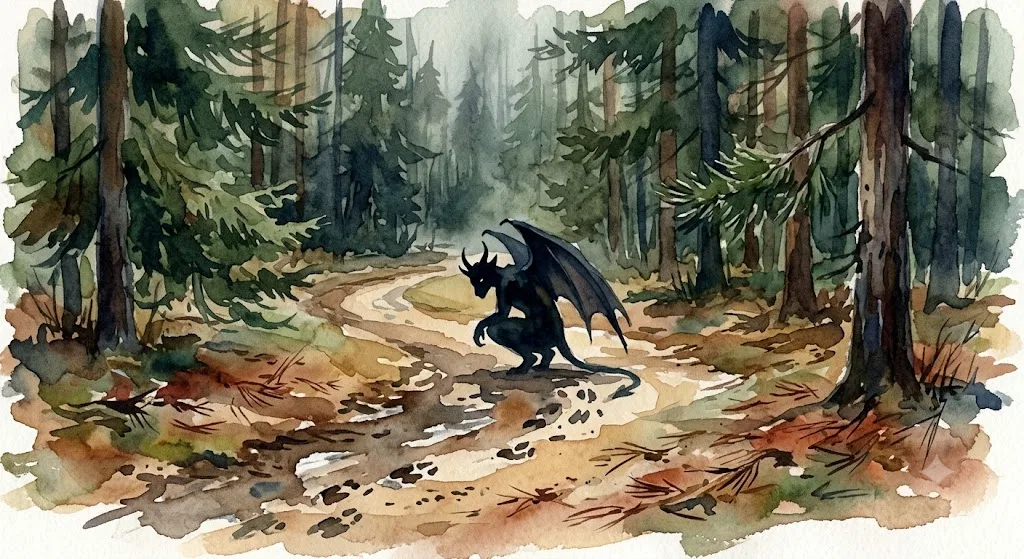
The Jersey Devil is New Jersey’s signature monster, but the best evidence for it points towards folklore, social panic and repeated misidentification rather than a real breeding animal in the Pine Barrens. The creature is usually described as a winged, hooved, shrieking beast with a horse-like or goat-like head, bat-like wings, claws and a tail. That image feels old, but the standard modern version was heavily shaped by newspaper reporting, local legend and showman promotion in the early twentieth century.[pinelandsalliance.org]pinelandsalliance.orgThe Jersey Devil and FolkloreThe most widely held belief about the origin of the Jersey Devil is that Mrs. Leeds, a resident of Estellvil…
That does not make the Jersey Devil unimportant. Quite the opposite: it explains why the legend has lasted. The story sits exactly where a powerful state monster should sit — in a real, vast, strange-looking landscape; attached to named families and places; repeated in newspapers; refreshed by hoaxes and sightings; and kept alive by local identity. The case for the Jersey Devil as biology is weak. The case for it as one of America’s most successful regional monster legends is extremely strong.
The classic creature description
Most readers now picture the Jersey Devil as a mismatched animal: part horse, part goat, part bat, part kangaroo, and part nightmare. Pinelands Preservation Alliance gives a familiar folk version in which Mrs Leeds, expecting her thirteenth child, cries out in frustration, “Let it be the devil!”, after which the newborn creature screeches, unfolds wings and escapes into nearby swamp or woodland.[pinelandsalliance.org]pinelandsalliance.orgThe Jersey Devil and FolkloreThe most widely held belief about the origin of the Jersey Devil is that Mrs. Leeds, a resident of Estellvil… Atlantic County’s public history page places the story in the Pine Barrens and notes familiar ingredients: Mother Leeds, a stormy night, a cursed or deformed child, hooves, wings and a creature fleeing into the pines.[atlanticcountynj.gov]atlanticcountynj.govJersey DevilJersey Devil
The details vary because this is not a stable species description. It is a folk image assembled over time. Some accounts lean horse-like, others goat-like. Some emphasise wings and hooves; others focus on screams, livestock attacks or impossible tracks in snow. New Jersey Humanities, drawing on historian Brian Regal’s public work, treats the “Mother Leeds” birth story as the popular legend while pointing to deeper political and religious roots behind the creature’s name and reputation.[njhumanities.org]njhumanities.orgOpen source on njhumanities.org.
That variation matters. If the Jersey Devil were being evaluated as an unknown animal, researchers would look for consistency: repeated descriptions of body size, gait, habitat, tracks, droppings, diet, nesting, breeding or remains. Instead, the creature behaves like a long-lived legend. It changes shape to fit the fears, jokes, newspaper styles and local expectations of each era.
What the evidence can and cannot show
The evidence can show that people have talked about, feared, joked about and occasionally claimed to see the Jersey Devil for generations. It can also show that newspapers and promoters played a major role in turning a regional Pine Barrens tale into a state-wide and then national monster. What the evidence does not show is the existence of a real, unclassified animal.
The strongest historical evidence is documentary rather than biological. The old “Leeds Devil” tradition appears in nineteenth-century writing before the modern “Jersey Devil” brand took over. In 1859, The Atlantic published W. F. Mayer’s “In the Pines”, a piece on the Pine Barrens that already mentions local devil lore and also supplies an early sceptical explanation: a supposed devil might have been a pine stump or a bear, made monstrous by darkness, drink, weather and imagination.[The Atlantic]theatlantic.comThe Atlantic In the PinesThe Atlantic In the Pines
The strongest biological evidence, by contrast, is missing. There is no accepted specimen, body, bone, feather, hide, DNA sample, nest, egg, breeding population, confirmed trackway or repeatable field evidence for a large winged mammal or hooved flying creature living in South Jersey. The Pine Barrens contain abundant wildlife, but official and conservation sources list recognisable animals — mammals, birds, reptiles, amphibians and fish — not a hidden dragon-like species. The New Jersey Pinelands Commission lists 39 mammal species, 299 bird species, 59 reptile and amphibian species and 91 fish species in the Pinelands.[NJ.gov]nj.govOpen source on nj.gov.
That gap does not prove that every witness lied. It does mean the claim “a real Jersey Devil animal exists” has not cleared the basic evidence threshold that ordinary wildlife claims usually require.

The 1909 panic made the monster famous
The most important evidence episode is the January 1909 sighting wave. This is where the Jersey Devil became more than a local tale. Reports of strange footprints, sightings and attacks spread through South Jersey, Philadelphia and the wider Delaware Valley. The Philadelphia Inquirer later described its 21 January 1909 front-page story, “WHAT-IS-IT VISITS ALL SOUTH JERSEY”, which reported hoof-like tracks in snow around Burlington and a mood “bordering on panic”.[Inquirer.com]inquirer.comThe Jersey Devil, the tale of a viral story from 110 years ago23 Jan 2019 — The first article in the Inquirer about the mysterious events…
Atlantic County’s history page treats that week as the moment when word-of-mouth legend became “authentic folk legend” through published police and newspaper accounts. It notes that reported sightings ranged across large distances, including Gloucester City and Trenton in 1909, and says roughly thirty sightings were reported in a single week, with newspaper coverage creating near panic.[atlanticcountynj.gov]atlanticcountynj.govJersey DevilJersey Devil
As evidence for a creature, the 1909 flap is messy. Snow tracks can be misread, copied, faked or linked after the fact. Newspaper competition can amplify rumours. Once a region expects a monster, ordinary sounds and shapes begin to look like clues. As evidence for folklore, however, the week is powerful. It shows how quickly a local monster can become a shared public event when tracks, weather, headlines, fear and entertainment line up.
The hoax problem is not a footnote
The Jersey Devil story has always had a show-business side. One of the clearest examples is the 1909 dime-museum hoax associated with Philadelphia promoter Norman Jeffries. Accounts of the episode describe a kangaroo altered with artificial wings or otherwise presented as the “real” Jersey Devil, sometimes advertised under an exotic label such as an “Australian vampire”.[Capital Century]capitalcentury.comOpen source on capitalcentury.com.
This does not mean every Jersey Devil sighting was invented by one promoter. It means the most famous evidence wave occurred in an environment where hoaxing, publicity and paid spectacle were part of the story. That is a serious problem for anyone treating the 1909 panic as straightforward zoological evidence.
It also helps explain why the creature’s image became so vivid. A vague “Leeds Devil” from Pine Barrens talk is one kind of legend. A winged, hooved, kangaroo-like monster promoted in newspapers and dime museums is another. The second version is easier to draw, sell, remember and repeat.
The Leeds family clue changes the story
The most persuasive historical interpretation does not start with a monster at all. It starts with the Leeds family of colonial West Jersey. Brian Regal’s “The Jersey Devil: A Political Animal”, published in NJS: An Interdisciplinary Journal, argues that the legend is tied to religious and political conflict involving Daniel Leeds, Quaker controversy, anti-Quaker pamphleteering, accusations of devilishness, and later satire involving Titan Leeds and Benjamin Franklin.[njs.libraries.rutgers.edu]njs.libraries.rutgers.eduIt was not unusual for political rivals to ridicule each other by calling them devils. Depictions in…Read more…
New Jersey Humanities summarises the same broad argument for a public audience: rather than a literal cursed birth, the deeper origin likely lies in colonial-era politics, Quaker disputes and Franklin’s mischievous treatment of a rival almanac publisher.[njhumanities.org]njhumanities.orgOpen source on njhumanities.org. A review of Regal and Frank J. Esposito’s The Secret History of the Jersey Devil likewise notes that one way Quakers denigrated Leeds was by labelling him a devil, placing the insult within a wider eighteenth-century tradition of religious and political demonisation.[IUScholarWorks]scholarworks.iu.eduScholar Works Daniel PerettiScholar Works Daniel Peretti
This is one of the most useful pieces of the evidence puzzle. The “devil” may have begun not as a creature report but as a social label: a way of marking a disliked family, printer, political opponent or religious outsider as dangerous. Over time, that label drifted into place-name lore, family folklore, children’s warnings and monster stories.
Why the Pine Barrens make the legend feel plausible
The Jersey Devil feels more believable because the Pine Barrens feel like the right kind of place for it. They are large, wooded, sandy, swampy and culturally distinctive. Atlantic County’s account stresses the old roads, cedar swamps, colonial place names and difficult travel conditions that shaped the region’s atmosphere.[atlanticcountynj.gov]atlanticcountynj.govJersey DevilJersey Devil Pinelands Preservation Alliance describes the Pine Barrens as home to ghost towns, historic sites and legends, including the Jersey Devil, as part of the Pinelands’ cultural identity.[pinelandsalliance.org]pinelandsalliance.orgOpen source on pinelandsalliance.org.
The ecology also matters. The Pinelands are not empty wasteland. They support many mammals, birds, reptiles, amphibians, fish and invertebrates, plus threatened and endangered species.[NJ.gov]nj.govOpen source on nj.gov. For a monster legend, that creates a useful tension. The woods are wild enough to produce real noises, tracks and fleeting encounters, but not so unexplored that a large unknown flying mammal could easily avoid every camera, roadkill event, hunter, biologist and hiker indefinitely.
Known animals can do some of the work. White-tailed deer, coyotes, foxes, bats, owls, bobcats and other species all live in or around the wider Pine Barrens ecosystem. Pinelands Preservation Alliance notes that large mammals in the region include white-tailed deer, coyotes, rare bobcats, beavers and river otters, along with foxes, bats, raccoons and smaller mammals.[pinelandsalliance.org]pinelandsalliance.orgMammals of the Pine BarrensMammals of the Pine Barrens None of those animals is the Jersey Devil. But at dusk, in snow, fog, headlights or panic, real animals can become strange very quickly.
The best sceptical explanations
The most convincing sceptical reading is not “nothing happened”. It is that different things happened and were gathered under one name.
A Jersey Devil report might begin with a real stimulus: tracks in snow, a large bird taking off, a fox scream, a deer seen at an odd angle, an owl in headlights, a coyote crossing a road, a bobcat glimpsed briefly, or a hoax object staged for attention. Once the witness or the local newspaper has the Jersey Devil in mind, the event gains a ready-made shape.
The main explanations are:
- Folklore inheritance: people already knew the Leeds Devil or Mother Leeds story, so ambiguous events could be fitted into an existing legend.
- Misidentified wildlife: Pine Barrens animals can make strange sounds, move suddenly, leave confusing tracks and appear distorted in poor light.
- Weather and tracks: snow can preserve, melt, distort or connect prints in misleading ways, especially when people are already looking for hoofmarks.
- Newspaper amplification: the 1909 panic shows how reports can multiply when editors, readers and witnesses feed one another’s expectations.
- Hoaxes and promotion: the kangaroo-and-wings episode shows that at least some “evidence” was manufactured for publicity.[Capital Century]capitalcentury.comOpen source on capitalcentury.com.
- Regional identity: a good monster gives a place a memorable symbol. The Jersey Devil belongs to South Jersey not because it is proven, but because it explains how the Pine Barrens feel in local imagination.
This combination is more persuasive than any single debunking. It allows for sincere witnesses, deliberate hoaxers, old folklore, real animals and media spectacle to coexist inside one evolving legend.
Modern sightings and photographs
Modern Jersey Devil reports continue, but they tend to repeat the same evidence problem: the story is vivid, while the proof is weak. A useful example came in 2015, when Dave Black of Little Egg Harbor claimed to have photographed a winged creature near a golf course. The image drew attention because it seemed to show a goat-like animal with wings, but sceptics quickly suggested it looked staged or like a taxidermied goat with costume wings; historian Brian Regal told The Guardian he was not impressed by the photo.[The Guardian]theguardian.comOpen source on theguardian.com.
This is the pattern that keeps the Jersey Devil alive but unconfirmed. A new image or claim appears; believers enjoy the possibility; sceptics point to staging, optical confusion or familiar animals; no physical follow-up settles the matter. The result is not proof, but renewal. The legend gets another pass through newspapers, websites, social media and local conversation.
For a claimed animal, that is frustrating. For a folk monster, it is almost ideal. The Jersey Devil does not need a clear photograph to survive. It needs just enough ambiguity for people to say, “What if?”
Why the legend still feels believable
The Jersey Devil endures because it has three kinds of strength even without biological proof. First, it has a strong setting. The Pine Barrens are real, distinctive and atmospheric, not a vague fantasy forest. Second, it has a layered origin: Mother Leeds, the Leeds family, Quaker conflict, Franklin satire, nineteenth-century Pine Barrens writing, 1909 newspapers and twentieth-century pop culture all give the story more texture than a simple campfire tale. Third, it has a repeatable evidence rhythm: tracks, screams, fleeting sightings, photographs, denials, hoaxes and arguments.
That rhythm is why the legend can feel plausible even when the case for a real creature is poor. The Jersey Devil is not supported by the kind of evidence that would establish a new animal. It is supported by the kind of evidence that establishes a durable legend: repeated testimony, local memory, printed scares, named places, hoaxes that become part of the lore, and a landscape that invites the imagination to finish what the eye cannot prove.

Verdict: real creature or real legend?
The fairest answer is that the Jersey Devil is a real New Jersey legend, not a demonstrated animal. Its evidence is strongest in folklore, newspaper history, local identity and the study of how monster panics spread. Its evidence is weakest where a biological claim most needs support: specimens, reliable tracks, bodies, DNA, clear photographs, ecological fit and repeatable observation.
That should not flatten the story. The Jersey Devil remains New Jersey’s most important monster because it does what the best regional cryptid traditions do. It turns a real place into a story people can enter. It gives the Pine Barrens a voice, a silhouette and a scream. It lets sceptics talk about hoaxes and misidentifications, believers talk about sightings, historians talk about the Leeds family, and travellers talk about what might be waiting beyond the trees.
Amazon book picks
Further Reading
Books and field guides related to Is the Jersey Devil a Real Creature?. Use these as the next step if you want deeper reading beyond the article.
The Secret History of the Jersey Devil
Evaluates the evidence and folklore behind the creature.
eBay marketplace picks
Marketplace Samples
Live-tested eBay searches with available results related to this page.


Endnotes
1.
Source: pinelandsalliance.org
Link:https://pinelandsalliance.org/learn-about-the-pinelands/pinelands-history-and-culture/the-jersey-devil-and-folklore/
Source snippet
The Jersey Devil and FolkloreThe most widely held belief about the origin of the Jersey Devil is that Mrs. Leeds, a resident of Estellvil...
2.
Source: njs.libraries.rutgers.edu
Link:https://njs.libraries.rutgers.edu/index.php/njs/article/download/13/12
Source snippet
It was not unusual for political rivals to ridicule each other by calling them devils. Depictions in...Read more...
3.
Source: inquirer.com
Link:https://www.inquirer.com/news/new-jersey/jersey-devil-history-fake-news-norman-jeffries-20190123.html
Source snippet
The Jersey Devil, the tale of a viral story from 110 years ago23 Jan 2019 — The first article in the Inquirer about the mysterious events...
4.
Source: atlanticcountynj.gov
Title: Jersey Devil
Link:https://www.atlanticcountynj.gov/government/government-information/history-of-atlantic-county/jersey-devil-fact-or-fiction
5.
Source: njhumanities.org
Link:https://njhumanities.org/humanities-to-go/psp/the-jersey-devil-in-myth-and-history/
6.
Source: nj.gov
Link:https://www.nj.gov/pinelands/reserve/anim/
7.
Source: pinelandsalliance.org
Link:https://pinelandsalliance.org/learn-about-the-pinelands/pinelands-overview/
8.
Source: pinelandsalliance.org
Link:https://pinelandsalliance.org/learn-about-the-pinelands/ecosystem/wildlife/
9.
Source: pinelandsalliance.org
Title: Mammals of the Pine Barrens
Link:https://pinelandsalliance.org/learn-about-the-pinelands/ecosystem/wildlife/mammal-portraits/
10.
Source: njs.libraries.rutgers.edu
Link:https://njs.libraries.rutgers.edu/index.php/njs/article/view/13/12
11.
Source: libraries.rutgers.edu
Title: exhibit running jersey devil
Link:https://www.libraries.rutgers.edu/news/exhibit-running-jersey-devil
12.
Source: libraries.rutgers.edu
Title: running jersey devil 1
Link:https://www.libraries.rutgers.edu/exhibits/running-jersey-devil-1
13.
Source: njs.libraries.rutgers.edu
Link:https://njs.libraries.rutgers.edu/index.php/njs/article/view/160/189
14.
Source: njs.libraries.rutgers.edu
Link:https://njs.libraries.rutgers.edu/index.php/njs/article/download/13/12/48
15.
Source: njs.libraries.rutgers.edu
Link:https://njs.libraries.rutgers.edu/index.php/njs/article/download/229/286
16.
Source: pinelandsalliance.org
Link:https://pinelandsalliance.org/tag/jersey-devil/
17.
Source: pinelandsalliance.org
Link:https://pinelandsalliance.org/category/topics/pinelands-animals/
18.
Source: pinelandsalliance.org
Link:https://pinelandsalliance.org/great-horned-owl/
19.
Source: nj.gov
Link:https://www.nj.gov/pinelands/infor/educational/facts/jerseydevil.shtml
20.
Source: nj.gov
Title: New Jersey Pinelands Commission | CMP
Link:https://www.nj.gov/pinelands/cmp/summary/
21.
Source: inquirer.com
Title: The Jersey Devil
Link:https://www.inquirer.com/archive/jersey-devil-20090522.html
22.
Source: inquirer.com
Link:https://www.inquirer.com/news/new-jersey/jersey-devil-history-fake-news-norman-jeffries-20190123.html%26outputType%3Dapp-web-view
23.
Source: gov.je
Title: ernment of Jersey Information and public services for the Island of Jersey
Link:https://www.gov.je/pages/default.aspx
24.
Source: jersey.com
Link:https://www.jersey.com/
25.
Source: theatlantic.com
Title: The Atlantic In the Pines
Link:https://www.theatlantic.com/magazine/archive/1859/05/in-the-pines/627265/
26.
Source: capitalcentury.com
Link:https://www.capitalcentury.com/1909.html
27.
Source: theguardian.com
Link:https://www.theguardian.com/us-news/2015/oct/17/jersey-devil-new-jersey-myth-photo-origin-story
28.
Source: scholarworks.iu.edu
Title: Scholar Works Daniel Peretti
Link:https://scholarworks.iu.edu/journals/index.php/jfrr/article/view/38708
29.
Source: Wikipedia
Link:https://en.wikipedia.org/wiki/Jersey
30.
Source: Wikipedia
Title: Jersey Devil
Link:https://en.wikipedia.org/wiki/Jersey_Devil
31.
Source: thevintagenews.com
Title: jersey devil
Link:https://www.thevintagenews.com/2018/02/19/jersey-devil/
32.
Source: cryptidz.fandom.com
Title: Jersey Devil
Link:https://cryptidz.fandom.com/wiki/Jersey_Devil
33.
Source: dvrbs.camdenhistory.com
Title: jersey devil
Link:https://dvrbs.camdenhistory.com/stories/jersey-devil/
Additional References
34.
Source: youtube.com
Title: History of a Legend: Mrs. Leeds and The Jersey Devil
Link:https://www.youtube.com/watch?v=Th-A6DA7c2Q
Source snippet
The Jersey Devil: inspired by the legend of Mother Leeds and the thirteenth child Folklore Th...
35.
Source: fws.gov
Link:https://www.fws.gov/sites/default/files/documents/Pinelands_NJ_PDF_508.pdf
36.
Source: youtube.com
Title: A Dark Legend Haunts New Jersey | Monster Quest: Origins
Link:https://www.youtube.com/watch?v=fPywtvbSuZY
Source snippet
History of a Legend: Mrs. Leeds and The Jersey Devil...
37.
Source: academia.edu
Link:https://www.academia.edu/15151370/The_Jersey_Devil_a_political_animal
38.
Source: facebook.com
Link:https://www.facebook.com/TheNaturalistsGuide/videos/according-to-folklore-the-new-jersey-pine-barrens-is-haunted-by-the-jersey-devil/791321950180823/
39.
Source: skepticalinquirer.org
Link:https://skepticalinquirer.org/2018/09/an-early-monster-with-an-older-history/
40.
Source: pineypower.com
Link:https://www.pineypower.com/animals.htm
41.
Source: facebook.com
Link:https://www.facebook.com/groups/385538572067406/posts/2011423762812204/
42.
Source: facebook.com
Link:https://www.facebook.com/johanegerkranspublic/posts/badabing-the-jersey-devil-is-a-folkloric-monster-according-to-the-legend-the-thi/1308624001065177/
43.
Source: instagram.com
Link:https://www.instagram.com/p/DPm5aqJDvUv/?hl=en
Topic Tree