Within NC Cryptids
The Real Animals Behind the Monsters
Many North Carolina cryptid reports become more interesting, not less, when bears, alligators, sturgeon and vanished cougars enter the picture.
On this page
- Black bears and upright shadows
- Alligators and river monsters
- Sturgeon, cougars and mistaken scale
Page outline Jump by section
Introduction
Many North Carolina monster stories become easier to understand when the state’s real animals are allowed back into the picture. Black bears can stand, shuffle, huff, raid barns and look alarmingly human-shaped in poor light. Alligators are native along the coast and can turn ordinary ponds, rivers and golf-course lagoons into instant “monster” settings. Sturgeon, large catfish, gar, bobcats, coyotes and the memory of vanished cougars all give local legends something solid to grow around. None of that proves Bigfoot, lake monsters or phantom panthers are real undiscovered species. It does explain why the stories feel rooted in North Carolina rather than simply imported from elsewhere.
The useful question is not “which animal explains every sighting?” It is “which real animal, habitat or memory makes this particular report plausible enough to survive?” In North Carolina, the answer often begins with a bear in the trees, a reptile in blackwater, a huge fish below a dam, or a cat that officially should not be there any more.
Why real wildlife makes better monster fuel than pure invention
North Carolina has the right mix for ambiguous animal stories: mountain forests, Piedmont farms, reservoirs, coastal swamps, pocosins, dark rivers and rapidly growing towns pressing into wildlife habitat. A creature report does not need a new species to become memorable. It needs a brief sighting, low light, a frightened witness, a partial track, a dead pet, a strange sound, or a familiar animal seen in an unfamiliar posture.
That is why the state’s monster lore often sits between folklore and field biology. A bear is not Bigfoot, but a black bear standing on its hind legs in a thicket can create the first sentence of a Bigfoot report. A bobcat is not a vampire beast, but a bobcat, coyote or feral dog moving through a frightened community can become the centre of a newspaper flap. A large catfish is not a lake serpent, but a heavy fish rolling near the surface of Lake Norman can make “Normie” feel less like a joke and more like a story with water under it.
Wildlife evidence also cuts both ways. It makes some reports less mysterious because known animals are available; it also makes them more interesting because the witnesses may have seen something real, just not what the legend later claimed. North Carolina’s black bears are now found across roughly 60% of the state’s land area after being reduced to remote areas and low numbers in the mid-20th century, which gives modern “large dark figure” reports a very different ecological backdrop from an empty-woods fantasy.[NC Wildlife]ncwildlife.govOpen source on ncwildlife.gov.
Black bears and upright shadows
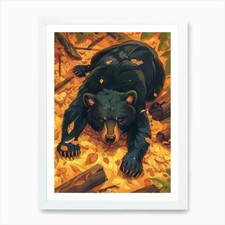
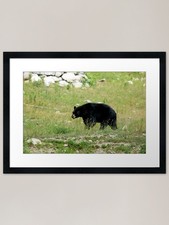
Black bears are the most important real animal behind North Carolina’s Bigfoot-style stories. The state has only one bear species, the American black bear, and it is now abundant in the mountains and coastal regions while becoming increasingly common in the Piedmont. Official wildlife material notes that North Carolina bears can occupy large home ranges and that their distribution has expanded dramatically since earlier population lows.[NC Wildlife]ncwildlife.govOpen source on ncwildlife.gov.
That matters for legends such as Knobby in Cleveland County and Sasquatch reports from wooded parts of the Piedmont and western North Carolina. The classic Bigfoot witness description is often a tall, dark, upright figure near a road, field edge or treeline. A black bear can rear up to look, smell, reach, warn, or reposition itself, and for a few seconds the silhouette can look less like an animal on four legs and more like a bulky figure with shoulders. In brush, fog, headlights or dusk, those seconds can become the whole story.
The bear explanation is strongest when reports involve:
- a large dark animal seen briefly near woods;
- a figure that appears upright only for a moment;
- no clear facial detail, hands, feet or stride pattern;
- a location within bear range or near expanding bear habitat;
- behaviour such as raiding food, moving through yards, breaking into outbuildings, or startling livestock.
The explanation is weaker when a report includes a sustained view of a long two-legged walk, detailed human-like anatomy, or multiple witnesses at close range. Even then, “weaker” does not mean “therefore Bigfoot”. It means the witness description contains features that a simple bear sighting does not neatly cover.
The return of bears also changes how older stories are heard. In some parts of North Carolina, people grew up during periods when bears were less visible near farms and towns. A bear in a place where a family did not expect one could be remembered not as “wildlife” but as “that thing behind the barn”. The legend grows in the gap between what the landscape can support and what the witness thought belonged there.
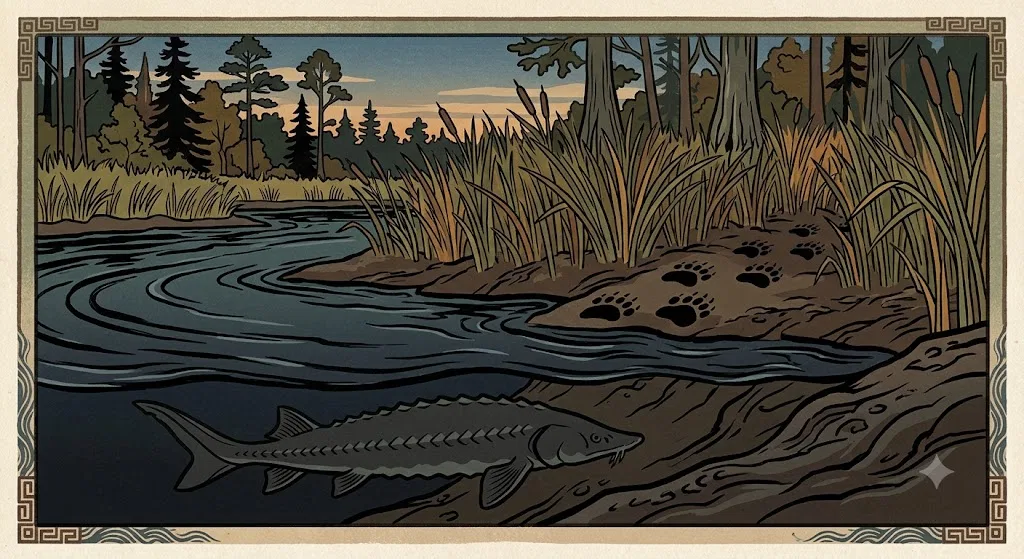
Alligators and river monsters
North Carolina’s coastal monster stories do not need to borrow all their atmosphere from swamps in other states. American alligators occur naturally in North Carolina in bay lakes, rivers, creeks, marshes, swamps and ponds, with patchy local populations along the coast. They are also seen in brackish water and occasionally on beaches, even though they must return to freshwater because they lack the salt glands of crocodiles.[NC Wildlife]ncwildlife.govOpen source on ncwildlife.gov.
That gives coastal “river monster” and “something in the water” reports a very practical starting point. A gator seen at night is mostly eyeshine, wake, back, tail and silence. In dark water, scale is hard to judge. A six-foot animal glimpsed from a bridge or boat ramp can become larger in memory, especially if the witness is surprised to see an alligator in North Carolina at all. The state sits near the northern edge of the species’ south-eastern range, so alligators feel both native and slightly uncanny: real enough for wildlife officers, unexpected enough for folklore.
The geography matters. Coastal Review has described North Carolina alligator populations as strongest in southern and coastal counties such as Brunswick, Columbus, Craven, New Hanover, Onslow and Pender, while earlier reporting placed healthy populations around the Croatan National Forest lakes as well as the southern coast.[Coastal Review]coastalreview.orghow many alligators in n chow many alligators in n c These are exactly the kinds of places where blackwater, marsh grass, boat landings and partly hidden animals make brief sightings easy to misread.
Alligators also explain why monster stories sometimes sharpen during warm months. Reports and public concern increase when alligators are more active and when more people are outside near water. Recent coastal reporting has noted rising calls to the N.C. Wildlife Helpline about alligator encounters as development and human activity bring people into closer contact with gator habitat.[Coastal Review]coastalreview.orghuman alligator encounters rise on nc coast as habitat is losthuman alligator encounters rise on nc coast as habitat is lost
This does not mean every river monster is an alligator. Logs, otters, swimming deer, large fish, floating vegetation and boat wakes can all produce false alarms. But in coastal North Carolina, the alligator is the rare “monster explanation” that is both dramatic and ordinary. The creature really is armoured, ancient-looking, capable of sudden movement, and present in the landscape.
Sturgeon, catfish and mistaken scale
Lake and river monsters often begin with a scale problem. Water hides most of the body, removes familiar reference points, and turns a rolling back or tail into a much larger imaginary creature. North Carolina has several real fish that can feed that problem, especially sturgeon, blue catfish and gar.
Sturgeon are particularly good at becoming monsters because they already look prehistoric. Lake sturgeon can live up to 150 years and grow more than six feet long and up to 200 pounds, according to the N.C. Wildlife Resources Commission.[NC Wildlife]ncwildlife.govOpen source on ncwildlife.gov. Atlantic sturgeon are even more startling in appearance and scale: North Carolina wildlife material describes sturgeon as anadromous fish that spend much of their lives in salt water but migrate into freshwater rivers to spawn, and notes that Atlantic sturgeon may grow to nine feet and weigh more than 500 pounds.[NC Wildlife]ncwildlife.govNC Wildlife Atlantic SturgeonNC Wildlife Atlantic Sturgeon
That does not make a sturgeon the automatic answer to every lake monster claim. Lake sturgeon were extirpated from North Carolina for more than 50 years and have been the subject of restoration efforts, including annual stocking in the French Broad River system since 2015.[NC Wildlife]ncwildlife.govNC Wildlife Lake SturgeonNC Wildlife Lake Sturgeon In other words, “it was a sturgeon” is more plausible in some river and restoration contexts than in every reservoir rumour. For Lake Norman’s Normie legend, sturgeon are often named in popular discussion, but the stronger everyday explanation is usually large catfish, gar, logs, wakes, or misjudged distance rather than a confirmed hidden sturgeon population.
Catfish deserve special attention because Lake Norman has a real history of large fish. The state’s freshwater fishing records list major catfish catches in North Carolina, including a 127-pound, 1-ounce blue catfish from the Roanoke River in 2021, while Lake Norman itself has produced notable record fish in other categories and has long been discussed as a place where very large catfish are possible.[NC Wildlife]ncwildlife.govnc freshwater fishing state recordsnc freshwater fishing state records Visit Lake Norman’s own tourism account of the Normie legend treats giant catfish as one of the main natural explanations for monster sightings in the lake, alongside debris and gar-like misidentifications.[Visit Lake Norman]visitlakenorman.orgVisit Lake Norman The Legend of Normie, the Lake Norman MonsterVisit Lake Norman The Legend of Normie, the Lake Norman Monster
Gar add another useful layer. Long-bodied fish near the surface can look serpentine, especially when only the head, back or wake is visible. Popular Normie explanations sometimes invoke alligator gar, but that claim needs caution: alligator gar are famous for their size, yet they are not naturally expected in Lake Norman in the way smaller native gar species may be. The U.S. Fish and Wildlife Service describes alligator gar as capable of reaching eight feet or more and weighing over 300 pounds, which explains their monster appeal, but size alone is not evidence that one is living in a North Carolina reservoir.[U.S. Fish and Wildlife Service]fws.govU.S. Fish and Wildlife Service All About Alligator GarU.S. Fish and Wildlife Service All About Alligator Gar
The best sceptical reading of lake monsters is therefore not “people saw nothing”. It is that water magnifies uncertainty. A real fish can be too large for a casual observer’s expectations, too briefly seen for identification, and too strange-looking to fit the witness’s mental picture of local wildlife.

Cougars, bobcats and the phantom cat problem
North Carolina’s cat-like monsters sit in a more emotionally charged category because they involve absence as much as presence. Cougars once belonged to the eastern landscape, but North Carolina wildlife officials state that cougars were extirpated from the state in the late 1800s and that there has been no substantiated evidence of wild cougars living anywhere in North Carolina since then. The agency still receives cougar and track reports, but investigations are nearly always traced to misidentified domestic or wild animals.[NC Wildlife]ncwildlife.goveastern cougareastern cougar
The U.S. Fish and Wildlife Service removed the eastern cougar from the federal endangered species list in 2018, calling the subspecies extinct and noting that there was no verifiable evidence, such as DNA, to the contrary.[U.S. Fish and Wildlife Service]fws.govU.S. Fish and Wildlife Service Long Extinct Eastern Cougar to be Removed fromU.S. Fish and Wildlife Service Long Extinct Eastern Cougar to be Removed from That official conclusion is central to North Carolina’s phantom panther stories: people are not inventing the idea of a large native cat from nowhere, but they are often applying an old ecological memory to modern sightings that do not meet evidence standards.
Bobcats are the more grounded cat explanation. They are found across a wide range of North Carolina habitats, with wooded areas of the Coastal Plain and mountains supporting the largest numbers. Adults are roughly twice the size of a domestic cat, standing about 20 to 30 inches at the shoulder and weighing 10 to 40 pounds.[NC Wildlife]ncwildlife.govOpen source on ncwildlife.gov. That is much smaller than a cougar, but a bobcat seen at night, crossing a road, carrying prey, or moving through brush can look larger than it is. Its short tail may not be noticed. Its spotted or grey-brown coat may be interpreted as “panther”, “wildcat” or simply “not a normal cat”.
The Beast of Bladenboro shows how this works in practice. The 1953–54 flap in Bladen County involved dead dogs and livestock, frightening reports of a cat-like creature, and conflicting descriptions ranging from panther-like to bear-like. Later accounts include a bobcat being trapped and killed after officials suggested the beast had been found, though doubts remained about whether a small bobcat could account for all the reported injuries and panic.[Wikipedia]WikipediaBeast of BladenboroBeast of Bladenboro
The important point is not that the Beast was definitely a bobcat. It is that the available animal categories were unstable from the beginning. Witnesses and hunters reached for “panther”, “wildcat”, “wolf”, “bear”, “bobcat” and “coyote” because the evidence was fragmentary: wounds, sounds, tracks, brief sightings and rumour. Once newspapers added “vampire” language, a possible predator incident became a monster tradition.
Coyotes, dogs and the sound of something wrong
Coyotes are often overlooked in North Carolina monster discussions because they are now familiar, but they are useful for explaining parts of animal-attack folklore. They can prey on outdoor cats and small unleashed dogs, and they may confront larger dogs as territorial rivals, especially around mating and pup-rearing periods. N.C. Wildlife guidance says coyotes view outdoor cats and small unleashed dogs as prey, while larger dogs may be treated as threats to territory or pups.[NC Wildlife]ncwildlife.govNC Wildlife CoyotesNC Wildlife Coyotes
That matters for stories built around dead pets, missing animals, night sounds and “something killing dogs”. A coyote does not look like a vampire beast, but a string of pet attacks can make a community imagine a single larger predator. If different animals are involved across several nights, the legend may still compress them into one creature because a single monster is easier to tell than a messy pattern of ordinary predation, scavenging and fear.
Coyotes also complicate canine sightings in eastern North Carolina, where red wolves survive in a limited recovery context. The red wolf is larger, taller and heavier than a coyote, with a broader muzzle, according to N.C. Wildlife.[NC Wildlife]ncwildlife.govOpen source on ncwildlife.gov. That does not make red wolves a blanket explanation for monster reports, especially because their wild presence is geographically restricted and closely managed. It does show why “wolf-like” claims in the state need careful location, scale and evidence before they can be interpreted.
For folklore, sound may be as important as sight. Coyotes yip, bark and howl; bobcats can produce harsh cries; foxes scream; barred owls call from dark woods; and domestic animals under stress make noises witnesses may not recognise. Once a community expects a monster, ordinary night sounds become supporting testimony.
When the animal explanation fits — and when it does not
Real wildlife explanations are strongest when they match the place, behaviour and physical details of a report. A coastal pond sighting of a ridged back and eyeshine has a better alligator explanation than a mountain ridge sighting. A dark upright figure in bear country has a better bear explanation than a phantom-cat explanation. A rolling shape in Lake Norman has a better fish, debris or wake explanation than a giant reptile explanation.
A useful test is to ask five simple questions:
- Is the animal known from that region? Black bears and bobcats are widespread enough to explain many wooded sightings; alligators are much more regionally limited.
- Was the sighting brief or partial? The shorter the encounter, the more likely scale, posture and species were misread.
- Did the behaviour fit a real animal? Raiding food, crossing roads, defending nests, hunting pets, swimming at the surface and avoiding people are all normal behaviours that can look strange in the wrong context.
- Did later retellings add details? Monster stories often become more specific after newspapers, local talk or tourism give the creature a name.
- Is there physical evidence? Clear photographs, DNA, verified tracks, carcasses or expert-confirmed remains carry more weight than memory alone.
This approach keeps the story interesting without pretending all reports are equal. Some claims are probably misidentified wildlife. Some are folklore attached to a real place. Some are hoaxes or publicity. Some may involve genuine animal encounters where the species remains uncertain because the evidence was never good enough.
Why North Carolina keeps the monsters anyway
The real animals do not kill the legends. They give them roots. A state with no bears, no alligators, no large fish, no bobcats and no memory of cougars would have to invent more from scratch. North Carolina does not. Its wildlife already supplies dark shapes, sudden splashes, screams in the woods, pet predation, huge fish stories and unnerving tracks at the edge of human settlement.
That is why the best North Carolina monster stories remain half-wild. Knobby makes more sense in a state where bears can appear upright in expanding habitat. Normie makes more sense in a deep reservoir with large fish, murky water and a tourism culture happy to nickname the unknown. The Beast of Bladenboro makes more sense in a coastal plain county where bobcats, coyotes, dogs, rumour and newspaper drama could collide. Phantom panthers make more sense in a landscape that once had cougars and still has people who feel the big cat never quite left.
The sceptical answer is not always the dull answer. In North Carolina, the real wildlife behind the monsters is often the most revealing part of the tale: not proof of hidden beasts, but proof that folklore grows best where the natural world is still capable of surprising people.
Amazon book picks
Further Reading
Books and field guides related to The Real Animals Behind the Monsters. Use these as the next step if you want deeper reading beyond the article.
Bear Attacks
Explains black bear behaviour that often feeds monster misidentifications.
Cryptozoology A To Z
Places North Carolina monster claims within broader mystery-animal traditions.
Field Guide To Bigfoot, Yeti, & Other Mystery Primates Worldwide
Provides context for creature reports often explained by wildlife.
Monsters of the Gévaudan
Shows how real animals and folklore merge into monster traditions.
eBay marketplace picks
Marketplace Samples
Live-tested eBay searches with available results related to this page.


Endnotes
1.
Source: Wikipedia
Title: Beast of Bladenboro
Link:https://en.wikipedia.org/wiki/Beast_of_Bladenboro
2.
Source: Wikipedia
Title: Eastern cougar
Link:https://en.wikipedia.org/wiki/Eastern_cougar
3.
Source: Wikipedia
Title: Alligator River National Wildlife Refuge
Link:https://en.wikipedia.org/wiki/Alligator_River_National_Wildlife_Refuge
4.
Source: Wikipedia
Title: Wampus cat
Link:https://en.wikipedia.org/wiki/Wampus_cat
5.
Source: Wikipedia
Link:https://en.wikipedia.org/wiki/Bobcat
6.
Source: ncwildlife.gov
Link:https://www.ncwildlife.gov/species/black-bear
7.
Source: ncwildlife.gov
Link:https://www.ncwildlife.gov/media/1403/open
8.
Source: ncwildlife.gov
Link:https://www.ncwildlife.gov/species/alligator-american
9.
Source: coastalreview.org
Title: how many alligators in n c
Link:https://coastalreview.org/2013/10/how-many-alligators-in-n-c/
10.
Source: coastalreview.org
Title: gators more frequent appearances make splash along coast
Link:https://coastalreview.org/2024/10/gators-more-frequent-appearances-make-splash-along-coast/
11.
Source: coastalreview.org
Title: human alligator encounters rise on nc coast as habitat is lost
Link:https://coastalreview.org/2026/05/human-alligator-encounters-rise-on-nc-coast-as-habitat-is-lost/
12.
Source: ncwildlife.gov
Link:https://www.ncwildlife.gov/species/lake-sturgeon
13.
Source: ncwildlife.gov
Title: NC Wildlife Atlantic Sturgeon
Link:https://www.ncwildlife.gov/media/3294/open
14.
Source: ncwildlife.gov
Title: NC Wildlife Lake Sturgeon
Link:https://www.ncwildlife.gov/media/3322/open
15.
Source: ncwildlife.gov
Title: nc freshwater fishing state records
Link:https://www.ncwildlife.gov/fishing/state-fishing-records/nc-freshwater-fishing-state-records
16.
Source: visitlakenorman.org
Title: Visit Lake Norman The Legend of Normie, the Lake Norman Monster
Link:https://www.visitlakenorman.org/blog/stories/post/the-legend-of-normie-the-lake-norman-monster/
17.
Source: fws.gov
Title: U.S. Fish and Wildlife Service All About Alligator Gar
Link:https://www.fws.gov/story/all-about-alligator-gar
18.
Source: ncwildlife.gov
Title: eastern cougar
Link:https://www.ncwildlife.gov/species/eastern-cougar
19.
Source: fws.gov
Title: U.S. Fish and Wildlife Service Long Extinct Eastern Cougar to be Removed from
Link:https://www.fws.gov/press-release/2018-01/long-extinct-eastern-cougar-be-removed-endangered-species-list-correcting
20.
Source: fws.gov
Link:https://www.fws.gov/species/eastern-cougar-puma-concolor-couguar
21.
Source: ncwildlife.gov
Link:https://www.ncwildlife.gov/species/bobcat
22.
Source: ncwildlife.gov
Title: NC Wildlife Coyotes
Link:https://www.ncwildlife.gov/media/1980/open
23.
Source: ncwildlife.gov
Link:https://www.ncwildlife.gov/species/red-wolf
24.
Source: facebook.com
Link:https://www.facebook.com/NCWildlifeFederation/photos/longnose-gar-are-spawning-in-carolina-lakes-swamps-rivers-this-species-100-milli/3241297609234118/
25.
Source: ncwildlife.gov
Link:https://www.ncwildlife.gov/media/1803/download?attachment=
26.
Source: ncwildlife.gov
Link:https://www.ncwildlife.gov/media/1977/download?attachment=
27.
Source: ncwildlife.gov
Link:https://www.ncwildlife.gov/species/coyote
28.
Source: fisheries.noaa.gov
Title: atlantic sturgeon
Link:https://www.fisheries.noaa.gov/species/atlantic-sturgeon
29.
Source: nationalzoo.si.edu
Link:https://nationalzoo.si.edu/animals/bobcat
30.
Source: ashevilleterrors.com
Title: The Beast of Bladenboro
Link:https://ashevilleterrors.com/the-beast-of-bladenboro/
31.
Source: wherethedogwoodblooms.com
Title: the beast of bladenboro
Link:https://www.wherethedogwoodblooms.com/the-beast-of-bladenboro/
32.
Source: nature.org
Link:https://www.nature.org/en-us/get-involved/how-to-help/animals-we-protect/bobcat/
33.
Source: appalachiancryptid.com
Title: Knobby | Sightings & Case File
Link:https://appalachiancryptid.com/cryptid/knobby-cryptid
34.
Source: fws.gov
Link:https://www.fws.gov/species/lake-sturgeon-acipenser-fulvescens
35.
Source: fws.gov
Link:https://www.fws.gov/refuge/alligator-river
36.
Source: visitlakenorman.org
Title: visitors guide to fishing in lake norman
Link:https://www.visitlakenorman.org/blog/stories/post/visitors-guide-to-fishing-in-lake-norman/
37.
Source: coastalreview.org
Title: atlantic sturgeon protecting an ancient giant
Link:https://coastalreview.org/2012/04/atlantic-sturgeon-protecting-an-ancient-giant/
38.
Source: ncwf.org
Title: coastal plain
Link:https://ncwf.org/blog/coastal-plain/
39.
Source: aark.org
Title: eastern cougar
Link:https://www.aark.org/eastern-cougar
40.
Source: wildlifemanagement.institute
Title: Black Bears
Link:https://wildlifemanagement.institute/node/1036
Additional References
41.
Source: youtube.com
Title: Beast of Bladenboro: The FULL Story of North Carolina’s Vampire Cat
Link:https://www.youtube.com/watch?v=ClKWJARhpDA
Source snippet
WATCH: Mystery creature spotted by boat captain leaves viewers guessing...
42.
Source: tn.gov
Link:https://www.tn.gov/twra/wildlife/mammals/large/cougars.html
43.
Source: federalregister.gov
Link:https://www.federalregister.gov/documents/2018/01/23/2018-01127/endangered-and-threatened-wildlife-and-plants-removing-the-eastern-puma-cougar-from-the-federal-list
44.
Source: facebook.com
Link:https://www.facebook.com/theAVLtoday/posts/the-us-fish-and-wildlife-service-has-officially-declared-the-eastern-cougar-also/2025828877695188/
45.
Source: facebook.com
Link:https://www.facebook.com/NorthCarolinaStateParks/posts/wildlifewednesday-theyre-hereyou-just-rarely-see-them-across-our-state-bobcats-q/1359467049544968/
46.
Source: facebook.com
Link:https://www.facebook.com/groups/31913894334890917/posts/36136367369310238/
47.
Source: facebook.com
Link:https://www.facebook.com/groups/31913894334890917/posts/36775100218770280/
48.
Source: instagram.com
Link:https://www.instagram.com/p/DXnH5OBEdiT/
49.
Source: townofblackmountain.org
Link:https://www.townofblackmountain.org/269/Black-Bear-Ecology
50.
Source: outerbanks.com
Link:https://www.outerbanks.com/alligator-river-national-wildlife-refuge.html
Topic Tree