Why Washington Became Bigfoot Country
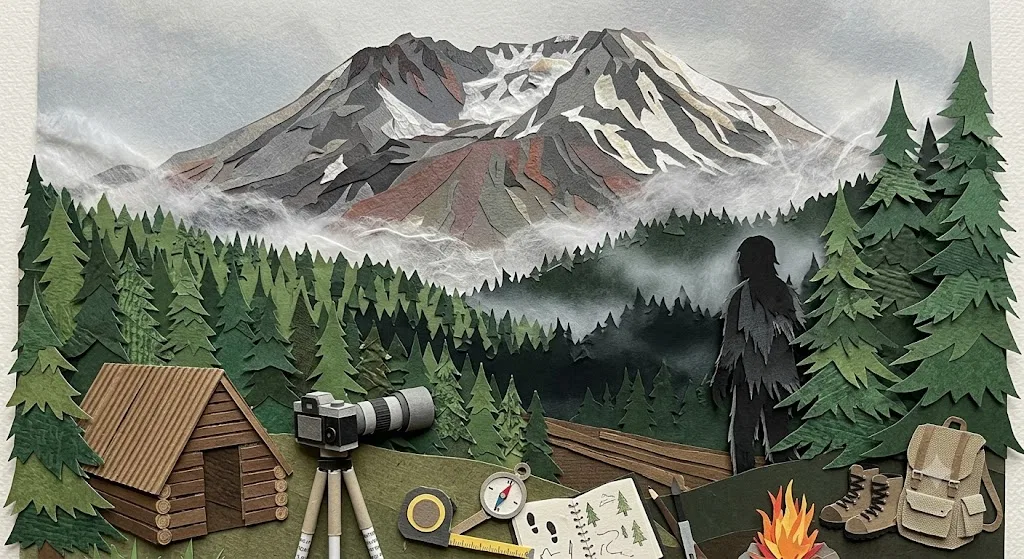
Washington is one of the strongest state-level homes of American monster folklore, but its cryptid reputation rests less on one “proof” than on a durable mix of forest geography, Indigenous and settler storytelling, newspaper-era sensation, local tourism, and repeated modern sighting claims.
Page outline Jump by section
Introduction
The state’s cryptid map also includes lake and sea monsters, especially the Lake Chelan Dragon and Salish Sea serpent traditions, plus newer pop-culture creatures such as Batsquatch. Some stories are old folklore, some are newspaper inventions, some are tourist-friendly jokes, and some are sincere reports by people who believe they saw something they cannot explain.
Why Washington became Bigfoot country
Washington gives the Bigfoot story almost everything it needs: enormous forests, steep volcanic terrain, misty valleys, logging roads, remote watersheds and enough real wildlife to make misidentification plausible. The Washington Department of Fish and Wildlife describes black bears as animals of “forested habitats” across the state, from coastal rainforests to dry woodland on the eastern slopes of the Cascades, and notes that they can also use clear cuts and open habitat edges — exactly the mixed landscapes where brief, distant sightings often happen.[WDFW]wdfw.wa.govOpen source on wa.gov.
That does not mean every Bigfoot report is “just a bear”. It means Washington has the ecological ingredients for uncertainty: poor visibility, large mammals, rough ground, startled witnesses, and fleeting views at dawn, dusk or through trees. WDFW’s public incident system for predatory wildlife and black bear reports also shows how often ordinary residents must interpret sudden wildlife encounters and report cougars, wolves, grizzlies and bears to officials.[WDFW]wdfw.wa.govOpen source on wa.gov.
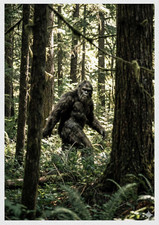
The name “Sasquatch” also ties the modern monster to older Pacific Northwest traditions, though that link should be handled carefully. A 1976 paper by anthropologist Wayne Suttles described “sasquatch” as an anglicisation of a Coast Salish word introduced to non-Indigenous audiences in the 1920s, while Smithsonian Magazine notes that Pacific Northwest Indigenous stories long preceded the 20th-century media Bigfoot boom.[LingPapers]lingpapers.sites.olt.ubc.caLing Papers So~ Questions About The Sasquatch 1 Wayne SuttlesLing Papers So~ Questions About The Sasquatch 1 Wayne Suttles The modern creature, then, is not simply an Indigenous being carried forward unchanged. It is a layered figure: part regional oral tradition, part settler “wild man” tale, part newspaper monster, part roadside attraction, and part unresolved witness claim.
The Mount St Helens story that helped define the legend
If one Washington case sits at the centre of Bigfoot history, it is the 1924 Ape Canyon incident near Mount St Helens. In the common version, a group of prospectors said ape-like creatures attacked their cabin with rocks after one of the men shot at a creature near a canyon. The story spread through newspapers as the “mountain devils” or “ape men” of the Mount St Helens region, and the canyon’s later name helped lock the event into Bigfoot lore. A Washington State Library-hosted PDF connected with Marc Myrsell’s research preserves period newspaper material around the “Mountain Devil” story, including the way the tale was reported and repeated.[WA Secretary of State]sos.wa.govOpen source on wa.gov.
The strongest reason the Ape Canyon tale endures is not that it offers strong proof. It endures because it has all the ingredients of a frontier monster story: isolated miners, gunfire, thrown stones, huge footprints, a hard-to-reach ravine, and official investigation. Later summaries note that Forest Service personnel found no convincing physical evidence and considered the footprints easy to fake, which makes the case a useful example of how Washington’s Bigfoot tradition often sits between sincere testimony and sceptical counter-explanation.[Wikipedia]WikipediaApe CanyonApe Canyon
The Mount St Helens setting also changed after the 1980 eruption. Today, the surrounding landscape is known for volcanic geology, trails and recreation as much as monster lore. The US Forest Service describes the Mount St Helens National Volcanic Monument and surrounding Gifford Pinchot National Forest as a rugged recreation area of lava flows, forest, steep backcountry and year-round access points.[US Forest Service]fs.usda.govmount st helens national volcanic monument surrounding areamount st helens national volcanic monument surrounding area In other words, the legend is attached to a real landscape that already feels dramatic without needing any creature to appear.
Ape Cave is a good example of how natural history and monster branding can become tangled. Washington Trails Association explains that Ape Cave is a lava tube formed nearly 2,000 years ago and says its name came not directly from Bigfoot, but from the “Mount St Helens Apes”, a local group of explorers connected with the cave’s early recreational history.[Washington Trails Association]wta.orgOpen source on wta.org. The result is very Washington: a genuine volcanic feature, a playful ape name, and a nearby Bigfoot tradition all feeding one another.

Where reports cluster, and what that does and does not prove
Modern Washington Bigfoot interest often points to databases of sighting reports, especially the Bigfoot Field Researchers Organization. Its Washington listing includes recent reports from counties such as Skamania, Jefferson and Chelan, while its broader database presents itself as an archive of submitted sightings and related reports.[BFRO]bfro.netstate listing.aspstate listing.asp These reports are useful for mapping folklore and witness culture, but they are not the same as verified zoological records.
The clusters make cultural and geographic sense. Skamania County and the Gifford Pinchot National Forest are deeply tied to the Mount St Helens tradition. Whatcom County, near Mount Baker and the Canadian border, has its own Sasquatch refuge identity. The Olympic Peninsula, including the Forks area, draws on rainforest remoteness and Bigfoot tourism. Eastern Washington sometimes enters the conversation through reports in large, less populated country where distance, dark timber and wildlife corridors make stories feel plausible to believers.
The key reader question is whether lots of reports make the creature likely. They make the legend strong, but not necessarily the animal. Reports cluster where people go hiking, hunting, logging, camping and driving through forest roads. They also cluster where a place already has a Bigfoot reputation, because people are primed to report ambiguous sights, sounds and tracks through that lens. Axios Seattle reported in 2023 that Washington led the United States in one analysis based on BFRO sighting data, with 710 reports, but even the quoted naturalist and cryptozoologist David George Gordon described himself as a “fence sitter” who would not “go to court” on the evidence.[Axios]axios.comBigfoot loves Washington too, sightings suggestBigfoot loves Washington too, sightings suggest
That ambivalence is the honest centre of the Washington story. The volume of claims is culturally important. It tells us Washington is a national capital of Bigfoot belief. It does not, by itself, establish a breeding population of large unknown primates.
The counties that tried to protect Sasquatch
Washington’s Bigfoot folklore is unusually visible in local law. Skamania County passed Ordinance No. 69-01 on 1 April 1969, an official ordinance concerning the protection of Sasquatch-like creatures. A facsimile and legal discussion are noted by the University of Wisconsin Law Library, while the Courthouse Libraries BC legal knowledge base points out that the ordinance was published in the local newspaper and treated as an official act rather than a mere April Fool’s joke.[University of Wisconsin Law School]law.wisc.eduThe Emergency Sasquatch OrdinancThe Emergency Sasquatch Ordinanc
The ordinance is often retold as “it is illegal to kill Bigfoot”, but its practical purpose was also public safety. Skamania County Chamber of Commerce says the late-1960s flood of reported sightings brought investigators and hunters into the area, and the county wanted to prevent armed enthusiasts from shooting either the alleged creature or a human being mistaken for one.[skamania.org]skamania.orgsasquatch sightings 2sasquatch sightings 2 KUOW gives the same practical framing: the county was concerned about Bigfoot hunters coming through with cameras and guns, and the rule could carry a fine and jail time.[kuow.org]kuow.orgWhy you shouldn't mess with Bigfoot in Washington stateWhy you shouldn't mess with Bigfoot in Washington state
Whatcom County followed with a Sasquatch protection and refuge resolution. The county document states plainly that “Whatcom County is hereby declared a Sasquatch protection and refuge area” and asks citizens to recognise that status.[documents.whatcomcounty.us]documents.whatcomcounty.usOpen source on whatcomcounty.us. Grays Harbor County later joined the pattern in 2022, after a student-led effort, with a resolution asking residents to recognise and honour the county as a Sasquatch protection and refuge area, though local reporting noted that it added no legal penalty.[KXRO News Radio]kxro.comOpen source on kxro.com.
These measures are best understood as a blend of folklore, civic humour, safety concern and local identity. They do not prove official belief in an undiscovered species. They show how thoroughly Sasquatch has become part of Washington’s public imagination.
Lake monsters: Chelan’s dragon and the deep-water problem
Washington’s best-known lake monster is the Lake Chelan Dragon, sometimes described in popular accounts as a winged alligator-snake or serpentine creature living in the state’s deepest lake. The setting is doing a lot of the work. Washington State Parks explains that Lake Chelan was carved by ice to a maximum depth of 1,486 feet, with the deepest point lying below sea level.[Washington State Parks]parks.wa.govOpen source on wa.gov. A Washington Department of Natural Resources presentation similarly identifies Lake Chelan as 1,486 feet deep and one of the deepest freshwater lakes in the United States.[Department of Natural Resources]dnr.wa.govDepartment of Natural Resources Plumbing the depths of Washington's deepest lakeDepartment of Natural Resources Plumbing the depths of Washington's deepest lake
That depth makes the legend feel intuitive: if any Washington lake could hide something strange, readers naturally imagine it would be Chelan. Popular travel and folklore accounts describe a creature with an alligator-like body, serpent head, long tail and bat-like wings, and Seattle Magazine places it among the Northwest’s mythical lake monsters.[Seattle magazine]seattlemag.comSeattle magazine The Mythical Lake Monsters of the NorthwestSeattle magazine The Mythical Lake Monsters of the Northwest Some modern retellings cite an 1892 attack story near Stehekin, though many online versions repeat one another and should be treated cautiously unless tied to a specific archival newspaper page.[Lake Chelan Pirate Fest]lakechelanpiratefest.comOpen source on lakechelanpiratefest.com.
The sceptical reading is straightforward. Deep water encourages mystery, but depth alone is not evidence of a large unknown animal. Lake monster stories often grow around long, cold, visually deceptive bodies of water where logs, waves, fish, otters, swimming deer, birds, boats and poor distance judgement can create odd impressions. Chelan’s dragon is therefore best read as a local legend attached to a genuinely dramatic lake, not as a documented zoological case.
Sea serpents in the Salish Sea
Washington also shares in the wider Pacific Northwest sea-serpent tradition, especially through the Salish Sea and the cross-border Cadborosaurus, often called “Caddy”. This creature is more strongly associated with British Columbia’s Cadboro Bay, but reports and carcass claims have ranged through the Pacific coast, including Washington-adjacent waters and Puget Sound folklore.
Cascade PBS notes that sea-serpent ideas in the Salish Sea long predate modern sports-team branding and that Indigenous artwork and performance traditions have included serpent-like water beings.[Cascade PBS]cascadepbs.orgCascade PBSBefore the Kraken, what lurked in the Salish Sea?Cascade PBSBefore the Kraken, what lurked in the Salish Sea? Modern Cadborosaurus claims, however, are a separate cryptozoological tradition shaped heavily by 20th-century newspapers, books and disputed carcass interpretations. Zoology writer Darren Naish’s review of the Cadborosaurus carcass material is sharply sceptical, arguing that many “Caddy” cases are better understood as a mixed bag of misidentified known animals, decomposed carcasses and stories pushed into one monster category.[Tetrapod Zoology]tetzoo.comTetrapod Zoology The Case of the Cadborosaurus Carcass: a ReviewTetrapod Zoology The Case of the Cadborosaurus Carcass: a Review
This is a useful distinction for Washington readers. Indigenous sea-being traditions are not simply “cryptid sightings” in modern terms; they belong to particular communities, stories and ceremonial contexts. Modern sea-serpent reports, by contrast, usually ask a different question: did someone see an unknown animal, a known animal in unusual conditions, or a story that grew in the telling? In Washington’s waters, seals, sea lions, whales, floating logs, wakes and decomposing sharks all offer more ordinary explanations before a new species is needed.
Batsquatch and the rise of playful local monsters
Not every Washington cryptid has deep roots. Batsquatch is a newer, more obviously pop-cultural creature: usually imagined as a winged, bat-like Sasquatch associated with Mount St Helens after the 1980 eruption. Washington Trails Association treats Batsquatch in a light, trail-themed way, describing it as a winged beast “unique to Washington” and pairing it with hiking suggestions rather than presenting it as a serious wildlife claim.[Washington Trails Association]wta.orgOpen source on wta.org.
That does not make Batsquatch worthless as folklore. It shows how Washington’s monster culture keeps generating new forms. Once a region is known for Sasquatch, it becomes easy to create variants: volcanic Sasquatch, winged Sasquatch, lake Sasquatch, road-crossing Sasquatch, festival Sasquatch. The creature works because the audience already understands the base myth.
Batsquatch also reveals a broader pattern. Some cryptids begin as alleged encounters and only later become mascots. Others begin almost as mascots and then pick up sighting lore afterwards. Washington has both kinds, and the difference matters. Ape Canyon is a witness-and-newspaper case that became folklore. Batsquatch is closer to a folklore remix that fits the region’s volcanic landscape and love of strange roadside stories.
Hoaxes, mistakes and why the legend survives anyway
The strongest sceptical explanations for Washington cryptids are not complicated. Bigfoot reports may involve bears, humans, shadows, stumps, elk, hoaxes, distorted memory, exaggerated tracks or sounds from known animals. Lake and sea monsters may involve floating timber, waves, fish, seals, sea lions, whales, decomposed sharks or stories adapted from older monster traditions. The absence of confirmed bones, bodies, clear DNA or repeatable scientific evidence remains a major problem for the idea of a large breeding primate in Washington.
The hoax problem is especially important because Bigfoot’s national media history includes famous fakery. Smithsonian Magazine describes how the 1958 California footprint story helped transform older Sasquatch traditions into a mass-media Bigfoot sensation, and how the Wallace family later said Ray Wallace’s tracks were a prank.[Smithsonian Magazine]smithsonianmag.comOpen source on smithsonianmag.com. That California case does not debunk every Washington report, but it shows how easily footprints can become powerful cultural evidence even when their origin is human.
Still, scepticism does not erase the legend’s value. Washington’s cryptids survive because they give people a vivid way to talk about wilderness, danger, humility and uncertainty. A dark shape crossing a logging road is more memorable as Sasquatch than as “unidentified animal”. A deep lake feels deeper when it has a dragon. A volcanic cave feels stranger when its name brushes against ape-men. These stories turn landscape into narrative.
They can also have real-world consequences. In December 2024, two men from Oregon died from apparent exposure after going missing during a Sasquatch search in the Gifford Pinchot National Forest, with reporting describing snow, rain, freezing temperatures, rough terrain and a large search effort.[The Times]thetimes.co.ukThe Times Two hunters searching for Bigfoot are found dead in forestThe Times Two hunters searching for Bigfoot are found dead in forest The lesson is not that monster stories are bad. It is that Washington’s cryptid country is real wilderness first and folklore country second.
How to read Washington cryptid stories well
A good Washington cryptid account usually answers several practical questions before asking the reader to believe anything extraordinary. Where exactly did it happen? Was it in known bear, cougar or elk habitat? Was the witness alone, tired, frightened or seeing the figure at distance? Are there photographs, casts, recordings or only a retold story? Did the account appear in a newspaper at the time, or only in later folklore collections? Is the story tied to tourism, a festival, a hoax tradition or a local law?
The most useful approach is to sort stories into categories:
- Folklore and cultural tradition: stories that matter because communities have told them over time, not because they function as wildlife reports.
- Eyewitness claims: sincere accounts of something seen, heard or found, but not independently verified.
- Media legends: newspaper, radio, television or internet stories that may amplify weak evidence.
- Tourism and civic identity: festivals, ordinances, mascots and trail lore that celebrate the mystery.
- Plausible misidentification: reports that fit known animals, landscape effects or human activity.
- Hoax or likely hoax: cases where footprints, photographs or stories show signs of deliberate manufacture.
Washington’s monster tradition is strongest when read through all of these lenses at once. Bigfoot is not just a question of whether a giant primate exists. It is also a story about Mount St Helens, rainforest roads, county governments, schoolchildren petitioning for refuge status, hikers in remote country, and a region that has made room for mystery without always pretending mystery is proof.
Washington’s cryptid identity in one sentence
Washington’s cryptid identity is the Pacific Northwest wilderness turned into story: Bigfoot in the timber, dragons in glacial water, sea serpents in the Salish Sea, and a long-running argument between wonder and evidence that has become part of the state’s culture.
Amazon book picks
Further Reading
Books and field guides related to Why Washington Became Bigfoot Country. Use these as the next step if you want deeper reading beyond the article.
Sasquatch: Legend Meets Science
Directly addresses Sasquatch evidence, footprints and the Pacific Northwest legend complex.
Where Bigfoot Walks
Centres on Washington’s Dark Divide and the landscapes that feed Sasquatch lore.
Abominable Science!
Helps readers weigh Bigfoot evidence against folklore, misidentification and media dynamics.
Bigfoot!
Covers Bigfoot as an American legend, including the wider context for Washington’s reputation.
eBay marketplace picks
Marketplace Samples
Live-tested eBay searches with available results related to this page.

Endnotes
1.
Source: wdfw.wa.gov
Link:https://wdfw.wa.gov/species-habitats/species/ursus-americanus
2.
Source: wdfw.wa.gov
Link:https://wdfw.wa.gov/species-habitats/living/dangerous-wildlife/reports
3.
Source: Wikipedia
Title: Ape Canyon
Link:https://en.wikipedia.org/wiki/Ape_Canyon
4.
Source: bfro.net
Title: state listing.asp
Link:https://www.bfro.net/GDB/state_listing.asp?state=wa
5.
Source: bfro.net
Link:https://www.bfro.net/gdb/
6.
Source: axios.com
Title: Bigfoot loves Washington too, sightings suggest
Link:https://www.axios.com/local/seattle/2023/04/26/bigfoot-washington-sightings
7.
Source: courthouselibrary.ca
Title: sasquatch bc law
Link:https://www.courthouselibrary.ca/how-we-can-help/our-legal-knowledge-base/sasquatch-bc-law
8.
Source: skamania.org
Title: sasquatch sightings 2
Link:https://skamania.org/my-product/sasquatch-sightings-2/
9.
Source: kuow.org
Title: Why you shouldn’t mess with Bigfoot in Washington state
Link:https://www.kuow.org/stories/did-you-know-why-you-shouldn-t-mess-with-bigfoot-in-washington-state
10.
Source: documents.whatcomcounty.us
Link:https://documents.whatcomcounty.us/WebLink8/0/doc/3276411/Page1.aspx
11.
Source: kxro.com
Link:https://www.kxro.com/grays-harbor-designated-as-a-sasquatch-protection-and-refuge-area/
12.
Source: cascadepbs.org
Title: Cascade PBSBefore the Kraken, what lurked in the Salish Sea?
Link:https://www.cascadepbs.org/mossback/2021/12/mossbacks-northwest-kraken-what-lurked-salish-sea/
13.
Source: Wikipedia
Link:https://en.wikipedia.org/wiki/Cadborosaurus
14.
Source: Wikipedia
Title: Lake Chelan
Link:https://en.wikipedia.org/wiki/Lake_Chelan
15.
Source: Wikipedia
Link:https://en.wikipedia.org/wiki/Bigfoot
16.
Source: bfro.net
Title: show county reports.asp
Link:https://www.bfro.net/GDB/show_county_reports.asp?county=Whatcom&state=wa
17.
Source: lingpapers.sites.olt.ubc.ca
Title: Ling Papers So~ Questions About The Sasquatch 1 Wayne Suttles
Link:https://lingpapers.sites.olt.ubc.ca/files/2018/03/1976_Suttles_2.pdf
18.
Source: smithsonianmag.com
Link:https://www.smithsonianmag.com/history/why-so-many-people-still-believe-in-bigfoot-180970045/
19.
Source: sos.wa.gov
Link:https://www.sos.wa.gov/sites/default/files/2022-05/SL_MtDevilMyrsell-001.pdf
20.
Source: fs.usda.gov
Title: mount st helens national volcanic monument surrounding area
Link:https://www.fs.usda.gov/r06/giffordpinchot/recreation/mount-st-helens-national-volcanic-monument-surrounding-area
21.
Source: wta.org
Link:https://www.wta.org/go-hiking/hikes/ape-cave
22.
Source: law.wisc.edu
Title: The Emergency Sasquatch Ordinanc 2025 06 01
Link:https://law.wisc.edu/newsletter/Law_Library/The_Emergency_Sasquatch_Ordinanc
23.
Source: parks.wa.gov
Link:https://parks.wa.gov/about/news-center/field-guide-blog/lake-chelan-state-park-history
24.
Source: dnr.wa.gov
Title: Department of Natural Resources Plumbing the depths of Washington’s deepest lake
Link:https://dnr.wa.gov/publications/ger_presentations_coe_lake_chelan.pdf
25.
Source: seattlemag.com
Title: Seattle magazine The Mythical Lake Monsters of the Northwest
Link:https://seattlemag.com/travel/mythical-lake-monsters-northwest/
26.
Source: lakechelanpiratefest.com
Link:https://lakechelanpiratefest.com/dragon.html
27.
Source: tetzoo.com
Title: Tetrapod Zoology The Case of the Cadborosaurus Carcass: a Review
Link:https://tetzoo.com/blog/2020/11/16/cadborosaurus-carcass-review
28.
Source: wta.org
Link:https://www.wta.org/go-outside/seasonal-hikes/fall-destinations/bigfoot-and-batsquatch-find-washingtons-mysterious-creatures-on-these-trails
29.
Source: thetimes.co.uk
Title: The Times Two hunters searching for Bigfoot are found dead in forest
Link:https://www.thetimes.co.uk/article/two-men-die-washington-exposure-big-foot-ftd9ckrpv
30.
Source: cryptidz.fandom.com
Title: Lake Chelan Dragon
Link:https://cryptidz.fandom.com/wiki/Lake_Chelan_Dragon
31.
Source: wta.org
Link:https://www.wta.org/go-hiking/hikes/sasquatch-ski-loops-trail-236
32.
Source: dotycoyote.com
Link:https://www.dotycoyote.com/writing/bigfoot.html
33.
Source: fs.usda.gov
Link:https://www.fs.usda.gov/media/232966
34.
Source: worldforestry.org
Link:https://worldforestry.org/sasquatch/
35.
Source: kids.kiddle.co
Title: Lake Chelan
Link:https://kids.kiddle.co/Lake_Chelan
36.
Source: twrps.com
Link:https://twrps.com/history/news-from-the-past/bigfoot/
37.
Source: brickthology.com
Link:https://brickthology.com/2023/07/20/sasquatch/
38.
Source: smithsonianmag.com
Title: scientist grover krantz risked it all chasing bigfoot 180970676
Link:https://www.smithsonianmag.com/smithsonian-institution/scientist-grover-krantz-risked-it-all-chasing-bigfoot-180970676/
39.
Source: ropewiki.com
Title: Ape Canyon
Link:https://ropewiki.com/Ape_Canyon
40.
Source: atlasobscura.com
Title: ape canyon
Link:https://www.atlasobscura.com/places/ape-canyon
41.
Source: usfolktales.com
Title: the lake chelan dragon
Link:https://usfolktales.com/the-lake-chelan-dragon/
Additional References
42.
Source: facebook.com
Link:https://www.facebook.com/GiffordPinchot/posts/ape-cave-is-one-of-the-most-visited-places-in-the-gifford-pinchot-national-fores/1555242854605306/
43.
Source: facebook.com
Link:https://www.facebook.com/610KONA/posts/bigfoot-is-legally-protected-in-these-2-washington-state-counties/8911547238863057/
44.
Source: academia.edu
Link:https://www.academia.edu/143645742/Bigfoot_in_American_Folklore_Regional_Variations_and_Cultural_Significance_Literature_Review
45.
Source: facebook.com
Link:https://www.facebook.com/smithsonianmagazine/posts/bigfoot-is-not-the-first-fabled-hominid-to-roam-north-america/871445188181006/
46.
Source: reddit.com
Link:https://www.reddit.com/r/Cryptozoology/comments/110q5le/cryptid_profile_the_lake_chelan_sea_serpent/
47.
Source: facebook.com
Link:https://www.facebook.com/groups/1138518337030031/posts/1751841919031000/
48.
Source: explorewashingtonstate.com
Link:https://explorewashingtonstate.com/washington-cryptids/
49.
Source: medium.com
Link:https://medium.com/mythology-journal/fear-the-monster-or-the-lake-the-story-of-rock-lake-monster-bfbcee7e7553
50.
Source: facebook.com
Link:https://www.facebook.com/groups/490265704445045/posts/3263562123782042/
51.
Source: facebook.com
Link:https://www.facebook.com/100063736174852/posts/goat-gorge-or-now-famously-known-as-ape-canyon-after-1924-on-the-ese-side-of-mou/1088269469974249/
Topic Tree
Follow this branch
Related pages 49
- Rhode Island Monsters
- Hawaii Monsters
- Illinois Cryptids
- Nebraska Cryptids
- Alabama Cryptids
- +44 more in sidebar