Within Mississippi Monsters
Why Chatawa Became Mississippi's Hometown Monster
The Chatawa Monster shows how a school scare, swamp setting and later witness tales became Mississippi's clearest hometown monster.
On this page
- The Tangipahoa woods and St Mary of the Pines
- Circus wreck stories, school scares and local warnings
- Witness anecdotes, films and the legend's afterlife
Page outline Jump by section
Introduction
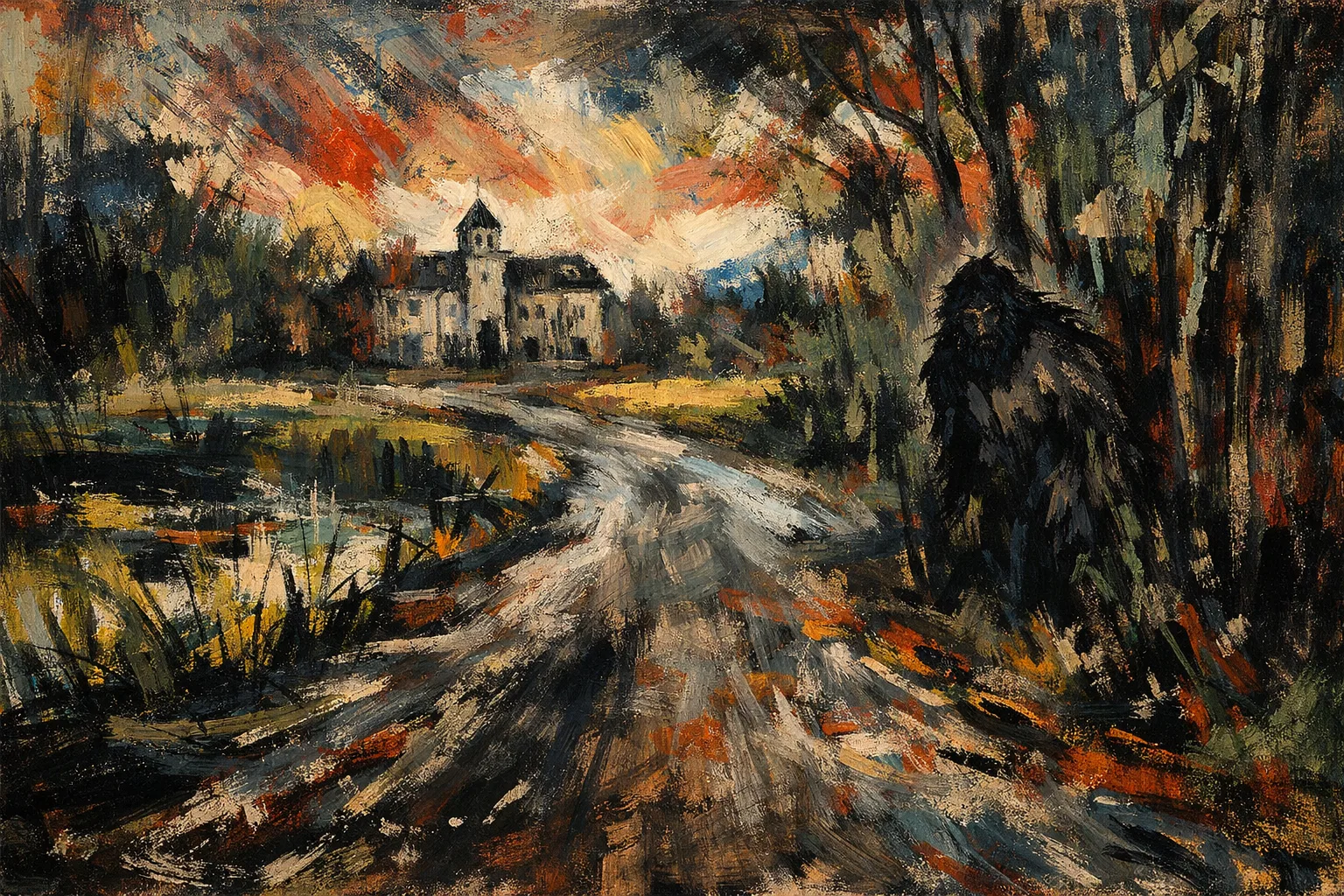
The Chatawa Monster is Mississippi’s most compact hometown monster: a shaggy, upright, Bigfoot-like figure tied not to a whole mountain range or national legend, but to one small Pike County community, its river woods, its former Catholic school, and a cluster of local explanations that are more interesting than a simple “monster in the swamp” tale. In its best-known version, the creature escaped from a circus train wreck near the Tangipahoa River. In the more grounded local version, the legend grew from St Mary of the Pines school stories, homesick boarders, warning tales, and possibly escaped monkeys from nearby Kramer’s Lodge.[https://www.wlbt.com]wlbt.comSource details in endnotes.
That is why Chatawa matters in Mississippi folklore. The evidence for a literal unknown animal is thin, but the evidence for a durable local legend is strong. The story has a place, a landscape, named community memory, several competing origin theories, later witness anecdotes, and a modern afterlife in film and game projects. It is less a proven cryptid than a case study in how a small community turns woods, school discipline, odd animals and half-remembered local history into a monster that refuses to leave.
The Tangipahoa woods made the monster believable
Chatawa is an unincorporated community in Pike County, close to the Louisiana line, and its monster story depends heavily on that geography. Local accounts place the creature around the Tangipahoa River woods and swamps, rather than in a vague “somewhere in Mississippi” setting. The US Geological Survey has a monitoring location for the Tangipahoa River at Chatawa, identifying it as a stream site in Pike County, which helps fix the legend to a real river corridor rather than a purely invented backdrop.[waterdata.usgs.gov]waterdata.usgs.govmonitoring locationTangipahoa River at Chatwa, MSDiscover water data collected at monitoring location USGS-07375270, located in Mississippi and find additio…
That matters because the Chatawa Monster is a creature of edges: riverbank, treeline, field margin, convent grounds, railway corridor. The story works because a witness does not need to see much. A dark shape crossing a field at night, a monkey glimpsed in trees, a strange sound near water, or claw marks on bark can all be pulled into the same story once a community already has a name for the thing in the woods. Modern summaries of the legend usually describe the monster as Bigfoot-like, hairy and upright, but the old local texture is less tidy: monkeys, escaped animals, school warnings and swamp rumours all overlap.[https://www.wlbt.com]wlbt.comSource details in endnotes.
Chatawa’s landscape also sits at a cultural crossroads. The community was historically connected to the former Illinois Central Railroad and the Tangipahoa River, and its story world looks south towards New Orleans as much as north into Mississippi. Local retellings note that St Mary’s school drew pupils from New Orleans families, which helps explain why the legend has a boarding-school flavour: a rural Mississippi campus, distant from home, surrounded by woods that older students could turn into a boundary.[https://www.wlbt.com]wlbt.comSource details in endnotes.
The monster’s habitat is therefore not just “swamp” in a generic Southern Gothic sense. It is the specific Chatawa setting where a small population, a religious school, a retreat-like campus, an old railway route, local wildlife stories and river-bottom concealment all reinforce one another. That is what makes the creature feel more local than many broad Bigfoot reports. The Chatawa Monster belongs to a map a resident could actually point to.
St Mary of the Pines gave the story its human centre
The most important local institution in the legend is St Mary of the Pines. The School Sisters of Notre Dame record that St Mary of the Pines in Chatawa began as a girls’ boarding school in the 1870s and closed a century later, after which the property was adapted for retired sisters and retreat use. The school’s long life gives the legend a plausible social setting: generations of pupils, teachers, rules, night-time anxieties, and stories passed down in dormitories and on campus paths.[School Sisters of Notre Dame]ssnd.orgOpen source on ssnd.org.
In the local-history version reported by Walt Grayson, lifelong resident Sam McKinney suggested that the Chatawa Monster may have begun as a story told by older students to keep younger, homesick pupils from running away through the woods towards New Orleans. That explanation is not as flashy as an escaped ape-man, but it fits the setting unusually well. A boarding school surrounded by unfamiliar woods needs only a few frightening warnings for a “monster outside the grounds” to become part of student culture.[https://www.wlbt.com]wlbt.comSource details in endnotes.
The St Mary’s strand also includes the memorable claim that nuns saw monkeys in the trees. McKinney’s explanation was not that they saw a supernatural beast, but that monkeys had come from Kramer’s Lodge, a nearby property with a wildlife preserve and exotic animals. In that version, the “monster” begins with a real oddity: primates in rural Mississippi woods would have been startling enough without needing an unknown species.[https://www.wlbt.com]wlbt.comthe mysteries of chatawa msSource details in endnotes.
This is one reason the Chatawa Monster is more interesting than a simple fake-or-real puzzle. The school explanation does not kill the story; it explains how the story could survive. Children repeat warnings. Adults remember them with amusement or unease. Later witnesses inherit the name before they ever see anything. Once a creature has a local label, every ambiguous shape has somewhere to go.
The circus wreck story is vivid, but shaky
The most dramatic origin story says a circus train was travelling towards New Orleans when it derailed near the Tangipahoa swamps. In this version, the train carried exotic animals and a caged ape-human creature. After the wreck, the cage was broken and the beast had disappeared. A few days later, a nun at St Mary of the Pines allegedly saw a hairy human-like figure moving through the undergrowth, giving the monster its first recognised sighting.[filmform.com]filmform.comOpen source on filmform.com.
As folklore, it is excellent. It has motion, disaster, a broken cage, an escaped exhibit, a religious witness, and a creature swallowed by swamp. As history, it is much less secure. The best local reporting is careful about this. McKinney told WLBT that similar circus-train-wreck legends appear along the railroad in places with nearby swamps, including Canton and as far north as Cairo, Illinois. That pattern makes the Chatawa version look less like a documented local accident and more like a travelling railway legend that attached itself to Chatawa because the setting was ideal.[https://www.wlbt.com]wlbt.comSource details in endnotes.
A Mississippi Folklore retelling reaches a similar sceptical point, noting that although several places claim circus derailment stories, the writer could not find documented incidents matching the Chatawa legend. That does not prove no accident of any kind ever happened, but it weakens the specific claim that a known circus wreck released the monster.[Mississippi Folklore]msfolklore.wordpress.comMississippi Folklore The Chatawa MonsterMississippi Folklore The Chatawa Monster
The train story may have persisted because it solves a narrative problem. If people are telling of an ape-like creature in Mississippi, listeners naturally ask: how did an ape get there? A circus train provides an instant answer. It imports the impossible animal from elsewhere, then lets the swamp hide it. This is a common move in monster folklore: the weird thing is not native, exactly, but escaped, abandoned, dumped, or released by accident. The Chatawa Monster’s circus origin works because it gives the creature a backstory without needing evidence of a breeding population, a body, or a scientific discovery.
Kramer’s Lodge offers the most practical “escaped animal” clue
The Kramer’s Lodge strand is less cinematic than the circus wreck, but it may be the strongest bridge between real local history and monster lore. In WLBT’s account, McKinney said the monkeys reportedly seen around St Mary’s came from Kramer’s Lodge, which had a wildlife preserve with exotic animals. A later summary of Chatawa’s local history also describes Kramer’s Lodge as a resort built by X. A. Kramer, former mayor of McComb, with caged exotic birds and animals, including bears and monkeys.[https://www.wlbt.com]wlbt.comthe mysteries of chatawa msSource details in endnotes.
That detail changes the legend’s centre of gravity. If monkeys really were kept nearby, then some early “strange creature” talk may not have started with Bigfoot at all. It may have started with people seeing or hearing animals that were genuinely out of place. A monkey in a Mississippi tree would be strange enough for a child, a nun, or a traveller to remember. Add distance, fear, darkness and retelling, and a monkey can become “something hairy”, then “something upright”, then a monster.
The bear element matters too, though it should not be overstated. Mississippi does have black bears, and state wildlife information notes that bears in milder Southern climates may be active in winter if food is available. Broader research on Mississippi black bears also records that the species was historically widespread but declined sharply through habitat loss and overharvest.[mdwfp.com]mdwfp.comMDWF P Black Bear Program No information is available for this pageMDWF P Black Bear Program No information is available for this page A bear standing briefly on its hind legs, seen at night or from a distance, is one plausible source for some upright-creature reports in the South. That does not explain monkeys in trees, and it does not validate the monster, but it gives sceptics a reasonable animal category to consider.
The practical explanation, then, is not “everyone saw the same escaped monkey” or “it was definitely a bear”. It is that Chatawa had the right ingredients for misidentification: dense cover, river-bottom gloom, known exotic animals nearby, occasional large wildlife, and a community already primed to interpret the woods through a monster story.
Witness anecdotes kept the legend alive
The Chatawa Monster has never rested on strong physical evidence. There is no widely accepted body, DNA sample, clear photograph, track cast or official wildlife record establishing an unknown ape-like animal in Pike County. The legend survives instead through anecdote: a nun’s sighting in the origin tale, nuns reporting monkeys in trees, stories around St Mary’s, and later local memories of something seen at the edge of fields or woods.[filmform.com]filmform.comOpen source on filmform.com.
The best-known later anecdote in local media concerns a highway patrolman who owned land in the area. According to Walt Grayson’s WLBT piece, he was ploughing at night when his tractor headlights caught a fleeting upright hairy creature ducking into the woods at the edge of his field; the story says he never returned to that field alone. This is exactly the kind of account that keeps a hometown monster alive: brief, personal, local, impossible to verify, but easy to remember.[https://www.wlbt.com]wlbt.comSource details in endnotes.
The report also places the anecdote in community conversation, saying it was still discussed around Chatawa’s artesian well. That detail matters because folklore is not only about what allegedly happened; it is about where people retell it. A story repeated at a local gathering point becomes part of the community’s shared map. The monster is not simply “out there” in the woods. It is also in the social spaces where residents test, tease and preserve the tale.[https://www.wlbt.com]wlbt.comthe mysteries of chatawa msSource details in endnotes.
For a sceptical reader, these anecdotes are weak evidence for a creature. For a folklore reader, they are strong evidence for a legend. The Chatawa Monster has enough witness-style material to feel grounded, but not enough corroboration to move beyond local tradition. That uneasy middle is exactly where many durable cryptid stories live.

Why Chatawa became Mississippi’s hometown monster
Mississippi has wider Bigfoot reports, black-panther stories and other strange-animal traditions, but Chatawa stands out because its monster is unusually place-bound. The legend has a small named community, a school with a century of memory, a river corridor, a railway, a local historian, a possible exotic-animal source, and an origin tale dramatic enough to travel.[wlbt.com]wlbt.comSource details in endnotes.
Several features make it work especially well:
It has a memorable origin myth. The circus wreck story is easy to retell even if it is historically doubtful. A broken cage in the swamp is a stronger image than “someone saw something once”.
It has a grounded counter-story. The St Mary’s school explanation gives sceptical readers a plausible social origin: older students frightening younger students, especially those tempted to run away from a boarding school far from home.[https://www.wlbt.com]wlbt.comSource details in endnotes.
It has a real-world animal complication. Kramer’s Lodge reportedly had exotic animals, including monkeys and bears, which means some “strange animal” memories may have had a real local trigger.[https://www.wlbt.com]wlbt.comthe mysteries of chatawa msSource details in endnotes.
It has an afterlife beyond belief. The monster does not require every resident to believe literally. It can function as a mascot, mystery, joke, warning, artistic subject and local identity marker all at once.
This is why the Chatawa Monster feels more like a hometown legend than a generic Bigfoot copy. It borrows the hairy upright creature shape from wider American monster lore, but its emotional engine is local: schoolchildren, nuns, monkeys, fields, woods, railroad stories and the feeling that a tiny place can still keep one secret.
Films, games and the legend’s afterlife
The Chatawa Monster has recently moved beyond oral tradition and local news into art and media. Johan Thurfjell’s 2024 short film The Chatawa Monster was filmed in Chatawa and presents the legend through black-and-white, grainy images of the swamp forests, interviews with two local residents, and reflections on both witness memory and the human need for monsters. Filmform lists the work as a seven-minute English-language film made in Chatawa in February 2024, with later screenings recorded in 2025.[filmform.com]filmform.comOpen source on filmform.com.
That artistic treatment is important because it shows how the legend has changed. The question is no longer only “Did an ape-man escape from a train?” It is also “Why does this place still want, or need, this story?” Contemporary art pages connected with the Chatawa project describe a board game built around moving through the habitat of the monster, using the tension of pursuit and uncertainty rather than claiming to solve the mystery.[sodertaljekonsthall.se]sodertaljekonsthall.seOpen source on sodertaljekonsthall.se.
Local and regional writers have also treated the monster as a cultural ambassador for Chatawa. Thomas Crone’s account, for example, describes the creature as perhaps the best-known ambassador of the town beyond its corner of Pike County, while still framing it as a “creature-slash-legend” rather than a confirmed animal.[thomascrone.substack.com]thomascrone.substack.comChatawa: Some Kind of MonsterChatawa: Some Kind of Monster
This modern afterlife may be the most honest form of the Chatawa Monster. The legend is not supported strongly enough to be handled as zoology. But as folklore, it is alive: adaptable, atmospheric, tied to place and still useful for artists, storytellers and curious travellers. The monster’s survival does not depend on proving the circus wreck. It survives because Chatawa’s woods, school memories and local voices gave Mississippi a creature small enough to belong somewhere, yet strange enough to keep being retold.
What the Chatawa Monster most likely tells us
The most evidence-aware reading is that the Chatawa Monster is a layered local legend rather than a confirmed mystery animal. The circus train story supplies the dramatic myth. St Mary of the Pines supplies the social setting. Kramer’s Lodge supplies a plausible source for real exotic-animal sightings. The Tangipahoa woods supply the atmosphere. Later anecdotes supply the chill that keeps the story from becoming only a quaint schoolyard joke.[https://www.wlbt.com]wlbt.comSource details in endnotes.
None of those layers proves an unknown ape-like creature in Pike County. They do explain why this particular Mississippi monster endured. A purely invented monster often fades when the joke is over. A purely misidentified animal is usually forgotten once someone names it. The Chatawa Monster sits between those categories. It may have begun as warning, mistake, prank or embellishment, but it attached itself to real places and real memories strongly enough to become part of Chatawa’s identity.
That is the value of the story. It shows how Mississippi’s monster folklore often grows not from grand spectacle, but from the intimate geography of rural life: a school at the edge of the woods, a river that hides what moves along it, a railway that invites travelling legends, and a community willing to keep one shaggy figure waiting just beyond the light.
Amazon book picks
Further Reading
Books and field guides related to Why Chatawa Became Mississippi's Hometown Monster. Use these as the next step if you want deeper reading beyond the article.
Weird U.S.
Readers of hometown monster legends often enjoy regional oddities and folklore.
The United States of Cryptids
Places local monsters like Chatawa within the wider American cryptid tradition.
eBay marketplace picks
Marketplace Samples
Live-tested eBay searches with available results related to this page.
Endnotes
1.
Source: wlbt.com
Link:https://www.wlbt.com/story/38109389/3-on-the-road-chatawa-monster/
Source snippet
[https://www.wlbt.com3](https://www.wlbt.com3) on the Road: Chatawa MonsterMay 4, 2018 — 3 May 2018 — Like the circus train that's supposed to have wrecked here a...
Published: May 4, 2018
2.
Source: wlbt.com
Title: the mysteries of chatawa ms
Link:https://www.wlbt.com/story/9976391/the-mysteries-of-chatawa-ms/
Source snippet
[https://www.wlbt.comThe](https://www.wlbt.comThe) mysteries of Chatawa, MS10 Mar 2009 — Like the circus train that's supposed to have wrecked here and... In Canto...
3.
Source: waterdata.usgs.gov
Title: monitoring location
Link:https://waterdata.usgs.gov/monitoring-location/07375270/
Source snippet
Tangipahoa River at Chatwa, MSDiscover water data collected at monitoring location USGS-07375270, located in Mississippi and find additio...
4.
Source: wlbt.com
Link:https://www.wlbt.com/story/10945640/look-around-ms-the-legend-of-chatawa/
Source snippet
[https://www.wlbt.comLook](https://www.wlbt.comLook) Around MS: The Legend of ChatawaAugust 18, 2009 — 17 Aug 2009 — Sam McKinney is a lifelong resident and is sort...
Published: August 18, 2009
5.
Source: ssndcentralpacific.org
Link:https://www.ssndcentralpacific.org/news-events/story/past-present-and-future-of-st-mary-of-the-pines/
6.
Source: filmform.com
Link:https://www.filmform.com/works/5992-the-chatawa-monster/
7.
Source: mdwfp.com
Title: MDWF P Black Bear Program No information is available for this page
Link:https://www.mdwfp.com/wildlife-hunting/wildlife-species-program/black-bear-program
8.
Source: sodertaljekonsthall.se
Link:https://www.sodertaljekonsthall.se/texts/embracing-the-mystery/
9.
Source: thomascrone.substack.com
Title: Chatawa: Some Kind of Monster
Link:https://thomascrone.substack.com/p/chatawa-some-kind-of-monster
10.
Source: ssndcentralpacific.org
Link:https://www.ssndcentralpacific.org/news-events/story/ssnd-associates-nicknamed-the-cemetery-girls/
11.
Source: filmform.com
Link:https://www.filmform.com/artists/1342-johan-thurfjell/
12.
Source: libguides.hindscc.edu
Title: The Chatawa Monster
Link:https://libguides.hindscc.edu/paranormalms/chatawa_monster
13.
Source: ssnd.org
Link:https://ssnd.org/back-in-time-excerpts-from-the-chronicles-of-st-mary-of-the-pines/
14.
Source: msfolklore.wordpress.com
Title: Mississippi Folklore The Chatawa Monster
Link:https://msfolklore.wordpress.com/2022/07/28/the-chatawa-monster/
15.
Source: chatawagame.com
Link:https://www.chatawagame.com/media
16.
Source: Wikipedia
Title: Illinois Central Railroad
Link:https://en.wikipedia.org/wiki/Illinois_Central_Railroad
17.
Source: Wikipedia
Title: Tangipahoa River
Link:https://en.wikipedia.org/wiki/Tangipahoa_River
18.
Source: edits.nationalmap.gov
Link:https://edits.nationalmap.gov/apps/gaz-domestic/public/search/names/691764
19.
Source: ecos.fws.gov
Link:https://ecos.fws.gov/ecp/species/1828
Additional References
20.
Source: youtube.com
Title: Exploring Mississippi Urban Legends: Myths and Folklore in the United States
Link:https://www.youtube.com/watch?v=XtCgNPOR4-g
Source snippet
A Hurricane Curse, the Dixie Mafia, and the Cowagator | Creeps, Crimes & Cryptids S2E1...
21.
Source: fws.gov
Link:https://www.fws.gov/refuge/upper-mississippi-river
22.
Source: fsa.usda.gov
Title: state acres for wildlife enhancement mississippi black bear habitat restoration
Link:https://www.fsa.usda.gov/sites/default/files/documents/state_acres_for_wildlife_enhancement_mississippi_black_bear_habitat_restoration.pdf
23.
Source: mswildlife.org
Link:https://mswildlife.org/certified-wildlife-habitat/
24.
Source: facebook.com
Link:https://www.facebook.com/WJTV12/posts/focused-on-mississippi-chatawa-monster/10157437715305509/
25.
Source: reddit.com
Link:https://www.reddit.com/r/mississippi/comments/14olrds/has_anyone_here_ever_seen_or_encountered_an/
26.
Source: instagram.com
Link:https://www.instagram.com/p/B3FPQ80gGMV/
27.
Source: johanthurfjell.org
Link:https://johanthurfjell.org/johan-thurfjell-cv/
28.
Source: psa-ms.org
Link:https://psa-ms.org/johan-thurfjell-nate-harold/
29.
Source: pinterest.com
Link:https://www.pinterest.com/pin/pin–173740498112633092/
Topic Tree