Within Delaware Cryptids
Are There Really Cougars in Delaware?
Cougar stories are especially tricky because the animal is real, but Delaware sightings can still come from escapes, rumours or misidentified wildlife.
On this page
- Pike Creek and northern sightings
- Real cats versus local rumours
- Wildlife explanations and missing proof
Page outline Jump by section
Introduction
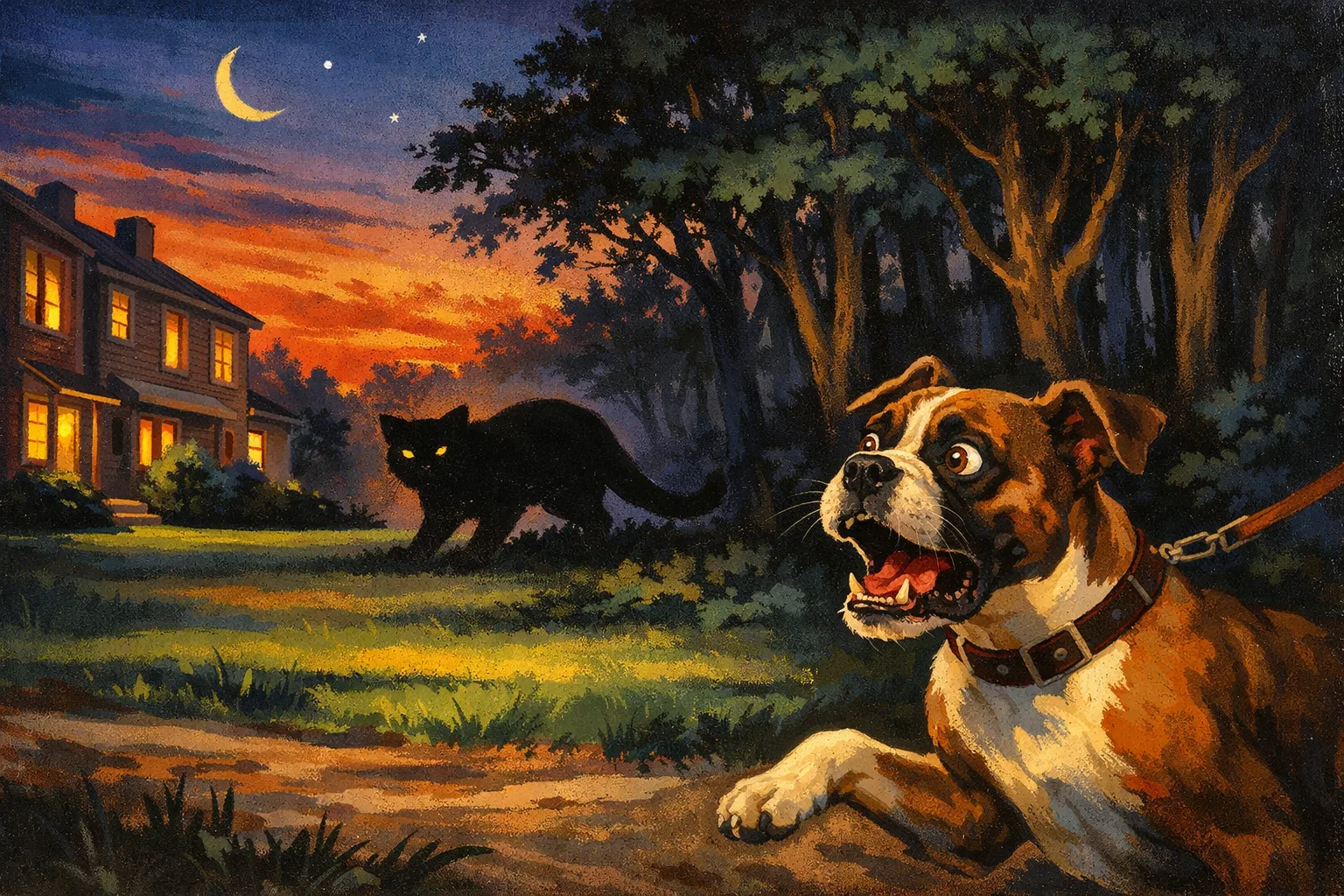
Northern Delaware’s cougar stories are compelling because they sit in a grey area: cougars are real animals, but a real animal is not the same as a confirmed local population. The best-known modern claim is the Pike Creek report from 10 November 2010, when police were called after a man walking his boxer near the Clearview Ridge Townhouses said he had watched a large cat, twice the size of his dog, growling under trees. Officers found no sign of it. WHYY also noted that Delaware environmental officials had received more than 40 cougar reports in 2000 and 2001, showing that the Pike Creek story was part of a longer northern New Castle County pattern rather than a one-off scare.[WHYY]whyy.orgCougar sighting in Pike Creekcougar sighting, this time near Pike Creek. New Castle County Police say the big cat was spotted near the Clearview Ridge Townhouses…
The cautious answer to “Are there really cougars in Delaware?” is: not as a proven resident population. Delaware’s own wildlife planning describes eastern cougars as extirpated from the state in the 1700s, and the U.S. Fish and Wildlife Service removed the eastern cougar from the federal endangered list in 2018 after determining it was extinct. That does not make every witness foolish. It means northern Delaware mystery-cat stories are best read as a mixture of unverified sightings, possible escaped or released captive animals, occasional long-distance biological possibilities, and misidentified wildlife seen in fragmented woodland, suburban edges and creek corridors.[DNREC]dnrec.delaware.govDelaware.govDelaware remains the only state in the continental U.S. without a population of bobcat (Lynx rufus), although this sp…
Why Pike Creek became Delaware’s cougar shorthand
The Pike Creek sighting is the most useful anchor for the modern Delaware cougar legend because it has the ingredients that keep a mystery-cat story alive: a named neighbourhood, a police response, a specific witness situation, a dramatic animal description and no physical proof afterwards. According to WHYY, New Castle County Police said the animal was reported near Clearview Ridge Townhouses; the witness described it as sitting under trees, larger than a full-grown boxer, and making a high-pitched growl while he and his dog watched. Police saw no trace of the animal.[WHYY]whyy.orgCougar sighting in Pike Creekcougar sighting, this time near Pike Creek. New Castle County Police say the big cat was spotted near the Clearview Ridge Townhouses…
The 6abc version adds more texture. Police were called at 12:48 a.m. to the 100 block of Benham Court, near Clearview Ridge. The witness, Steve Bitanga of Newark, said he heard a screech, saw a large animal about 30 yards away and watched it for about eight minutes, but did not take a photograph. A New Castle County Police officer told the station that because the caller described an animal twice the size of a boxer, police had an obligation to alert the public.[6abc Philadelphia]6abc.comOpen source on 6abc.com.
That last detail matters. Much of the Delaware cougar tradition is not built on captured animals or specimen evidence; it is built on credible-sounding civic reactions to uncertain reports. Police responding to a call does not confirm a cougar. It confirms that a resident reported something alarming enough to be treated seriously in the moment. For folklore, that distinction is powerful. A “possible cougar” becomes a neighbourhood memory because it briefly changes how people walk dogs, watch tree lines and talk about nearby woods.
Pike Creek is also a believable setting for a large-animal rumour, even if it is not proof of one. DNREC describes Pike Creek as a tributary of White Clay Creek in northern New Castle County, and the wider White Clay Creek system was designated as part of the National Wild and Scenic Rivers System on a watershed basis in 2000. White Clay Creek State Park and surrounding protected lands provide wooded corridors, stream valleys and suburban edge habitat where deer, foxes, coyotes and large dogs can appear suddenly at night.[DNREC]dnrec.delaware.govDNRECSuccess Stories: Pike CreekDNRECSuccess Stories: Pike Creek
The 2000–2001 flap and northern New Castle County rumours
The Pike Creek report did not appear from nowhere. WHYY’s 2010 coverage says Delaware environmental officials received more than 40 cougar reports in 2000 and 2001. That figure is important because it suggests a “flap”: a period when one rumour, report or suspected animal primes people to interpret later sightings through the same lens.[WHYY]whyy.orgCougar sighting in Pike Creekcougar sighting, this time near Pike Creek. New Castle County Police say the big cat was spotted near the Clearview Ridge Townhouses…
A later hunting-column discussion by Steven Kendus, republishing an article he said had run in Delaware’s News Journal, placed the earlier activity mainly in northern New Castle County and described rumours from the late 1990s through early 2000s. Kendus claimed that reports included videos, photos, tracks, prey kills and first-hand accounts from public employees, and that New Castle County Police assigned an officer to try to capture a cougar. The same article also quoted Delaware Division of Fish and Wildlife game mammal biologist Joe Rogerson taking a far more cautious line: “Anything is possible,” but the odds did not favour wild cougars in Delaware because a large-ranging animal should eventually leave stronger evidence such as a road-kill, trail-camera image or hunter report.[Delaware Hunting]huntingthefirststate.comDelaware Hunting Connecticut cougar gives us hope in DelawareDelaware Hunting Connecticut cougar gives us hope in Delaware
That contrast captures the whole Delaware mystery-cat problem. On one side are persistent local memories: “people saw something”, “officials looked into it”, “there were tracks”, “someone had a video”. On the other side is the wildlife-management standard: a cougar population is not established by repeated anecdotes alone. A living population should produce repeatable evidence over time — photographs clear enough for identification, genetic material, scat, hair, carcasses, kittens, road-killed animals or a captured individual.
There is also an escape-rumour thread. Kendus’s article mentions a theory that at least one cougar had been illegally kept as a pet in south-eastern Pennsylvania, escaped or was released in 1996, and moved into northern Delaware. That scenario is more biologically plausible than a hidden breeding population, but it still needs evidence. Escaped captive animals can explain isolated real cats in odd places; they do not automatically explain decades of scattered reports.[Delaware Hunting]huntingthefirststate.comDelaware Hunting Connecticut cougar gives us hope in DelawareDelaware Hunting Connecticut cougar gives us hope in Delaware
Real cats, but not necessarily local cats
The strongest reason not to dismiss every Delaware cougar claim out of hand is that cougars can travel extraordinary distances. The famous comparison is the Connecticut cougar of 2011. A male mountain lion was killed by a vehicle in Milford, Connecticut, and genetic testing linked it to the Black Hills of South Dakota. A scientific paper later described it as a subadult male that travelled more than 2,450 km in straight-line distance, with evidence from DNA, photographs and other records along the route.[USFS Research & Development]research.fs.usda.govOpen source on usda.gov.
That case changed the public conversation across the East. It proved that a wild western cougar can appear far beyond the established breeding range. It did not prove that every eastern cougar report is correct, or that Delaware has resident cougars. In fact, the Connecticut animal is useful precisely because it was so well documented: tissue, DNA, earlier samples and trail-camera evidence created a chain that ordinary sighting reports rarely provide.[Connecticut Public]ctpublic.orgwildlife biologist breaks down mountain lion sightings in ctwildlife biologist breaks down mountain lion sightings in ct
Federal wildlife conclusions point the same way. The U.S. Fish and Wildlife Service reviewed the eastern cougar’s status and said no state within the historical range expressed belief in an existing eastern cougar population. In its 2018 final rule, the Service determined that the eastern puma, or cougar, was extinct, with no evidence of an extant reproducing population or individuals of that eastern subspecies.[U.S. Fish and Wildlife Service]fws.govOpen source on fws.gov.
The practical takeaway for Delaware is a careful middle position. A single cougar passing through the Mid-Atlantic is not impossible. A released or escaped captive cat is not impossible. A long-hidden, breeding northern Delaware cougar population is much harder to support, because even secretive large carnivores leave physical traces when they persist for years in a densely settled region.
Why northern Delaware produces convincing false alarms
Northern New Castle County is exactly the kind of landscape where people can sincerely report a big cat and still be mistaken. It has wooded parkland, stream corridors, deer, night-time dog walking, headlights, garden edges and quick glimpses across lawns or roads. A large animal crossing a suburban boundary at dawn or after midnight is not observed like an animal in a field guide. It is seen for seconds, often partly hidden, with the viewer already startled.
Several ordinary or semi-ordinary explanations can create a cougar-shaped story:
Coyotes. DNREC says coyotes have been documented in all three Delaware counties and that Delaware was the 49th state populated by the species. Coyotes are not cats, but they are now part of the state’s predator landscape, and a large, lean coyote seen at night can be misjudged by someone expecting a dog, fox or deer.[DNREC]dnrec.delaware.govDNRECCoyotes in DelawareDNRECCoyotes in Delaware
Domestic or exotic-looking cats. A large house cat, especially seen from a distance in poor light, can seem much larger than it is. Long tails are memorable, but scale is notoriously difficult without a fixed reference point. In mystery-cat reports across the eastern United States, “it was too big to be a house cat” is common testimony, but size estimates made under stress are weak evidence on their own.
Dogs, foxes and deer at odd angles. Delaware’s parks and suburban edges support common wildlife that can appear uncanny when only the back, tail, shoulders or eyeshine are visible. A deer crouching or moving through brush is not shaped like a cougar in full view, but a partial view can be misleading. A fox scream or coyote vocalisation can also colour what a witness thinks they have just seen.
Bobcat confusion — with a Delaware twist. In many eastern states, bobcats are the default official explanation for cougar reports. Pennsylvania’s Game Commission says its investigations find the overwhelming number of mountain lion sightings in Pennsylvania are actually bobcats. Delaware is unusual, however, because DNREC’s Wildlife Action Plan says it remains the only state in the continental U.S. without a bobcat population, although bobcats occur across Delaware Bay in New Jersey and suitable habitat exists, especially in southern Delaware.[Pennsylvania Governor's Office]pa.govOpen source on pa.gov.
That Delaware bobcat point is easy to misunderstand. It does not make cougars more likely. It simply removes one common explanation from the top of the list for confirmed resident wildlife. A wandering bobcat from a neighbouring state or a misidentified animal might still enter a local rumour, but Delaware does not have the ordinary, established bobcat background that Pennsylvania or New Jersey can invoke as readily.
The missing proof problem
The biggest weakness in northern Delaware cougar claims is not that cougars are impossible. It is that the evidence has not matured in the way wildlife biologists would expect if cougars were genuinely present over the long term. A large carnivore moving through a suburbanised, road-crossed state faces cars, cameras, hunters, animal-control calls and constant human observation. Over years, at least some hard evidence should accumulate.
Joe Rogerson’s comment in the Delaware hunting article gets at this plainly: the chances of a wide-ranging cougar not being hit by a car, photographed on a trail camera or shot by a hunter are slim. That is not a perfect argument — rare animals can evade detection — but it is a strong practical test in a small, populated state.[Delaware Hunting]huntingthefirststate.comDelaware Hunting Connecticut cougar gives us hope in DelawareDelaware Hunting Connecticut cougar gives us hope in Delaware
Official wildlife decisions use a similar logic at broader scale. The U.S. Fish and Wildlife Service’s 2018 final rule said it was highly unlikely that an eastern puma population could remain undetected since the last confirmed sighting in 1938. The agency was addressing the eastern subspecies, not a single Delaware rumour, but the reasoning applies: persistent breeding populations produce persistent evidence.[U.S. Fish and Wildlife Service]fws.govendangered and threatened wildlife and plants removing eastern puma 0endangered and threatened wildlife and plants removing eastern puma 0
This is also why the Connecticut cougar is such a useful comparison. It was not accepted because someone insisted they saw a large cat. It was accepted because DNA, physical remains and earlier records made the animal traceable. For Delaware’s cougar legend to shift from mystery-cat folklore into confirmed wildlife history, it would need that kind of evidence: a clear verified photograph, DNA-tested scat or hair, a carcass, an official capture, or repeated documentation from independent cameras in a coherent area.
How the cougar story fits Delaware folklore
Delaware’s cougar claims are different from the state’s swamp-monster or Bigfoot-style stories because the creature being claimed is not imaginary in itself. Cougars are real, powerful, wide-ranging North American cats. That makes the legend feel closer to a wildlife question than a campfire tale. The uncertainty is not “could such an animal exist?” but “is this animal here, now, in this place?”
That realism gives northern Delaware cougar stories their staying power. A monster in a swamp can be enjoyed as folklore even after a hoax is exposed. A cougar in Pike Creek is harder to file away, because it belongs to the same world as deer collisions, coyotes in suburbs and black bears wandering into northern Delaware. DNREC has documented that black bears, once absent from Delaware for more than a century, have occasionally crossed into northern Delaware as neighbouring populations expanded. That does not prove cougar presence, but it shows why residents are primed to believe that large mammals can surprise the state.[DNREC]dnrec.delaware.govDNRECHow Delaware is Preparing for the Return of Black BearsDNRECHow Delaware is Preparing for the Return of Black Bears
The legend also feeds on the geography of the state. Northern Delaware is not wilderness, but it is not just pavement either. White Clay Creek, Pike Creek, the C&D Canal Conservation Area and other protected or semi-protected corridors create enough green space for rumours to move through. DNREC describes the C&D Canal Conservation Area as nearly 5,000 acres of protected land along the Delaware portion of the canal, while White Clay Creek is promoted as a wooded park and watershed with significant habitat value.[documents.dnrec.delaware.gov]documents.dnrec.delaware.govC&D Canal Conservation AreaC&D Canal Conservation Area
That patchwork landscape makes the cougar a perfect Delaware mystery animal: too plausible to dismiss instantly, too unsupported to accept confidently, and perfectly suited to the edge between suburb and woods.
How to read a Delaware cougar report without killing the fun
A good mystery-cat report is not automatically a hoax, and a weak report is not automatically worthless. The most useful approach is to separate three questions that often get muddled together.
First, did the witness probably see an animal? In many cases, yes. The Pike Creek report involved a man walking a dog, a specific location, a police call and a described encounter. That is stronger than a vague campfire rumour, even though it remains unconfirmed.[ABC7 San Francisco]abc7news.comABC7 San FranciscoCougar sighting reported in New Castle Co.10 Nov 2010 — New Castle County Police are looking into the reported sighting…
Second, was the animal certainly a cougar? That is much harder. Without a photograph, tracks, hair, scat or a carcass, the identification rests on size, shape, sound and memory. Those can be sincere and still wrong.
Third, would one cougar mean Delaware has cougars? No. A single escaped captive, released animal or long-distance wanderer would be a remarkable event, not proof of a breeding population. The federal eastern cougar decision and Delaware’s own wildlife planning both point away from a resident eastern cougar population.[DNREC]dnrec.delaware.govDelaware.govDelaware remains the only state in the continental U.S. without a population of bobcat (Lynx rufus), although this sp…
For readers interested in Delaware’s strange-animal traditions, that makes the northern cougar story more interesting, not less. It is a case study in how folklore and wildlife biology overlap. A rumour can begin with a real glimpse, grow through repeated retelling, borrow credibility from police or agency attention, and survive because the animal in question is not biologically absurd. The mystery remains enjoyable precisely because the best answer is not a smug “impossible”, but a careful “possible in narrow ways, unproven in the way people usually mean”.

Bottom line for northern Delaware
Northern Delaware has a genuine mystery-cat tradition centred on New Castle County and sharpened by the 2010 Pike Creek report. The strongest evidence shows repeated claims, local concern and occasional official attention, not confirmed resident cougars. The best-supported wildlife view is that eastern cougars are gone from Delaware, that the eastern cougar was federally declared extinct, and that any real cougar in the modern Mid-Atlantic would most likely be an escaped or released captive animal, or a rare western wanderer rather than part of a hidden local population.[delaware.gov]dnrec.delaware.govDelaware.govDelaware remains the only state in the continental U.S. without a population of bobcat (Lynx rufus), although this sp…
That leaves Delaware with a wonderfully awkward legend: a real animal, a plausible landscape, memorable sightings, and a stubborn absence of the kind of proof that would settle the matter. The cougar of Pike Creek is therefore best understood not as a confirmed predator haunting northern Delaware, but as the state’s cleanest example of a modern mystery-cat story — one paw in wildlife biology, the other in local folklore.
Amazon book picks
Further Reading
Books and field guides related to Are There Really Cougars in Delaware?. Use these as the next step if you want deeper reading beyond the article.
Heart of a Lion
Explores the famous eastern cougar journey often cited in regional debates.
eBay marketplace picks
Marketplace Samples
Live-tested eBay searches with available results related to this page.
Endnotes
1.
Source: whyy.org
Title: Cougar sighting in Pike Creek
Link:https://whyy.org/articles/cougar-sighting-in-pike-creek/
Source snippet
cougar sighting, this time near Pike Creek. New Castle County Police say the big cat was spotted near the Clearview Ridge Townhouses...
2.
Source: dnrec.delaware.gov
Link:https://dnrec.delaware.gov/dewap/sgcn/mammals/
Source snippet
remains the only state in the continental U.S. without a population of bobcat (Lynx rufus), although this sp...
3.
Source: 6abc.com
Link:https://6abc.com/archive/7775289/
4.
Source: dnrec.delaware.gov
Title: DNRECSuccess Stories: Pike Creek
Link:https://dnrec.delaware.gov/watershed-stewardship/nps/success-stories/pike-creek/
5.
Source: dnrec.delaware.gov
Title: DNRECCoyotes in Delaware
Link:https://dnrec.delaware.gov/fish-wildlife/hunting/coyotes/
6.
Source: dnrec.delaware.gov
Title: DNRECHow Delaware is Preparing for the Return of Black Bears
Link:https://dnrec.delaware.gov/outdoor-delaware/how-delaware-is-preparing-for-the-return-of-black-bears/
7.
Source: news.delaware.gov
Link:https://news.delaware.gov/2019/12/04/black-bear-sighted-in-northern-delaware-public-asked-to-contact-dnrec-fish-wildlife-natural-resources-police-if-seen/
8.
Source: documents.dnrec.delaware.gov
Title: C&D Canal Conservation Area
Link:https://documents.dnrec.delaware.gov/fw/Wildlife-Areas/C-and-D-Canal-Castle-Trail.pdf
9.
Source: whyy.org
Title: Black bear sighting reported at Univ. of Delaware
Link:https://whyy.org/articles/black-bear-sighting-reported-at-univ-of-delaware/
10.
Source: dnrec.delaware.gov
Title: fish wildlife
Link:https://dnrec.delaware.gov/fish-wildlife/
11.
Source: dnrec.delaware.gov
Link:https://dnrec.delaware.gov/wildlife/
12.
Source: dnrec.delaware.gov
Title: sick dead wildlife
Link:https://dnrec.delaware.gov/fish-wildlife/conservation/sick-dead-wildlife/
13.
Source: dnrec.delaware.gov
Link:https://dnrec.delaware.gov/dewap/
14.
Source: dnrec.delaware.gov
Link:https://dnrec.delaware.gov/outdoor-delaware/preserving-all-the-wonder-of-wildlife-for-years-to-come-how-the-delaware-wildlife-action-plan-helps-protect-thousands-of-species/
15.
Source: dnrec.delaware.gov
Link:https://dnrec.delaware.gov/fish-wildlife/hunting/furbearers/
16.
Source: documents.dnrec.delaware.gov
Title: Chapter 1
Link:https://documents.dnrec.delaware.gov/fw/dwap/2015%20Submitted%20Documents/Chapter%201.pdf
17.
Source: dnrec.delaware.gov
Title: wildlife action plan
Link:https://dnrec.delaware.gov/fish-wildlife/conservation/wildlife-action-plan/
18.
Source: dnrec.delaware.gov
Link:https://dnrec.delaware.gov/fish-wildlife/hunting/
19.
Source: dnrec.delaware.gov
Title: wildlife areas
Link:https://dnrec.delaware.gov/fish-wildlife/wildlife-areas/
20.
Source: dnrec.delaware.gov
Title: white clay creek master plan
Link:https://dnrec.delaware.gov/parks/planning/white-clay-creek-master-plan/
21.
Source: documents.dnrec.delaware.gov
Title: C and D Canal Overview
Link:https://documents.dnrec.delaware.gov/fw/Wildlife-Areas/C-and-D-Canal-Overview.pdf
22.
Source: whyy.org
Title: cougar sighting in pike creek 2
Link:https://whyy.org/articles/cougar-sighting-in-pike-creek-2/
23.
Source: abc7news.com
Link:https://abc7news.com/archive/7775289/
Source snippet
ABC7 San FranciscoCougar sighting reported in New Castle Co.10 Nov 2010 — New Castle County Police are looking into the reported sighting...
24.
Source: fws.gov
Title: endangered and threatened wildlife and plants removing eastern puma 0
Link:https://www.fws.gov/species-publication-action/endangered-and-threatened-wildlife-and-plants-removing-eastern-puma-0
25.
Source: huntingthefirststate.com
Title: Delaware Hunting Connecticut cougar gives us hope in Delaware
Link:https://huntingthefirststate.com/connecticut-cougar-gives-us-hope-in-delaware/
26.
Source: research.fs.usda.gov
Link:https://research.fs.usda.gov/download/treesearch/52133.pdf
27.
Source: ctpublic.org
Title: wildlife biologist breaks down mountain lion sightings in ct
Link:https://www.ctpublic.org/news/2022-08-25/wildlife-biologist-breaks-down-mountain-lion-sightings-in-ct
28.
Source: fws.gov
Link:https://www.fws.gov/story/2011-03/us-fish-and-wildlife-service-concludes-eastern-cougar-extinct
29.
Source: pa.gov
Link:https://www.pa.gov/agencies/pgc/about-us/frequently-asked-questions
30.
Source: fws.gov
Title: long extinct eastern cougar be removed endangered species list correcting
Link:https://www.fws.gov/press-release/2018-01/long-extinct-eastern-cougar-be-removed-endangered-species-list-correcting
31.
Source: abcnews.com
Link:https://abcnews.com/US/conn-mountain-lion-made-long-journey-south-dakota/story?id=14169829
32.
Source: fws.gov
Link:https://www.fws.gov/partner/delaware-division-fish-and-wildlife
33.
Source: fws.gov
Link:https://www.fws.gov/rivers/river/white-clay
34.
Source: Wikipedia
Link:https://en.wikipedia.org/wiki/Delaware
35.
Source: Wikipedia
Title: Eastern cougar
Link:https://en.wikipedia.org/wiki/Eastern_cougar
36.
Source: Wikipedia
Title: White Clay Creek State Park
Link:https://en.wikipedia.org/wiki/White_Clay_Creek_State_Park
37.
Source: experience.arcgis.com
Title: C&D Canal
Link:https://experience.arcgis.com/experience/45efbbef728b48308366fcb5c89cb488/page/C%26D-Canal
38.
Source: youtube.com
Link:https://www.youtube.com/watch?v=icTIeZFCw3Y
39.
Source: destateparks.galaxydigital.com
Link:https://destateparks.galaxydigital.com/agency/detail/?agency_id=142331
40.
Source: dec.ny.gov
Link:https://dec.ny.gov/nature/animals-fish-plants/eastern-cougar/sightings
Additional References
41.
Source: youtube.com
Link:https://www.youtube.com/watch?v=FLFL328AVB8
Source snippet
Video Evidence of a Cougar or Mountain Lion in Fallston, Maryland?...
42.
Source: youtube.com
Title: Video Evidence of a Cougar or Mountain Lion in Fallston, Maryland?
Link:https://www.youtube.com/watch?v=TByjeB1rwQ4
Source snippet
Mountain Lions Are Appearing Across New York — And Experts Have No Idea Why...
43.
Source: newcastlede.gov
Link:https://www.newcastlede.gov/CivicAlerts.aspx?AID=1914
44.
Source: legislature.vermont.gov
Link:https://legislature.vermont.gov/Documents/2026/Workgroups/House%20Environment/Wildlife/Apex%20Species%20and%20Landscape%20Restoration/W~Emily%20Carrollo~Long-distance%20Dispersal%20of%20a%20Subadult%20Male%20Cougar%20from%20South%20Dakota%20to%20Connecticut%20Documented%20with%20DNA%20Evidence~2-6-2025.pdf
45.
Source: federalregister.gov
Link:https://www.federalregister.gov/documents/2015/06/17/2015-14931/endangered-and-threatened-wildlife-and-plants-removing-eastern-puma-cougar-from-the-federal-list-of
46.
Source: youtube.com
Title: Mountain lions in Eastern Connecticut?
Link:https://www.youtube.com/watch?v=5IHZOJ3PSVY
Source snippet
'Large cats' seen in York County just house cats, Game Commission says...
47.
Source: mountainlion.org
Link:https://mountainlion.org/about-mountain-lions/
48.
Source: reddit.com
Link:https://www.reddit.com/r/Pennsylvania/comments/15ykq6y/are_there_mountain_lions_in_pa_pa_game_commission/
49.
Source: facebook.com
Link:https://www.facebook.com/GreensburgDailyNews/posts/bobcat-sightings-have-increased-in-the-state-since-the-1970s-leading-state-offic/1450345900433297/
50.
Source: wilmingtontrailclub.org
Link:https://wilmingtontrailclub.org/locations/chesapeake-and-delaware-canal-wildlife-area-biddle-point/
Topic Tree