Within Alabama Cryptids
Are Black Panthers Really Roaming Alabama?
Alabama's black panther stories raise a practical question: when is a mystery cat a legend, a known animal or a bad glimpse?
On this page
- Why phantom cat stories keep recurring
- Possible matches: bobcats, cougars, dogs and shadows
- How wildlife knowledge changes the legend
Page outline Jump by section
Introduction
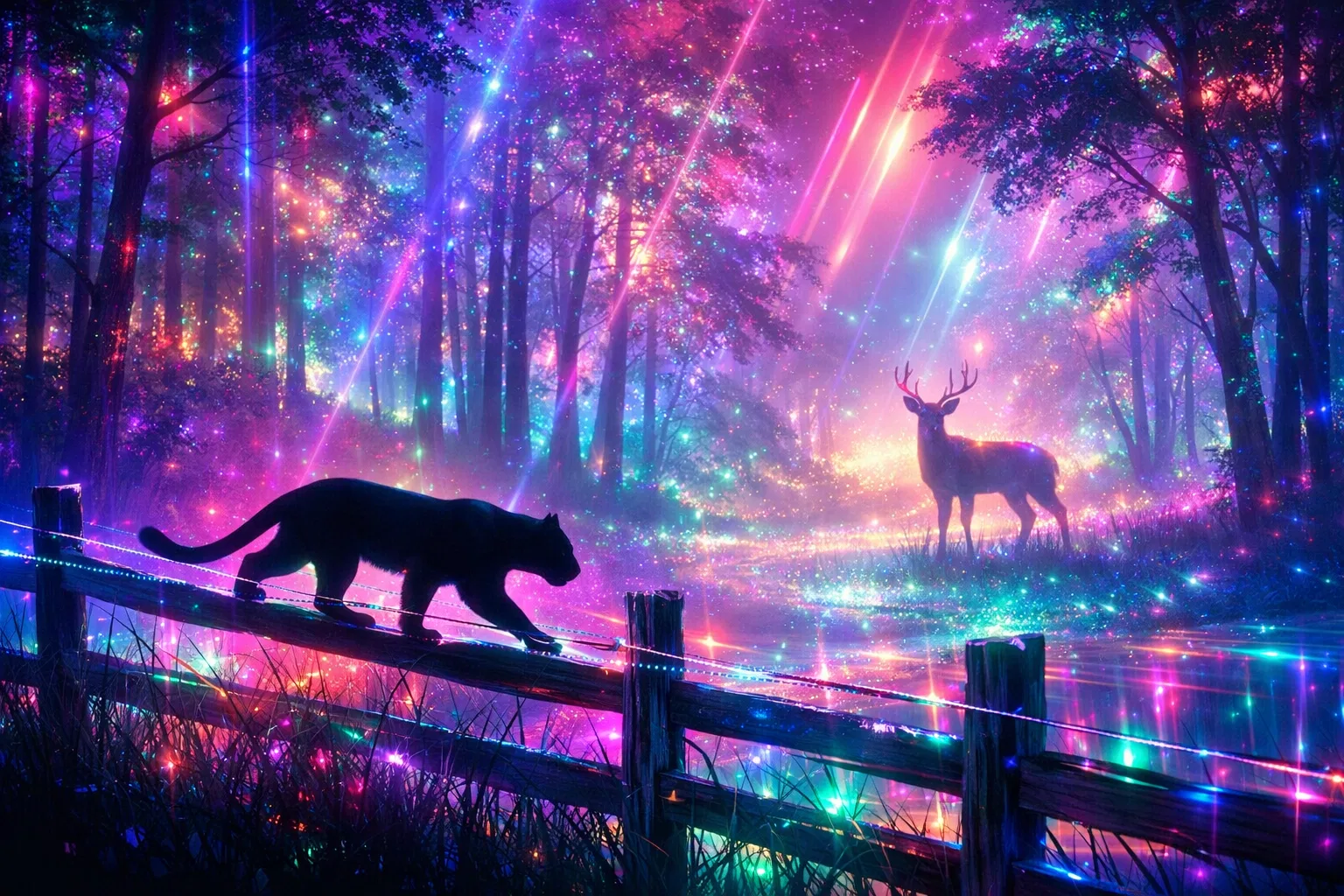
“Black panther” stories in Alabama are best understood as a meeting point between real wildlife, poor viewing conditions and local legend. People across the state do report large dark cats: animals crossing back roads at night, slipping along field edges, or appearing briefly near creeks, hunting land and rural homes. The practical problem is that Alabama wildlife evidence has not confirmed a breeding population of black panthers, and state-linked wildlife sources point instead to bobcats, domestic or feral cats, dogs, coyotes, black bears, escaped captives, and occasional unverified cougar-like animals as likelier explanations. Outdoor Alabama notes that reports of mountain lions are common, but says confirmed evidence such as trail-camera images, road-killed animals, hunter-taken specimens or reliable photographs has not supported a current population.[Outdoor Alabama]outdooralabama.comOutdoor AlabamaThe Truth About Black Panthers and Bears in AlabamaJul 6, 2014 — There have not been any confirmed reports by trail camera…
That does not make the stories meaningless. It makes them interesting in a different way. Alabama’s black panther legend asks a sharp question: when someone sees a dark animal for three seconds in bad light, are they remembering a true big cat, a known animal made strange by context, or a piece of Southern folklore that has learned to travel from witness to witness?
What Alabamians mean by “black panther”
In everyday Alabama speech, “panther” is often a flexible word. It may mean a cougar, a Florida panther, a large wildcat, a mysterious black animal, or simply “something cat-like that was too big to be a house cat”. Biologically, though, the phrase is slippery. A black panther is not a separate species; in modern zoological usage it usually means a melanistic, or unusually dark, leopard or jaguar. Those animals are not native to Alabama.[Stephanie Manka, Ph.D.]stephanieschuttler.comStephanie Manka, Ph.D.What is a Black Panther?Stephanie Manka, Ph.D.November 24, 2018 — 24 Nov 2018 — Black panthers technically could refer to any species of big cat that is black, b…
The animal most people are probably imagining is a black cougar. That is where the evidence becomes difficult for the legend. Alabama Extension states plainly that an all-black cougar has never been recorded, and that black-phase jaguars and jaguarundis are even less plausible for Alabama because their ranges do not place them in the state.[Alabama Cooperative Extension System]aces.edualabama cougars sorting fact from fictionalabama cougars sorting fact from fiction The same Extension discussion still leaves a small door open for rare cougar-like events: a travelling male cougar from elsewhere, an escaped or released captive, or an animal seen too briefly to identify. But that is very different from a hidden Alabama population of black big cats.
This is why the story persists so easily. The word “panther” sounds old, local and powerful. It fits Alabama’s woods, swamps and rural roads better than the more clinical language of “unverified large felid report”. It also gives witnesses a familiar label for a confusing encounter: a black shape, a long tail, a low body, a road crossing, a vanishing act.
Why phantom cat stories keep recurring
Alabama gives phantom cat stories the right stage. Much of the state is rural or semi-rural, with forest edges, creek bottoms, agricultural openings, hunting leases, pine plantations and wooded residential fringes. These are also places where people often see animals in low light: from a vehicle, through a windscreen, from a porch, on a game camera, or while hunting at dawn and dusk.
Wildlife agencies hear these claims repeatedly. Outdoor Alabama’s “Black Cats of Alabama” page says reports of large black cats come in from across the state year after year, ranging from simple sightings to claims about missing pets and livestock losses; it also notes that investigations, photographs and samples have failed to produce a captured or verified animal.[Outdoor Alabama]outdooralabama.comOpen source on outdooralabama.com. That pattern matters. A legend can be widespread without becoming zoological evidence. Repetition proves cultural strength, not necessarily animal presence.
The strongest versions of the story often share the same ingredients:
- A brief view. The animal crosses a road, slips through brush, or appears at the edge of a field.
- A size shock. The witness says it was much larger than a house cat, but has little scale for comparison.
- A dark silhouette. Colour and shape are judged in shadow, headlights, moonlight or thick cover.
- A remembered tail. Long-tail descriptions push witnesses towards “panther”, even when the animal could be a dog, coyote, domestic cat or a misjudged bobcat.
- A local echo. Once a community has panther stories, new sightings are more likely to be interpreted through that old label.
This is not a sneer at witnesses. It is how human perception works in wild places. A few seconds of movement can produce a confident memory, especially when the animal is unexpected and the setting already feels like panther country.
Possible matches: bobcats, cougars, dogs and shadows
The useful way to read Alabama black panther reports is not to ask, “Did the witness lie?” Most probably did not. The better question is, “Which known animal could create this impression under these conditions?”
Bobcats
Bobcats are Alabama’s most important real wildcat in this story. Outdoor Alabama describes the bobcat as a medium-sized cat, reddish brown to smoky grey, with black spots or streaks, black ear tufts, facial ruffs and a short black-tipped tail.[Outdoor Alabama]outdooralabama.comOpen source on outdooralabama.com. Alabama Extension adds that bobcats can be distinguished from cougars and domestic cats partly by body size and tail length, but also notes that melanistic, or all-black, bobcats have been recorded and that black cats seen in the state are either melanistic bobcats or domestic cats.[Alabama Cooperative Extension System]aces.eduliving with bobcatsliving with bobcats
That last point is important but should not be overplayed. A melanistic bobcat is a plausible “black wildcat” explanation, but it does not automatically explain every giant-panther claim. Bobcats are much smaller than cougars, and their short tails should be a giveaway in a good view. In a poor view, however, a bobcat moving low through vegetation can become a much larger creature in memory, especially if the observer sees it without a clear background object for scale.
Tracks can help, but only if they are measured and photographed properly. Alabama Extension gives a simple size comparison: domestic cat tracks are generally around 1 inch by 1 inch, bobcat tracks around 2 inches by 2 inches, and cougar tracks around 3 inches by 3 inches; cats also usually leave four toes without claw marks because their claws are retractable.[Alabama Cooperative Extension System]aces.eduliving with bobcatsliving with bobcats That makes tracks more useful than a shaky night-time sighting, though even tracks can be distorted by mud, overlap and wishful interpretation.
Cougars
Cougars once belonged to Alabama’s wildlife history, which gives modern panther stories a real historical root. Outdoor Alabama says cougars were probably once statewide, especially in remote upland woods, rough terrain and bottomland swamps, but that no self-sustaining population is currently known.[Outdoor Alabama]outdooralabama.comOutdoor AlabamaCougarCougars probably were extirpated from Alabama in the mid-1800s. Occasional sightings suggest free-ranging pumas, of… Alabama Extension states that the last confirmed cougar in Alabama was killed in Tuscaloosa County in 1956, and that officials have not confirmed the regular reports they receive.[Alabama Cooperative Extension System]aces.eduAlabama Cooperative Extension System Alabama Cougars: Sorting Fact From FictionAlabama Cooperative Extension System Alabama Cougars: Sorting Fact From Fiction
This is the point at which legend and memory overlap. If older families remember “painters” or panthers as part of the old countryside, they are not inventing the idea from nothing. Cougars did exist in the broader Eastern landscape. The problem is the jump from “historically present” to “secretly breeding now”, especially when modern Alabama has hunters, road networks, trail cameras, smartphones, wildlife officers, taxidermists and roadkill records. A breeding population of large cats would be expected to leave firmer traces.
Still, one-off cougar possibilities are not impossible in principle. Alabama Extension notes rare possibilities such as escaped or released captive cougars, and wandering male cougars travelling long distances from established western or neighbouring populations.[Alabama Cooperative Extension System]aces.edualabama cougars sorting fact from fictionalabama cougars sorting fact from fiction That makes a single tan cougar-like animal more plausible than a resident population of black panthers.
Dogs, coyotes and domestic cats
The least glamorous explanations may be the most common. Alabama Extension says feral cats may account for many supposed cougar sightings, especially when photographs or videos are later compared with background objects; it also notes that domestic dogs and coyotes can be mistaken for cougars from the right angle or in poor light.[Alabama Cooperative Extension System]aces.edualabama cougars sorting fact from fictionalabama cougars sorting fact from fiction For black panther reports specifically, the same source says the most sensible explanation is that black feral cats or dogs are being mistaken for black panthers.[Alabama Cooperative Extension System]aces.edualabama cougars sorting fact from fictionalabama cougars sorting fact from fiction
This sounds too small until the viewing conditions are considered. A black domestic cat close to the viewer, seen with no scale reference, can look surprisingly large. A black Labrador-type dog crossing low in headlights can create a long, dark, fast-moving silhouette. A coyote partly hidden by grass may seem more cat-like than it is. The mind fills in the missing edges.

Black bears
Black bears add another layer because they are real, native, dark and increasing in visibility in parts of Alabama. Outdoor Alabama says the state has a historic south-western bear population, mainly associated with Mobile, Washington and Clarke counties, and that bears have also moved into north-east Alabama from north-west Georgia, especially around DeKalb, Cherokee and Etowah counties.[Outdoor Alabama]outdooralabama.comOpen source on outdooralabama.com. Alabama Extension describes two current bear populations: a remnant population in the Mobile River Basin and a naturally expanding population in north-east Alabama.[Alabama Cooperative Extension System]aces.edublack bears in alabama history biology reducing conflictblack bears in alabama history biology reducing conflict
A bear is not shaped like a panther, and its lack of a long tail should rule it out in a clear sighting. But first glances are rarely clear. Alabama Extension explicitly notes that small black bear populations occur in the state and that, although size and lack of tail distinguish bears from panthers, confusion is possible at first glance.[Alabama Cooperative Extension System]aces.edualabama cougars sorting fact from fictionalabama cougars sorting fact from fiction A young bear moving quickly through brush or across a road could easily become “a huge black animal” before later retelling sharpens it into a cat.
Why no confirmed population is the key fact
The black panther legend depends on absence: the animal is always nearly seen, almost photographed, just beyond proof. Wildlife biology tends to work in the opposite direction. A breeding population leaves bodies, young animals, DNA, scat, roadkill, tracks, clear trail-camera records and repeated verifiable encounters.
This is where Alabama’s evidence remains weak. Outdoor Alabama’s article on black panthers and bears says there have been no confirmed mountain lion reports by trail camera, roadkill, traditional photography or hunter-harvested specimens since the mid-20th century.[Outdoor Alabama]outdooralabama.comOutdoor AlabamaThe Truth About Black Panthers and Bears in AlabamaJul 6, 2014 — There have not been any confirmed reports by trail camera… The cougar species page similarly says sightings are still commonly reported, but are likely misidentifications of domestic dogs and cats, coyotes and bobcats, with some puma reports traced to captive escapees.[Outdoor Alabama]outdooralabama.comOutdoor AlabamaCougarCougars probably were extirpated from Alabama in the mid-1800s. Occasional sightings suggest free-ranging pumas, of…
That does not mean every report is worthless. It means reports sit on a ladder of evidence. At the bottom are campfire stories and social media posts. A little higher are sincere eyewitness accounts with no photograph. Higher still are clear images with scale, track casts, scat samples, hair samples, DNA, carcasses or verified roadkill. Alabama’s black panther tradition is rich at the lower levels and thin at the higher ones.
For a curious reader, that distinction is more useful than a simple “real” or “fake”. The legend is real as folklore. The sightings are real as human experiences. The animal, as a confirmed Alabama population of black big cats, has not met the evidence standard that would move it from mystery-beast tradition into wildlife fact.
How wildlife knowledge changes the legend
The modern trail-camera era has changed Alabama’s panther stories in an awkward way. On one hand, cameras make people more alert to nocturnal animals in their own backyards and hunting leases. On the other, they raise the standard of proof. If black panthers were widespread across Alabama, the same camera network that records deer, bobcats, coyotes, bears, hogs and stray dogs should eventually produce clear, repeatable evidence.
This pressure has shifted the legend. Older panther stories could survive as oral testimony: “My grandfather saw one near the creek,” or “Everybody around here knows they scream at night.” Newer stories often arrive as online images or clips, where the debate becomes more technical: How big is the animal compared with the fence post? Is the tail visible? Are there claw marks in the track? Is the “panther” actually a black house cat near the camera? Alabama Extension’s point about supposed cougar photos resolving into feral cats once scaled against background objects is exactly the kind of modern debunking that reshapes the old tale.[Alabama Cooperative Extension System]aces.edualabama cougars sorting fact from fictionalabama cougars sorting fact from fiction
Wildlife recovery also complicates the story. Black bears really are expanding or reappearing in parts of the state, and official sources expect sightings to increase as populations grow and young males disperse.[Outdoor Alabama]outdooralabama.comOpen source on outdooralabama.com. That means some modern “black panther” reports may be attached to genuine large-animal movement, just not the animal named in the story. In north-east Alabama especially, a dark animal where people did not expect one may be a bear before it is a mystery cat.
The result is not the death of the legend, but a smarter version of it. The question becomes less “Are officials hiding black panthers?” and more “Which animals, landscapes and viewing conditions keep producing panther-shaped stories?”
Reading a sighting without ruining the story
A good sceptical reading does not have to flatten the fun out of Alabama’s black panthers. It can make the story better, because it lets each case be judged on what it actually offers. A report from a moving car at night is not the same as a daylight photograph with a scale reference. A long-tailed tan cat is not the same problem as a black animal with no visible tail. A sighting in Mobile River Basin bear country is not identical to a sighting near north Alabama’s recolonising bear range.
For readers trying to make sense of a claim, the most useful questions are simple:
- Was there a scale reference? A fence, road lane, gate, feeder or tree can shrink a “panther” back into a cat or dog.
- Was the tail clearly seen? Long tails support cougar-like claims; short tails point more towards bobcat; no tail may suggest bear or poor visibility.
- Were tracks measured? Around 1 inch suggests domestic cat, around 2 inches suggests bobcat, and around 3 inches would be more cougar-like, though conditions matter.[Alabama Cooperative Extension System]aces.eduliving with bobcatsliving with bobcats
- Was the animal black, or just silhouetted? Backlighting can erase colour and markings.
- Is there physical evidence? Clear images, DNA, roadkill or a body would matter far more than repeated retellings.
This approach leaves room for mystery without treating every shadow as a hidden species. Alabama’s black panther is most convincing as a living folk category: a name people give to frightening, fleeting, dark animal encounters in a state where real bobcats, bears, dogs, coyotes and old cougar memory all overlap. The creature may not be roaming Alabama as a confirmed black big cat, but the story certainly is.
eBay marketplace picks
Marketplace Samples
Live-tested eBay searches with available results related to this page.


Endnotes
1.
Source: outdooralabama.com
Link:https://www.outdooralabama.com/node/1320
Source snippet
Outdoor AlabamaThe Truth About Black Panthers and Bears in AlabamaJul 6, 2014 — There have not been any confirmed reports by trail camera...
2.
Source: outdooralabama.com
Link:https://www.outdooralabama.com/carnivores/cougar
Source snippet
Outdoor AlabamaCougarCougars probably were extirpated from Alabama in the mid-1800s. Occasional sightings suggest free-ranging pumas, of...
3.
Source: stephanieschuttler.com
Title: Stephanie Manka, Ph.D.What is a Black Panther?
Link:https://stephanieschuttler.com/what-is-a-black-panther/
Source snippet
Stephanie Manka, Ph.D.November 24, 2018 — 24 Nov 2018 — Black panthers technically could refer to any species of big cat that is black, b...
Published: November 24, 2018
4.
Source: aces.edu
Title: alabama cougars sorting fact from fiction
Link:https://www.aces.edu/blog/topics/forestry-wildlife/alabama-cougars-sorting-fact-from-fiction/
5.
Source: outdooralabama.com
Link:https://www.outdooralabama.com/node/1484
6.
Source: outdooralabama.com
Link:https://www.outdooralabama.com/carnivores/bobcat
7.
Source: aces.edu
Title: living with bobcats
Link:https://www.aces.edu/blog/topics/forestry-wildlife/living-with-bobcats/
8.
Source: aces.edu
Title: Alabama Cooperative Extension System Alabama Cougars: Sorting Fact From Fiction
Link:https://www.aces.edu/wp-content/uploads/2018/11/ANR-1358_Alabama-CougarsSortingFactFromFiction_031523L-G.pdf
9.
Source: outdooralabama.com
Link:https://www.outdooralabama.com/black-bear/alabama-black-bears
10.
Source: aces.edu
Title: black bears in alabama history biology reducing conflict
Link:https://www.aces.edu/blog/topics/forestry-wildlife/black-bears-in-alabama-history-biology-reducing-conflict/
11.
Source: outdooralabama.com
Link:https://www.outdooralabama.com/node/1886
12.
Source: Wikipedia
Link:https://en.wikipedia.org/wiki/Black
13.
Source: Wikipedia
Title: Black panther
Link:https://en.wikipedia.org/wiki/Black_panther
14.
Source: dictionary.cambridge.org
Link:https://dictionary.cambridge.org/us/dictionary/english/large
15.
Source: aces.edu
Link:https://www.aces.edu/wp-content/uploads/2024/12/FOR-2166_Living-with-Bobcats_120624L-G.pdf
16.
Source: forestry.alabama.gov
Title: Life History of the Bobcat
Link:https://www.forestry.alabama.gov/Pages/Informational/Forms/Life_History/Life_History_of_the_Bobcat.pdf
17.
Source: outdooralabama.com
Link:https://www.outdooralabama.com/carnivores/black-bear
Additional References
18.
Source: youtube.com
Title: Jaguarundi Sightings — What I Saw Might Explain Many Black Panther Reports
Link:https://www.youtube.com/watch?v=MwpHcOa0EpU
Source snippet
The Mystery Behind North America's Black Panther...
19.
Source: youtube.com
Title: Black Bobcat??? Blount County Alabama
Link:https://www.youtube.com/watch?v=r5lNJCY4jAo
Source snippet
Jaguarundi Sightings — What I Saw Might Explain Many Black Panther Reports...
20.
Source: 256today.com
Link:https://256today.com/alabama-legends-tall-tales-the-mystery-behind-alabamas-black-panther-sightings/
21.
Source: instagram.com
Link:https://www.instagram.com/reel/CvpSsCftkT6/?hl=en
22.
Source: facebook.com
Link:https://www.facebook.com/NorthAmericanBearCenter/posts/black-bears-of-north-america-alabama-edition-once-found-across-the-state-black-b/1197877025825702/
23.
Source: facebook.com
Link:https://www.facebook.com/SoulGrown/posts/do-you-know-about-the-legend-of-black-panthers-in-alabama-think-its-just-a-tall-/1419217116919620/
24.
Source: reddit.com
Link:https://www.reddit.com/r/Awwducational/comments/jcqkvg/black_panthers_are_not_separate_species_but/
25.
Source: merriam-webster.com
Link:https://www.merriam-webster.com/dictionary/black
26.
Source: facebook.com
Link:https://www.facebook.com/groups/603326787000151/posts/1623361968329956/
27.
Source: bigcatrescue.org
Link:https://bigcatrescue.org/conservation-news/black-panthers
Topic Tree