What Monsters Does Virginia Claim?
Virginia’s cryptid map is not built around one single monster. It is a patchwork of mountain Bigfoot stories, a very well-documented suburban axe-and-rabbit-suit legend, Chesapeake sea-serpent reports, swamp creature rumours, phantom big-cat claims, and a few borderland monsters borrowed from the wider Mid-Atlantic.
Page outline Jump by section
Introduction
The key pattern is geography. Southwest Virginia gives the state its Bigfoot-like Woodbooger. Northern Virginia gives it the Bunny Man, an urban legend rooted in two real 1970 incidents. Tidewater and the Chesapeake connect Virginia to Chessie, the Bay’s sea-serpent figure. The Great Dismal Swamp supplies the landscape for hairy “Skunkfoot” rumours and older swamp lore. Behind many sightings sit ordinary but impressive animals: black bears, bobcats, otters, manatees and, more controversially, claimed mountain lions.
The Woodbooger: Southwest Virginia’s Bigfoot with a civic address
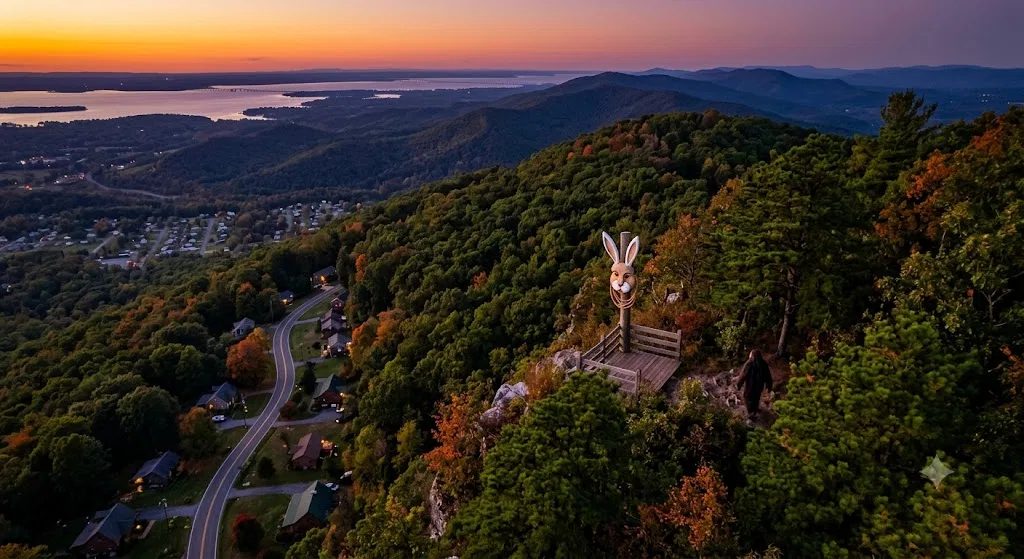
Virginia’s clearest state-level Bigfoot figure is the Woodbooger, a local name for a Sasquatch-like creature associated especially with Norton, Wise County, High Knob and Flag Rock Recreation Area. Norton’s own tourism pages describe the Woodbooger as a “mythical Bigfoot-like creature” rumoured to roam Flag Rock and Southwest Virginia, and the city has leaned fully into the legend with a statue, a sanctuary designation and an annual festival.[Norton VA]nortonva.govNorton VAWoodbooger Sanctuary | Norton, VANorton VAWoodbooger Sanctuary | Norton, VA
That local embrace matters because it shows how a cryptid becomes part of place identity. The city says the Woodbooger statue and sanctuary followed a visit by Animal Planet’s Finding Bigfoot, which filmed in Southwest Virginia in 2011, including High Knob, Washington County, Damascus and Saltville. Norton City Council later designated Flag Rock Recreation Area as a Woodbooger Sanctuary, and the park now presents the creature beside real outdoor attractions such as hiking, overlooks and wildlife habitat.[Norton VA]nortonva.govNorton VAWoodbooger Sanctuary | Norton, VANorton VAWoodbooger Sanctuary | Norton, VA
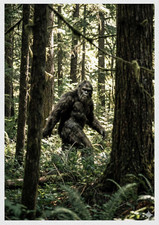
The Woodbooger’s modern public life is less about a single decisive sighting than about a cluster of mountain claims and a memorable regional name. Reported encounters usually follow the familiar Bigfoot pattern: a large, dark, upright, hair-covered figure glimpsed briefly in wooded terrain; odd vocalisations; knocks; footprints; or a sense of being watched in remote country. The official festival framing is careful: Norton calls the creature mythical, not zoologically confirmed, while still using it to celebrate folklore, natural resources, local businesses and outdoor recreation.[Norton VA]nortonva.govNorton VAWoodbooger Festival | Norton, VANorton VAWoodbooger Festival | Norton, VA
The setting helps the story. Southwest Virginia has steep ridges, deep hollows, coalfield communities, old logging country and enough forest to make a large unknown figure feel imaginable. It also has abundant black bears, which are one of the most common sceptical explanations for Bigfoot-like sightings across North America. Virginia’s Department of Wildlife Resources says bears have their highest concentrations in the Blue Ridge and Alleghany Mountains and around the Great Dismal Swamp, but can occur in at least 92 of Virginia’s 98 counties and cities.[Virginia Wildlife Resources]dwr.virginia.govOpen source on virginia.gov.
That does not mean every Woodbooger witness saw a bear. It means the natural history is important. A bear seen for seconds in poor light, partly upright, partly screened by trees, can become much stranger in memory, especially in a region where the Woodbooger story is already available as an explanation. The interesting question is not only “was it Bigfoot?” but “why did this mountain landscape become so good at sustaining a Bigfoot story?”
Virginia Bigfoot reports: where the sightings cluster
Beyond Norton, Virginia has a broader Sasquatch reporting tradition. The Bigfoot Field Researchers Organization, a private sighting database rather than an official scientific body, lists reports across the state, including recent claims in Grayson, Buchanan and Rockingham counties. Its county pages show older clusters in western and mountain counties such as Giles and Roanoke, with reports describing road crossings, close wooded encounters, rock-throwing, vocalisations and “Class A” visual sightings.[BFRO]bfro.netstate listing.aspstate listing.asp
A 2023 Axios Richmond summary, also using BFRO data, reported 86 Virginia Bigfoot sightings going back to the 1970s, with a visible concentration in the southwest. It also noted the Virginia Bigfoot Conference in Weyers Cave, which shows that Bigfoot in Virginia is not merely a set of isolated reports but a social scene: conferences, investigators, witnesses, sceptics and curious road-trippers.[Axios]axios.comBigfoot's trail in VirginiaBigfoot's trail in Virginia
The reports tend to follow a few recurring landscapes:
- Southwest mountains and coalfields, where the Woodbooger has become the best-known local form.
- Blue Ridge and Shenandoah-adjacent country, where roads, ridgelines, farms and forests meet.
- Rural western counties, where brief night sightings by motorists are easier to imagine and harder to verify.
- Occasional suburban-edge reports, where wooded corridors meet development.
The credibility problem is the same one Bigfoot faces everywhere: reports are plentiful, but physical evidence strong enough to satisfy mainstream biology has not followed. A useful sceptical lens is the bear connection. A 2024 Ars Technica report on a peer-reviewed analysis discussed the correlation between Sasquatch reports and black bear populations, noting that bears can be mistaken for something stranger, particularly at distance or in poor visibility.[Ars Technica]arstechnica.comstudy finds bigfoot sightings correlate with black bear populationsstudy finds bigfoot sightings correlate with black bear populations
Virginia is therefore a good Bigfoot state in the cultural sense, not in the evidential sense. It has the right storytelling conditions: old mountains, forest cover, bears, rural roads, tourism, local names, and a public willing to treat a strange report as both possible and fun. What it does not have is accepted biological proof of an unknown upright ape.

The Bunny Man: Virginia’s best-documented monster is really an urban legend
The Bunny Man is not a cryptid in the strict “unknown animal” sense, but any honest guide to Virginia monster lore has to include him. He is Northern Virginia’s most famous creature-like legend: a figure in a rabbit suit, usually armed with an axe or hatchet, associated today with “Bunny Man Bridge” near Clifton. Unlike many monster stories, this one has a documented seed.
Fairfax County Public Library’s local-history research, especially historian-archivist Brian A. Conley’s work, traces the legend to two reported incidents in Fairfax County in October 1970. In the first, a man in a white suit with long bunny ears reportedly shouted at a young couple parked near Guinea Road in Burke and threw a hatchet through their car window. In the second, a security guard at a construction site on Guinea Road reported a man in a rabbit costume chopping at a porch post and threatening him over trespassing.[Fairfax County Research]research.fairfaxcounty.govFairfax County Research The Bunny Man UnmaskedFairfax County Research The Bunny Man Unmasked
From there, the story multiplied. Newspaper coverage, police calls, prank sightings and schoolyard retellings turned two alarming but local incidents into a regional legend. Later versions moved the action to the Colchester Overpass, now widely called Bunny Man Bridge, and added invented material: escaped asylum inmates, murdered children, hanging bodies, ghostly returns and Halloween rituals. The Washington Post was already treating the Bunny Man as a Halloween legend by 2003, while local coverage has repeatedly stressed the gap between the real 1970 reports and the later bridge mythology.[The Washington Post]washingtonpost.comThe Washington Post Boo! It's the Bunny Man!The Washington Post Boo! It's the Bunny Man!
The Bunny Man is useful because he shows legend formation almost in fast motion. A real police matter becomes a rumour. The rumour gains a location. The location gains ritual value for teenagers and ghost tourists. Then the internet supplies a standardised backstory with false names, false dates and false institutions. Conley’s research is especially valuable because it separates the documented Guinea Road events from later folklore.
He also fits Virginia specifically. The early incidents happened at a moment when parts of Fairfax County were changing quickly from rural or semi-rural land into suburbia. Some modern interpretations see the Bunny Man as a distorted expression of property anxiety, development pressure and trespassing fears: a local figure, dressed absurdly, violently defending a vanishing boundary.[Northern Virginia Magazine]northernvirginiamag.comNorthern Virginia Magazine Long Live the BunnymanNorthern Virginia Magazine Long Live the Bunnyman
So, was the Bunny Man “real”? A threatening costumed man appears to have been reported in 1970. The bridge-haunting axe murderer of modern legend is folklore.
Chessie: the Chesapeake sea serpent shared with Maryland
Chessie, the Chesapeake Bay sea monster, belongs to both Maryland and Virginia because the Bay itself does. The creature is usually described as a long, serpentine animal moving through the water, sometimes with humps, sometimes with a snake-like motion. Sightings are reported in Chesapeake waters and tidal tributaries, and one important modern thread begins on the Virginia side of the Potomac in the summer of 1978.[Chesapeake Bay Museum]cbmm.orgOpen source on cbmm.org.
Chessie is interesting because the story moved from fright to mascot. The U.S. Fish and Wildlife Service used the figure in Chessie: A Chesapeake Bay Story, an educational colouring book about protecting the Bay, and later Chessie Returns. Conservation groups still describe Chessie as an environmental icon associated with the Bay’s ecological health.[Chesapeake Conservation Partnership]chesapeakeconservation.orgchessie the chesapeake bay sea monsterchessie the chesapeake bay sea monster
There are also plausible animal explanations. Manatees, though associated with Florida, have occasionally travelled into the Chesapeake region. The U.S. Geological Survey reported that a famous manatee nicknamed Chessie was rescued from cold Chesapeake waters in 1994, tagged, and later documented returning north; USGS scientists also noted that manatee movement from Florida to the Chesapeake may not be as unusual as once assumed.[USGS]usgs.govOpen source on usgs.gov.
That manatee does not explain every sea-serpent account. It does show why the Bay is an excellent generator of monster reports. Large unfamiliar animals, floating debris, strings of birds, otters swimming in line, wave effects and brief views at water level can all appear uncanny. Chessie also arrives in a landscape where people already care deeply about pollution, fisheries, shoreline development and the loss of older watermen’s culture. Recent historical writing on Chessie has treated the monster partly as a symbol of change around the Bay, not simply as a zoological claim.[The Northern Mariner]tnm.journals.yorku.caThe Northern Mariner Book Reviews 417 Eric A. Cheezum. ChessieThe Northern Mariner Book Reviews 417 Eric A. Cheezum. Chessie
For Virginia readers, Chessie’s value is that it adds a coastal counterpoint to the mountain Woodbooger. The state’s monster geography stretches from Appalachian woods to tidal water.
The Great Dismal Swamp: Skunkfoot, bears and a landscape made for rumours
The Great Dismal Swamp is one of Virginia’s most powerful folklore landscapes. It lies in southeastern Virginia and northeastern North Carolina, and the modern National Wildlife Refuge protects nearly 113,000 acres, described by the U.S. Fish and Wildlife Service as the largest intact remnant of a swamp that once covered more than one million acres.[U.S. Fish and Wildlife Service]fws.govOpen source on fws.gov.
Swamps produce monster stories for obvious reasons: low visibility, difficult access, strange sounds, animal tracks, rot, mist and a long human history that can feel half-hidden. In Virginia’s case, the Great Dismal Swamp also carries Indigenous oral tradition, maroon history, Underground Railroad associations, ghost stories and wildlife encounters. Encyclopedia Virginia records a Nansemond oral tradition in which Lake Drummond was formed after a great firebird descended on the swampy basin thousands of years ago.[Encyclopedia Virginia]encyclopediavirginia.orgthe great dismal swampthe great dismal swamp
The more cryptid-like swamp story appears in a 1981 Washington Post article about a hairy, foul-smelling creature nicknamed “Skunkfoot”, described as 7½ feet tall, shaggy and sewer-scented, said to come out of the Dismal Swamp and stomp through a park at night. The article’s tone is playful, but the creature fits a familiar swamp-Bigfoot pattern: height, hair, smell, footprints and a wilderness edge.[The Washington Post]washingtonpost.comThe Washington Post Creature From the Dismal SwampThe Washington Post Creature From the Dismal Swamp
The most grounded explanation is that the swamp really is full of large animals. Virginia’s wildlife agency says the Great Dismal Swamp may offer the best opportunity in the state to see black bears, and that black bear, bobcat and river otter are encountered there with unusual frequency. Another DWR piece calls the swamp a “black bear dreamland” because it has little human disturbance and abundant food.[Virginia Wildlife Resources]dwr.virginia.govOpen source on virginia.gov.
That does not make the swamp less interesting. It makes it more interesting. The Great Dismal Swamp is a place where real wildlife and older fear overlap. A bear crashing through brush, an unseen otter splashing in a ditch, or a bobcat scream at dusk can become a monster when heard through a landscape already loaded with legend.
Phantom cats and mountain lions: the almost-cryptid that refuses to go away
Virginia’s phantom cat tradition sits between folklore and wildlife debate. People report “black panthers”, cougars or mountain lions in the Blue Ridge, Shenandoah region and rural counties, but official confirmation is another matter. The Virginia Department of Wildlife Resources says that since 1970, 121 sightings have been identified as possible mountain lions, but none has been officially confirmed. It notes that many reported sightings occur around Shenandoah National Park and the Bedford-Amherst-Nelson county region.[Virginia Wildlife Resources]dwr.virginia.goveastern cougar pumaeastern cougar puma
This is not the same as saying a large cat could never appear in Virginia. Escaped or released captive cougars are possible, and young western cougars have occasionally wandered far east in North America. But a breeding wild cougar population in Virginia is not recognised by state wildlife authorities. Older reporting from Virginia wildlife officials has likewise suggested that most sightings are probably bobcats, foxes or large feral domestic cats misidentified as cougars.[VT Scholarly Communication Libraries]scholar.lib.vt.eduOpen source on vt.edu.
The “black panther” version is even trickier. In North American folklore, black panthers often fill the gap left by vanished eastern cougars: a remembered predator transformed into a shadow animal. The problem is that no all-black cougar has been documented in the United States, even though black big-cat stories are widespread in Appalachia and the rural South.[Crozet Gazette]crozetgazette.comblue ridge naturalist a panther in western albemarleblue ridge naturalist a panther in western albemarle
Virginia’s phantom cats matter because they show how cryptid traditions can cling to a real ecological absence. The cougar once belonged to eastern forests; now it is mostly a memory, a rumour and an occasional claim. That makes it different from the Woodbooger. A cougar is a real animal. The unresolved part is whether one is actually living wild in Virginia today.
Borderland monsters: Snallygaster, Wampus Cat and imported legends
Not every monster attached to Virginia is equally Virginian. Some are better understood as borderland or travelling folklore.
The Snallygaster, for example, is primarily a Maryland creature: a winged, bird-reptile monster associated with Frederick County, German-American folklore claims and sensational 1909 newspaper stories. Later retellings spread it across the Washington, DC, West Virginia and Blue Ridge region, so it brushes against northern Virginia culture, but its centre of gravity remains Maryland. Modern historical accounts also stress that the 1909 Snallygaster craze was shaped by newspaper invention and by ugly racial politics, not just harmless monster fun.[wikipedia.org]WikipediaOpen source on wikipedia.org.
The Wampus Cat is broader still: an Appalachian and Southern cat-like creature with many forms, from a half-comic “fearsome critter” to a dangerous night predator with glowing eyes. It is often linked in popular retellings to Cherokee or Appalachian tradition, but the details vary wildly by region. For Virginia, it is best treated as part of the wider Appalachian monster vocabulary rather than a sharply localised state cryptid.[Wikipedia]WikipediaWampus catWampus cat
These travelling legends still matter to a Virginia cryptid page because folklore does not respect state lines. Stories move along mountain corridors, rivers, roads, newspapers, family migration and now social media. A creature can be “from” Maryland or Appalachia and still feel familiar in Virginia if the habitat, history and audience fit.
What probably explains many Virginia monster reports?
The most satisfying answer is not one explanation but a stack of them. Virginia’s monster lore survives because different kinds of evidence and experience get bundled together: brief wildlife encounters, old warnings, local jokes, newspaper exaggeration, tourism branding, hoaxes and sincere testimony.
Several explanations recur across the state:
Misidentified black bears. Bears are widespread in Virginia and concentrated in exactly the sorts of places that produce Bigfoot reports: mountains, wooded ridges and the Great Dismal Swamp. A bear standing, moving through brush or seen at night can look startlingly human for a moment.[Virginia Wildlife Resources]dwr.virginia.govOpen source on virginia.gov.
Known animals in unfamiliar settings. Manatees in the Chesapeake, otters swimming in line, bobcats screaming, large birds, deer, coyotes and feral cats can all produce “what was that?” moments. Chessie is especially vulnerable to this because water distorts scale and movement.[USGS]usgs.govOpen source on usgs.gov.
Hoaxes and media amplification. The Snallygaster’s 1909 newspaper life and the Bunny Man’s rapid mutation show how quickly a story can grow once it is printable, repeatable and frightening.[Our History, Our Heritage]mdhistoricaltrust.wordpress.comthe snallygaster shadows fearthe snallygaster shadows fear
Landscape memory. The Great Dismal Swamp, the Blue Ridge, the coalfields and the Chesapeake are not blank backdrops. They already carry histories of danger, labour, displacement, isolation and environmental change. Monsters give those feelings a body.
Tourism and local pride. Norton’s Woodbooger is the clearest case: the creature is not treated by the city as proven biology, but it has become a friendly emblem for hiking, festivals, merchandise and regional distinctiveness.[Norton VA]nortonva.govNorton VAWoodbooger Festival | Norton, VANorton VAWoodbooger Festival | Norton, VA
Why Virginia’s cryptids endure
Virginia’s cryptids endure because they are useful stories. The Woodbooger makes Southwest Virginia’s mountains feel wilder and more distinctive. The Bunny Man turns suburban development anxiety into a campfire villain with a police-report root. Chessie gives the Chesapeake Bay a creature that can be spooky, playful and ecological at the same time. The Great Dismal Swamp reminds readers that some landscapes are so dense with history and wildlife that ordinary sounds can feel uncanny.
The evidence for unknown animals remains thin. There is no accepted scientific proof of a Virginia Sasquatch, no confirmed Chesapeake sea serpent, no verified wild breeding cougar population, and no reason to treat bridge-haunting Bunny Man stories as literal history. But as folklore, these legends are strong. They organise local memory, give road trips a destination, help towns brand themselves, and let people talk about the wild edges of a state that is often imagined only through presidents, battlefields and colonial history.
Virginia’s monster tradition is therefore best approached with two attitudes at once: enjoy the strangeness, and keep asking what the story is made from. In Virginia, the answer is usually part animal, part landscape, part newspaper, part local pride, and part shadow moving at the edge of the trees.
Amazon book picks
Further Reading
Books and field guides related to What Monsters Does Virginia Claim?. Use these as the next step if you want deeper reading beyond the article.
Mysterious America
Covers the kinds of monsters and folklore discussed across Virginia.
eBay marketplace picks
Marketplace Samples
Live-tested eBay searches with available results related to this page.

Endnotes
1.
Source: nortonva.gov
Title: Norton VAWoodbooger Sanctuary | Norton, VA
Link:https://www.nortonva.gov/455/Woodbooger-Sanctuary
2.
Source: nortonva.gov
Title: Norton VAWoodbooger Festival | Norton, VA
Link:https://www.nortonva.gov/509/Woodbooger-Festival
3.
Source: nortonva.gov
Title: Norton VAFlag Rock Recreation Area | Norton, VA
Link:https://www.nortonva.gov/439/Flag-Rock-Recreation-Area
4.
Source: dwr.virginia.gov
Link:https://dwr.virginia.gov/wildlife/bear/living-with-black-bears/
5.
Source: bfro.net
Title: state listing.asp
Link:https://www.bfro.net/GDB/state_listing.asp?state=va
6.
Source: bfro.net
Title: show county reports.asp
Link:https://www.bfro.net/GDB/show_county_reports.asp?county=Roanoke&state=VA
7.
Source: bfro.net
Title: show county reports.asp
Link:https://www.bfro.net/GDB/show_county_reports.asp?county=Giles&state=VA
8.
Source: axios.com
Title: Bigfoot’s trail in Virginia
Link:https://www.axios.com/local/richmond/2023/05/01/virginia-bigfoot-sightings-richmond
9.
Source: Wikipedia
Title: Bunny Man
Link:https://en.wikipedia.org/wiki/Bunny_Man
10.
Source: Wikipedia
Title: Chessie (sea monster)
Link:https://en.wikipedia.org/wiki/Chessie_%28sea_monster%29
11.
Source: usgs.gov
Link:https://www.usgs.gov/programs/cmhrp/news/famous-manatee-chessie-sighted-chesapeake-bay-after-long-absence
12.
Source: dwr.virginia.gov
Link:https://dwr.virginia.gov/vbwt/sites/great-dismal-swamp-national-wildlife-refuge/
13.
Source: dwr.virginia.gov
Title: bears otters and more exploring the wild in the great dismal swamp
Link:https://dwr.virginia.gov/blog/bears-otters-and-more-exploring-the-wild-in-the-great-dismal-swamp/
14.
Source: dwr.virginia.gov
Title: eastern cougar puma
Link:https://dwr.virginia.gov/wildlife/information/eastern-cougar-puma/
15.
Source: Wikipedia
Link:https://en.wikipedia.org/wiki/Snallygaster
16.
Source: Wikipedia
Title: Wampus cat
Link:https://en.wikipedia.org/wiki/Wampus_cat
17.
Source: Wikipedia
Title: List of cryptids
Link:https://en.wikipedia.org/wiki/List_of_cryptids
18.
Source: Wikipedia
Link:https://en.wikipedia.org/wiki/Bigfoot
19.
Source: Wikipedia
Title: Great Dismal Swamp
Link:https://en.wikipedia.org/wiki/Great_Dismal_Swamp
20.
Source: uncommonwealth.lva.virginia.gov
Title: the legend of chessie
Link:https://uncommonwealth.lva.virginia.gov/blog/2025/11/26/the-legend-of-chessie/
21.
Source: bfro.net
Link:https://www.bfro.net/gdb/
22.
Source: bfro.net
Title: show county reports.asp
Link:https://www.bfro.net/GDB/show_county_reports.asp?county=Wythe&state=VA
23.
Source: nortonvaoutside.com
Title: Norton, VA Tourism Woodbooger
Link:https://www.nortonvaoutside.com/woodbooger
24.
Source: arstechnica.com
Title: study finds bigfoot sightings correlate with black bear populations
Link:https://arstechnica.com/science/2024/01/study-finds-bigfoot-sightings-correlate-with-black-bear-populations/
25.
Source: research.fairfaxcounty.gov
Title: Fairfax County Research The Bunny Man Unmasked
Link:https://research.fairfaxcounty.gov/local-history/bunnyman
26.
Source: washingtonpost.com
Title: The Washington Post Boo! It’s the Bunny Man!
Link:https://www.washingtonpost.com/archive/lifestyle/2003/10/31/boo-its-the-bunny-man/75237ae1-2bdf-4e1a-9c91-c0f2f0ed0191/
27.
Source: northernvirginiamag.com
Title: Northern Virginia Magazine Long Live the Bunnyman
Link:https://northernvirginiamag.com/culture/2015/10/01/long-live-the-bunnyman/
28.
Source: cbmm.org
Link:https://cbmm.org/tag/chessie/
29.
Source: chesapeakeconservation.org
Title: chessie the chesapeake bay sea monster
Link:https://www.chesapeakeconservation.org/lightning-update/chessie-the-chesapeake-bay-sea-monster/
30.
Source: tnm.journals.yorku.ca
Title: The Northern Mariner Book Reviews 417 Eric A. Cheezum. Chessie
Link:https://tnm.journals.yorku.ca/index.php/default/article/download/1283/1220
31.
Source: fws.gov
Link:https://www.fws.gov/refuge/great-dismal-swamp
32.
Source: encyclopediavirginia.org
Title: the great dismal swamp
Link:https://encyclopediavirginia.org/entries/the-great-dismal-swamp/
33.
Source: washingtonpost.com
Title: The Washington Post Creature From the Dismal Swamp
Link:https://www.washingtonpost.com/archive/local/1981/07/12/creature-from-the-dismal-swamp/c9524d15-d3ec-4fe4-bb02-f3d6a528e9e8/
34.
Source: scholar.lib.vt.edu
Link:https://scholar.lib.vt.edu/VA-news/ROA-Times/issues/1996/rt9605/960513/05130011.htm
35.
Source: crozetgazette.com
Title: blue ridge naturalist a panther in western albemarle
Link:https://www.crozetgazette.com/2014/05/02/blue-ridge-naturalist-a-panther-in-western-albemarle/
36.
Source: mdhistoricaltrust.wordpress.com
Title: the snallygaster shadows fear
Link:https://mdhistoricaltrust.wordpress.com/2025/10/31/the-snallygaster-shadows-fear/
37.
Source: facebook.com
Link:https://www.facebook.com/groups/395051826831248/posts/813881954948231/
38.
Source: wesclark.com
Link:https://wesclark.com/jw/snallygaster.html
39.
Source: ultimatepopculture.fandom.com
Link:https://ultimatepopculture.fandom.com/wiki/Bigfoot
40.
Source: cryptozoologycryptids.fandom.com
Link:https://cryptozoologycryptids.fandom.com/wiki/Snallygaster
41.
Source: nortonva.gov
Title: Flag Rock History | Norton, VA
Link:https://www.nortonva.gov/471/Flag-Rock-History
42.
Source: nortonva.gov
Title: Parks | Norton, VA
Link:https://www.nortonva.gov/475/Parks
43.
Source: nortonva.gov
Title: Explore | Norton, VA
Link:https://www.nortonva.gov/9/Explore
44.
Source: nortonva.gov
Link:https://www.nortonva.gov/DocumentCenter/View/3823/FRRA-Brochure
45.
Source: nortonva.gov
Link:https://www.nortonva.gov/467/Campground
46.
Source: nortonva.gov
Link:https://nortonva.gov/Pages/MenuSecondary/HiddenSecondarySubMenus?menuContainerID=secondaryNav&moduleID=&pageID=426&themeID=1
47.
Source: nortonva.gov
Title: Green Salamander Sanctuary | Norton, VA
Link:https://www.nortonva.gov/454/Green-Salamander-Sanctuary
48.
Source: fws.gov
Link:https://www.fws.gov/media/black-bear-great-dismal-swamp-refuge
49.
Source: science.howstuffworks.com
Title: wampus cat
Link:https://science.howstuffworks.com/science-vs-myth/strange-creatures/wampus-cat.htm
50.
Source: libguides.wvu.edu
Link:https://libguides.wvu.edu/Halloween/monsters
51.
Source: midatlanticattractions.wordpress.com
Title: according to legend these creepy cryptids roam the mid atlantic region
Link:https://midatlanticattractions.wordpress.com/2023/10/27/according-to-legend-these-creepy-cryptids-roam-the-mid-atlantic-region/
52.
Source: mdhistoricaltrust.wordpress.com
Link:https://mdhistoricaltrust.wordpress.com/tag/snallygaster/
53.
Source: colonialghosts.com
Title: The Great Dismal Swamp
Link:https://colonialghosts.com/the-great-dismal-swamp/
54.
Source: americanfolklore.net
Title: The Wampus Cat
Link:https://www.americanfolklore.net/the-wampus-cat/
Additional References
55.
Source: youtube.com
Title: Life in Virginia’s Appalachia: Creatures of Folkore
Link:https://www.youtube.com/watch?v=A6Wq-LWGsII
Source snippet
Hunting the Woodbooger: Southwest Virginia's Mysterious Mountain Creature...
56.
Source: youtube.com
Title: Hunting the Woodbooger: Southwest Virginia’s Mysterious Mountain Creature
Link:https://www.youtube.com/watch?v=MkXpXei9Zuo
Source snippet
The Terrifying True Story of Virginia's Bunny Man...
57.
Source: nepis.epa.gov
Link:https://nepis.epa.gov/Exe/ZyPURL.cgi?Dockey=P1001W2L.TXT
58.
Source: youtube.com
Title: Chessie: A Cultural History of the Chesapeake Bay Sea Monster
Link:https://www.youtube.com/watch?v=wcnNrUYuHiI
Source snippet
A Scary State: Ep.193 Virginia's Cryptids & Curiosities...
59.
Source: youtube.com
Title: The Terrifying True Story of Virginia’s Bunny Man
Link:https://www.youtube.com/watch?v=iA7BgeCckNU
Source snippet
Chessie: A Cultural History of the Chesapeake Bay Sea Monster...
60.
Source: skepticalinquirer.org
Link:https://skepticalinquirer.org/wp-content/uploads/sites/29/2019/03/Issue-03-10.pdf
61.
Source: instagram.com
Link:https://www.instagram.com/p/DWlyjJimiYm/
62.
Source: reddit.com
Link:https://www.reddit.com/r/Cryptozoology/comments/19di7nu/bigfoot_and_black_bears_a_correlational_analysis/
63.
Source: academia.edu
Link:https://www.academia.edu/143645742/Bigfoot_in_American_Folklore_Regional_Variations_and_Cultural_Significance_Literature_Review
64.
Source: facebook.com
Link:https://www.facebook.com/groups/vaoffroad/posts/1827234427963088/
Topic Tree
Follow this branch
Related pages 49
- Rhode Island Monsters
- Hawaii Monsters
- Illinois Cryptids
- Nebraska Cryptids
- Alabama Cryptids
- +44 more in sidebar