Why Massachusetts Makes Such Strange Monsters
Massachusetts has one of the strangest cryptid maps in New England: a sea serpent off Gloucester, a pale humanoid in Dover, phantom cats on Cape Cod, Bigfoot-style reports in the Berkshires and Bridgewater country, and small dangerous “little people” folded into modern Hockomock Swamp lore.
Page outline Jump by section
Introduction
Massachusetts has one of the strangest cryptid maps in New England: a sea serpent off Gloucester, a pale humanoid in Dover, phantom cats on Cape Cod, Bigfoot-style reports in the Berkshires and Bridgewater country, and small dangerous “little people” folded into modern Hockomock Swamp lore. The best way to read these stories is not as a single hidden-zoology case, but as a layered state tradition: maritime natural history, colonial newspaper sensation, Indigenous and settler folklore, teen-witness mystery, wildlife misidentification, local tourism, and sceptical investigation all overlap.
The strongest Massachusetts monster tradition is the Gloucester sea serpent, because it produced numerous nineteenth-century witness accounts and even a formal natural-history inquiry. The most famous modern cryptid is the Dover Demon, a brief 1977 case built on teenage eyewitnesses. The Bridgewater Triangle is broader and looser: a folklore zone where many different creature claims have been gathered under one spooky regional label. None of these creatures is confirmed as an unknown animal, but several are valuable as folklore because they show how Massachusetts turns real landscapes — harbours, swamps, dunes, forests and old roads — into places where the ordinary feels briefly unstable.
Why Massachusetts has so many monster stories
Massachusetts is unusually good cryptid territory because its landscapes are compact but varied. Cape Ann gives the state a deep maritime monster tradition; Cape Cod supplies dunes, beaches, decomposing sea carcasses and phantom-cat stories; the Berkshires and central woods give Bigfoot reports a plausible-looking forest backdrop; and southeastern Massachusetts has the Hockomock Swamp, a large wetland whose physical difficulty makes it easy for stories to cling to it.
The Hockomock Swamp is not just a spooky name on paranormal websites. The Massachusetts Executive Office of Energy and Environmental Affairs describes the Hockomock Swamp Area of Critical Environmental Concern as about 16,950 acres, with wetlands that act as a large water reservoir and flood-control system in southeastern Massachusetts. That environmental fact matters: big, wet, partially inaccessible places generate ambiguous sounds, poor sightlines, animal tracks, night lights, fog and local cautionary tales. They do not prove monsters, but they explain why monster stories stick.[Massachusetts Government]mass.govOpen source on mass.gov.
The state also has enough real wildlife to complicate witness claims. MassWildlife lists black bears in western, central and north-eastern Massachusetts, and Mass Audubon notes that the black bear is the only bear species making its home in the state, while the bobcat is the only wild cat now found there. Coyotes, fishers, bobcats, bears, deer, owls and large waterbirds all provide ordinary candidates for extraordinary reports, especially at dusk or in headlights.[Massachusetts Government]mass.govOpen source on mass.gov.
That is the pattern running through most Massachusetts cryptid lore: a real place, a moment of uncertainty, a dramatic witness description, then decades of retelling. The creature may begin as a claimed animal, become a local monster, and later survive as a festival subject, podcast episode, road-trip stop, museum exhibit or Halloween article.
The Gloucester sea serpent: Massachusetts’ oldest great monster case
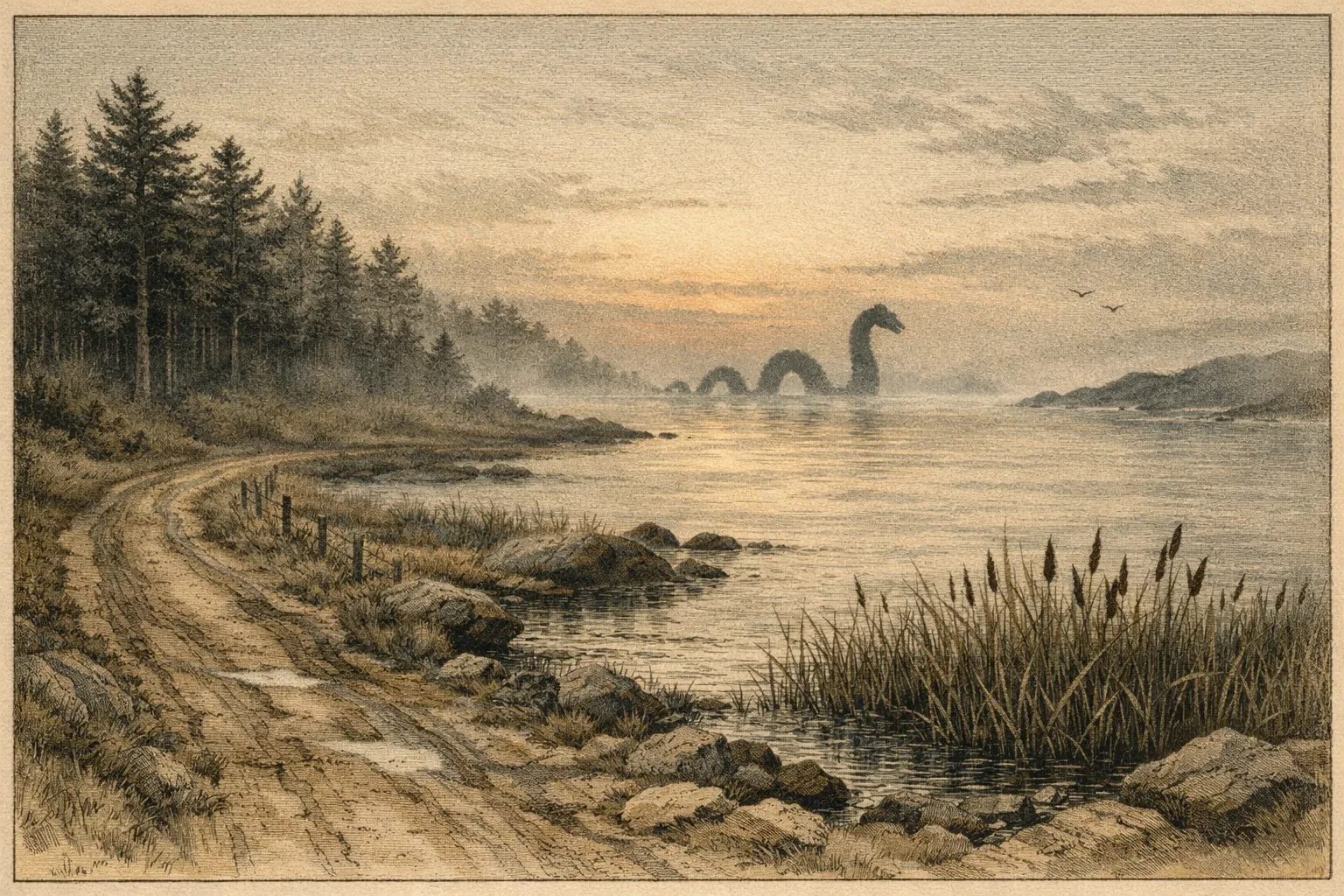
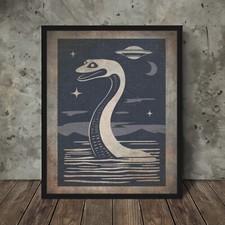
The Gloucester sea serpent is the state’s heavyweight cryptid story. Reports clustered around Cape Ann and Gloucester Harbour in 1817, when witnesses described a long marine creature, often serpent-like or humped, moving through the water. The story was not merely tavern talk: the Linnaean Society of New England investigated the reports and produced an 1817 pamphlet on a “large marine animal” seen near Cape Ann. The Massachusetts Historical Society notes that the society’s report concluded the serpent was real and even classified it as a new species, Scoliophis atlanticus.[Massachusetts Historical Society]masshist.orgit appeared so strange and wonderfulit appeared so strange and wonderful
That makes the Gloucester case fascinating even for sceptics. It shows early American naturalists trying to do science in a moment when public testimony, newspaper excitement and incomplete zoological knowledge were all colliding. The Linnaean Society was young, ambitious and working in a world where marine biology was still full of gaps. A large unknown creature in a harbour did not seem automatically absurd in 1817.
Later writers have treated the Gloucester serpent as a case study in how knowledge is made. Chandos Michael Brown’s article “A Natural History of the Gloucester Sea Serpent” appeared in American Quarterly in 1990 and framed the episode around science, authority and culture in antebellum America. In plain terms, the serpent mattered because it forced people to ask who should be believed: fishermen, townspeople, gentlemen naturalists, newspaper editors or later sceptics.[JSTOR]jstor.orgOpen source on jstor.org.
Modern sceptical explanations have ranged from misidentified known animals to unusual marine events. Joe Nickell, writing in Skeptical Inquirer, argued that key features in the old testimony could point towards a known animal rather than a new sea serpent, while other discussions have suggested that humps, wakes, whales, sharks, seals, swimming animals or multiple animals in line can all turn into “serpents” under the right conditions.[Skeptical Inquirer]skepticalinquirer.orggloucester sea serpent mystery solved after two centuriesgloucester sea serpent mystery solved after two centuries
The legend’s afterlife is unusually strong. Cape Ann Museum material preserves the visual culture around the serpent, including nineteenth-century images and references to the Linnaean Society report. That gives the Gloucester creature something most cryptids lack: a long paper trail, public art, institutional memory and a place in local maritime identity.[Cape Ann Museum]capeannmuseum.orgserpent articleserpent article
The Dover Demon: a two-night mystery that became a modern cryptid
The Dover Demon is much younger, stranger-looking and thinner in evidence than the Gloucester sea serpent, but it has become Massachusetts’ most recognisable modern cryptid. The core reports came from Dover, west of Boston, on 21–22 April 1977. The usual account centres on three teenage witnesses: Bill Bartlett on Farm Street, John Baxter on Miller Hill Road, and Abby Brabham on Springdale Avenue. Descriptions vary, but the creature is typically remembered as small, thin-limbed, pale or peach-coloured, with a large head and glowing eyes.[Wikipedia]WikipediaDover DemonDover Demon
What gives the Dover Demon its staying power is its odd fit with the landscape. It was not a hairy forest ape or a lake serpent. It was a fragile, almost alien-looking figure glimpsed beside rural roads and stone walls in an affluent Massachusetts town. The witnesses were young, the sightings were brief, and the case produced no body, tracks, photographs or repeat flap. That makes it perfect folklore material: just enough detail to visualise, not enough evidence to settle.
Sceptical explanations have stayed cautious rather than final. Benjamin Radford’s Skeptical Inquirer analysis argues that the case rests on a small number of eyewitnesses and is unlikely to be solved unless a hoax is confessed or better evidence appears. Proposed explanations include a foal, a calf, a misidentified animal, an owl, a pop-culture-influenced story, or a school-holiday hoax. Joe Nickell separately suggested an owl-based explanation, noting how reflective eyes, pale plumage and partially opened wings might appear strange in headlights.[Skeptical Inquirer]skepticalinquirer.orgSkeptical Inquirer Deconstructing the Dover DemonSkeptical Inquirer Deconstructing the Dover Demon
The Dover Demon also shows how a local report becomes pop culture. WGBH revisited the case in 2024, describing how the creature still puzzles enthusiasts nearly half a century later, while later entertainment and cryptid media have turned the sketch-like witness descriptions into a standard monster image.[GBH]wgbh.orgnearly half a century later dover demon mystery still puzzles enthusiastsnearly half a century later dover demon mystery still puzzles enthusiasts
Its evidential status is weak: no confirmed animal, no physical evidence, and only a short sighting window. Its folklore status is strong: a vivid local creature, tied to exact roads and dates, with a look unlike most older New England monsters.
The Bridgewater Triangle: one label, many creatures
The Bridgewater Triangle is not a single monster case. It is a regional folklore frame applied to roughly 200 square miles of southeastern Massachusetts, commonly associated with Bridgewater, West Bridgewater, Easton, Raynham, Taunton, Rehoboth, Freetown and surrounding areas. The Bridgewater Public Library describes it as a zone of alleged paranormal phenomena including UFOs, poltergeists, Bigfoot-like sightings, giant snakes and thunderbirds, with the term coined by New England cryptozoologist Loren Coleman.[bridgewaterpubliclibrary.org]bridgewaterpubliclibrary.orgOpen source on bridgewaterpubliclibrary.org.
For a creature-focused Massachusetts page, the key point is that the Triangle acts like a collecting basin. Bigfoot claims, thunderbird stories, giant snakes, black dogs, Pukwudgie retellings, odd lights and swamp legends all get pulled into the same geography. That can be useful for readers, because it shows where the state’s weird-animal folklore clusters. It can also blur categories. A Wampanoag little-people tradition, a modern Bigfoot report, a misidentified bird and a ghost story are not the same kind of claim, even when they are retold on the same tour.
Hockomock Swamp is the centre of gravity. Its scale, wetland ecology and cultural history give it the right ingredients for durable legend. Officially, it is a major wetland and conservation area; in paranormal writing, it becomes the “heart” of the Triangle. Those two identities feed each other. A real swamp can be beautiful, ecologically important and difficult to cross, while also becoming a screen onto which people project danger and mystery.[Massachusetts Government]mass.govOpen source on mass.gov.
Creature claims in the Triangle tend to be evidence-light. Atlas Obscura notes reports ranging from Bigfoot sightings to strange orbs, cattle mutilation and a 1980 Boston Magazine account in which Norton police sergeant Thomas Downey reportedly saw a six-foot winged creature late at night. Such stories are memorable, but they usually arrive as retold testimony rather than documented zoological evidence.[Atlas Obscura]atlasobscura.comAtlas Obscura How Massachusetts Came to Have Its Own BermudaAtlas Obscura How Massachusetts Came to Have Its Own Bermuda
The best reading is therefore layered: the Bridgewater Triangle is a powerful regional folklore machine, not a proven monster habitat. Its importance lies in how it organises southeastern Massachusetts weirdness into a shared map.
Pukwudgies: folklore, not just “tiny cryptids”
Pukwudgies are often presented online as small goblin-like cryptids haunting the Bridgewater Triangle or Freetown State Forest. That modern framing is only part of the story. A more careful approach treats Pukwudgies first as beings in Indigenous and regional folklore, then asks how they were later absorbed into cryptid culture.
A useful corrective comes from New England folklore writing that distinguishes broad internet monster descriptions from older Wampanoag material. One discussion notes that early Massachusetts Pukwudgie stories locate them around the salt-water marshes near Popponesset Bay, south of Mashpee, and present them as “little people” with social organisation rather than merely as troll-like monsters. It also warns that modern cryptid retellings often flatten different Indigenous traditions into a generic spooky creature.[Fairies of New England]fairiesofnewengland.comFairies of New England The problem with the pukwudgies of MassachusettsFairies of New England The problem with the pukwudgies of Massachusetts
That distinction matters for public-facing cryptid writing. Calling Pukwudgies “Massachusetts cryptids” can be acceptable in a modern folklore context, but it should not erase the fact that these stories come through Indigenous tradition, later settler retellings and contemporary paranormal tourism. The creature changes meaning depending on who is telling the story.
In Bridgewater Triangle media, Pukwudgies are often associated with Freetown State Forest and Hockomock Swamp as dangerous tricksters. That version fits the wider “cursed swamp” atmosphere, but it is also the version most shaped by modern paranormal packaging. The evidence for actual recent encounters is anecdotal; the evidence for the figure’s importance in regional storytelling is much stronger.[Wikipedia]WikipediaBridgewater TriangleBridgewater Triangle
Bigfoot in Massachusetts: forests, flaps and thin evidence
Massachusetts Bigfoot stories cluster in two broad kinds of place: the wilder west and the spooky south-east. The Berkshires provide the most intuitive setting, with wooded mountains, rural roads and proximity to New York and Vermont. The Bridgewater Triangle provides the more dramatic folklore setting, where Bigfoot-like creatures are folded into a larger paranormal zone.
The Bigfoot Field Researchers Organization lists Massachusetts reports by county, including recent Class B reports in Berkshire, Worcester and Hampshire counties. A Class B report generally means a possible encounter without clear visual confirmation or strong physical evidence. These reports are useful as a map of claims, but they are not proof of an undiscovered primate.[BFRO]bfro.netstate listing.aspstate listing.asp
The “Barrington Beast” is one of the state’s older Bigfoot-like stories. Modern local coverage describes a 1765 Berkshire County account involving a strange creature near Great Barrington, later folded into Bigfoot history. The Berkshire Edge notes that the first printed account of a Berkshire County “creature” appeared in 1765 and placed the incident near what is now Great Barrington Town Hall.[The Berkshire Edge]theberkshireedge.comThe Berkshire Edge'True' story of Barrington BigfootThe Berkshire Edge'True' story of Barrington Bigfoot
That early date is interesting, but it should be handled carefully. It predates the twentieth-century Bigfoot image by nearly two centuries. A colonial-era “creature” story can become a Bigfoot ancestor in modern retelling, but it may not originally have meant anything like the Pacific Northwest Sasquatch. This is a common pattern in cryptid history: older wild-man, bear, giant or devil stories get reclassified after a famous modern monster category becomes available.
In southeastern Massachusetts, Bigfoot stories often attach to Hockomock Swamp and the Bridgewater Triangle. Boston.com’s 2013 travel piece, drawing on local weird-lore sources, refers to claims of Bigfoot sightings in the swamp and a 1970s episode in which a creature allegedly killed livestock, followed by a police search that found no sign of it. That is classic monster-flap structure: alarming animal losses, a dramatic suspected culprit, official attention, then no confirmatory evidence.[Boston.com]boston.comInside the Bridgewater TriangleInside the Bridgewater Triangle

The Beast of Truro and the phantom-cat problem
The Beast of Truro, also called the Pamet Puma, is one of Massachusetts’ most plausible-sounding mystery-beast stories because it concerns a kind of animal that really exists elsewhere: a large cat. In the early 1980s, Truro on Cape Cod saw reports of pet and livestock attacks, strange cries and sightings of a cougar-like animal. Local retellings describe a creature with a long, curved tail and a body larger than an ordinary bobcat.[wildings-cape-cod]dwcapecod.comwildings-cape-cod Tracking the 'Pamet Pumawildings-cape-cod Tracking the 'Pamet Puma
The difficulty is that mountain lions are not recognised as a resident Massachusetts species. MassWildlife says there are only two Massachusetts mountain-lion records meeting its evidence requirements. Its public guidance emphasises that many reports cannot be confirmed and that the agency needs physical evidence, such as a clear photograph, tracks, scat, hair or DNA.[Massachusetts Government]mass.govOpen source on mass.gov.
This is where phantom-cat folklore becomes especially interesting. Unlike the Dover Demon, a cougar is a real animal. A transient mountain lion is not impossible in the eastern United States; one famously travelled through the region and was killed in Connecticut in 2011, a case often cited in discussions of New England cougar reports. But a breeding Massachusetts population would be expected to leave repeated, verifiable evidence.[Massachusetts Government]mass.govOpen source on mass.gov.
For Truro, plausible explanations include a loose dog or dogs, a bobcat seen under poor conditions, an escaped exotic cat, a transient cougar, or a mixture of animal attacks and rumour. The case remains memorable because it sits close to the border between cryptid and wildlife question. It is not a supernatural monster story; it is a local panic around an unidentified predator.
Smaller creature traditions: Silver Lake, Black Flash and thunderbirds
Not every Massachusetts monster has the evidence or cultural weight of Gloucester, Dover or Bridgewater. Some survive as local oddities, one-line newspaper memories or Cape Cod Halloween lore.
The Silver Lake “frogman” or giant frog tradition is a good example of a thin but intriguing local lake-monster claim. New England Folklore traces mentions of a “Giant Frog” or little “Frogman” in Plymouth County’s Silver Lake to reports discussed around general stores and in old newspaper references from the 1940s and 1950s. The available evidence is sparse, and even modern cryptid summaries tend to circle back to the same limited references.[New England Folklore]newenglandfolklore.blogspot.comthe frogman of silver lake trulythe frogman of silver lake truly
Provincetown’s Black Flash belongs more to phantom or costumed-boogeyman lore than to animal cryptozoology, but it sits close enough to Massachusetts creature tradition to deserve mention. Provincetown Magazine describes the Black Flash as part of the strange atmosphere of 1939, a year that also included a reported “sea monster” carcass near Wood End. Later local retellings portray a tall, fast, black-clad figure with glowing or metallic features, frightening townspeople and eluding capture.[Shutterstock]provincetownmagazine.comOpen source on provincetownmagazine.com.
The likely explanations for the Black Flash are social rather than zoological: prankster, rumour, panic, theatrical costume, or multiple incidents folded into one character. That makes it useful for comparison. Some Massachusetts “creatures” are claimed animals; others are mystery figures; others are folklore beings. They all live in the same monster ecosystem, but they should not be evaluated as if they were the same type of evidence.
Thunderbird or giant-bird claims in the Bridgewater Triangle have a similar ambiguity. A large bird glimpsed at night or in bad weather can become a pterodactyl-like creature in retelling, especially in a region already primed for weirdness. Massachusetts has large birds, including herons, eagles, vultures, owls and migratory species, but no physical evidence supports a surviving prehistoric bird or unknown giant avian species.
What sceptics usually point to
Sceptical explanations for Massachusetts cryptids are not all the same. A good sceptical reading starts with the specific case.
For the Gloucester sea serpent, the strongest sceptical line is misidentification shaped by nineteenth-century natural-history uncertainty: known marine animals, odd swimming behaviour, waves, humps, multiple animals, whales, sharks, seals or carcasses. The case remains historically important because many people reported something, but “many reports” does not automatically equal “new species”.[Massachusetts Historical Society]masshist.orgit appeared so strange and wonderfulit appeared so strange and wonderful
For the Dover Demon, the sceptical focus is eyewitness limitation: brief night sightings, young witnesses, no physical evidence, delayed publicity and possible animal or hoax explanations. The case is not debunked beyond all doubt, but it is too thin to support a biological claim.[Skeptical Inquirer]skepticalinquirer.orgSkeptical Inquirer Deconstructing the Dover DemonSkeptical Inquirer Deconstructing the Dover Demon
For Bigfoot and phantom cats, the issue is ecological evidence. Massachusetts has black bears, bobcats, coyotes and fishers; it has occasional unusual wildlife reports; and it has many people carrying phones and using trail cameras. A breeding population of large unknown primates or cougars would be expected to leave clearer traces than anecdotes alone. Mass Audubon and MassWildlife’s species information helps set the baseline for what animals are actually known in the state.[Mass Audubon]massaudubon.orgOpen source on massaudubon.org.
For Bridgewater Triangle stories, the sceptical issue is category mixing. A swamp can have real Indigenous history, real wildlife, real crimes, real conservation value, real local fear and real folklore without requiring one paranormal explanation. The Triangle is powerful because it bundles many anxieties together: wilderness, colonial violence, wetlands, darkness, animal remains, old institutions, police stories and modern media.
Why the legends endure
Massachusetts cryptids endure because they are attached to places people can actually visit. Farm Street in Dover, Gloucester Harbour, the Hockomock Swamp, Freetown State Forest, Truro dunes and Berkshire backroads are not abstract monster realms. They are ordinary Massachusetts landscapes with one extra story layer.
The legends also let different kinds of readers enjoy the same material. A folklore reader can care about Pukwudgies and the Bridgewater Triangle as living story traditions. A history reader can follow the Gloucester sea serpent through early American science and newspaper culture. A wildlife reader can treat the Beast of Truro as a case in predator identification. A sceptic can ask why evidence fails to improve. A road-trip reader can simply enjoy the strangeness without pretending the monsters are confirmed.
The state’s monster map is therefore best read as a set of claims with different evidential weights:
- Most historically documented: the Gloucester sea serpent, because of nineteenth-century reports and the Linnaean Society investigation.
- Most iconic modern cryptid: the Dover Demon, because of its precise 1977 setting, memorable witness sketches and unusual appearance.
- Largest folklore zone: the Bridgewater Triangle, because it gathers many separate creature and paranormal traditions under one regional label.
- Most plausible animal confusion: the Beast of Truro and other big-cat reports, because cougars are real animals but not established as a Massachusetts population.
- Most easily distorted by retelling: Pukwudgies, because Indigenous little-people traditions have often been recast as generic internet cryptids.
That mix is what makes Massachusetts distinctive. Its monsters are not all trying to be the same thing. Some come from the sea, some from the swamp, some from teen testimony, some from old folklore, and some from the uneasy moment when a real animal is seen badly enough to become something else.

Amazon book picks
Further Reading
Books and field guides related to Why Massachusetts Makes Such Strange Monsters. Use these as the next step if you want deeper reading beyond the article.
The United States of Cryptids
Includes major Massachusetts creatures within a national framework.
eBay marketplace picks
Marketplace Samples
Live-tested eBay searches with available results related to this page.
Endnotes
1.
Source: mass.gov
Link:https://www.mass.gov/info-details/hockomock-swamp-acec
2.
Source: mass.gov
Link:https://www.mass.gov/info-details/mammals-in-massachusetts
3.
Source: jstor.org
Link:https://www.jstor.org/stable/i327497
4.
Source: Wikipedia
Title: Dover Demon
Link:https://en.wikipedia.org/wiki/Dover_Demon
5.
Source: wgbh.org
Title: nearly half a century later dover demon mystery still puzzles enthusiasts
Link:https://www.wgbh.org/culture/2024-04-29/nearly-half-a-century-later-dover-demon-mystery-still-puzzles-enthusiasts
6.
Source: bridgewaterpubliclibrary.org
Link:https://bridgewaterpubliclibrary.org/bridgewater-triangle-and-hockomock-swamp
7.
Source: mass.gov
Title: into the hockomock where wildlife and stories dwell
Link:https://www.mass.gov/news/into-the-hockomock-where-wildlife-and-stories-dwell
8.
Source: Wikipedia
Title: Bridgewater Triangle
Link:https://en.wikipedia.org/wiki/Bridgewater_Triangle
9.
Source: bfro.net
Title: state listing.asp
Link:https://www.bfro.net/GDB/state_listing.asp?state=ma
10.
Source: bfro.net
Title: show county reports.asp
Link:https://www.bfro.net/GDB/show_county_reports.asp?county=Berkshire&state=MA
11.
Source: boston.com
Title: Inside the Bridgewater Triangle
Link:https://www.boston.com/culture/new-england-travel/2013/10/02/inside-the-bridgewater-triangle/
12.
Source: mass.gov
Link:https://www.mass.gov/info-details/are-there-mountain-lions-in-massachusetts
13.
Source: mass.gov
Link:https://www.mass.gov/how-to/report-unusual-wildlife-sightings
14.
Source: mass.gov
Link:https://www.mass.gov/doc/mountain-lions-in-massachusetts-distinguishing-fiction-from-the-facts/download
15.
Source: Wikipedia
Title: Gloucester sea serpent
Link:https://en.wikipedia.org/wiki/Gloucester_sea_serpent
16.
Source: Wikipedia
Link:https://en.wikipedia.org/wiki/Pukwudgie
17.
Source: Wikipedia
Title: Hockomock Swamp
Link:https://en.wikipedia.org/wiki/Hockomock_Swamp
18.
Source: mass.gov
Link:https://www.mass.gov/learn-about-wildlife
19.
Source: mass.gov
Link:https://www.mass.gov/lists/living-with-wildlife-fact-sheet-library
20.
Source: bridgewaterpubliclibrary.org
Link:https://bridgewaterpubliclibrary.org/sites/bridgewaterpubliclibrary.org/files/attachments/MysteriousAmerica.pdf
21.
Source: wgbh.org
Title: regaling tales of the gloucester sea serpent a forgotten legend of cryptozoology
Link:https://www.wgbh.org/news/local/2024-05-22/regaling-tales-of-the-gloucester-sea-serpent-a-forgotten-legend-of-cryptozoology
22.
Source: massaudubon.org
Link:https://www.massaudubon.org/nature-wildlife/mammals-in-massachusetts
23.
Source: masshist.org
Title: it appeared so strange and wonderful
Link:https://www.masshist.org/beehiveblog/2019/10/it-appeared-so-strange-and-wonderful/
24.
Source: skepticalinquirer.org
Title: gloucester sea serpent mystery solved after two centuries
Link:https://skepticalinquirer.org/2019/09/gloucester-sea-serpent-mystery-solved-after-two-centuries/
25.
Source: capeannmuseum.org
Title: serpent article
Link:https://www.capeannmuseum.org/media/pdfs/serpent_article.pdf
26.
Source: skepticalinquirer.org
Title: Skeptical Inquirer Deconstructing the Dover Demon
Link:https://skepticalinquirer.org/2022/12/deconstructing-the-dover-demon/
27.
Source: skepticalinquirer.org
Link:https://skepticalinquirer.org/2023/06/identifying-the-enigmatic-dover-demon/
28.
Source: atlasobscura.com
Title: Atlas Obscura How Massachusetts Came to Have Its Own Bermuda
Link:https://www.atlasobscura.com/articles/how-massachusetts-came-to-have-its-own-bermuda-triangle
29.
Source: fairiesofnewengland.com
Title: Fairies of New England The problem with the pukwudgies of Massachusetts
Link:https://fairiesofnewengland.com/2023/11/30/problem-with-the-massachusetts-pukwudgies/
30.
Source: theberkshireedge.com
Title: The Berkshire Edge’True’ story of Barrington Bigfoot
Link:https://theberkshireedge.com/real-story-great-barrington-bigfoot/
31.
Source: dwcapecod.com
Title: wildings-cape-cod Tracking the ‘Pamet Puma’
Link:https://www.dwcapecod.com/post/tracking-the-pamet-puma
32.
Source: theberkshireedge.com
Title: is there a cougar coverup in massachusetts
Link:https://theberkshireedge.com/is-there-a-cougar-coverup-in-massachusetts/
33.
Source: newenglandfolklore.blogspot.com
Title: the frogman of silver lake truly
Link:https://newenglandfolklore.blogspot.com/2016/04/the-frogman-of-silver-lake-truly.html
34.
Source: provincetownmagazine.com
Link:https://provincetownmagazine.com/2011/10/16/the-black-flash-the-legend-lives-on/
35.
Source: folkbestiary.com
Link:https://folkbestiary.com/massachusetts/
36.
Source: pdsh.fandom.com
Title: Dover Demon
Link:https://pdsh.fandom.com/wiki/Dover_Demon
37.
Source: cryptidz.fandom.com
Title: Dover Demon
Link:https://cryptidz.fandom.com/wiki/Dover_Demon
38.
Source: cryptozoologycryptids.fandom.com
Title: Dover Demon
Link:https://cryptozoologycryptids.fandom.com/wiki/Dover_Demon
39.
Source: obscurban-legend.fandom.com
Title: Black Flash
Link:https://obscurban-legend.fandom.com/wiki/Black_Flash
40.
Source: newengland.com
Link:https://newengland.com/yankee/history/bigfoot-sighting-berkshires/
41.
Source: reddit.com
Title: the dover demon
Link:https://www.reddit.com/r/cryptids/comments/1k5kzng/the_dover_demon/
42.
Source: facebook.com
Link:https://www.facebook.com/MassWildlife/photos/wildlife-wednesday-trivia-can-you-guess-what-type-of-animal-this-skull-belongs-t/2994248187303961/
43.
Source: medium.com
Title: The Hockomock Swamp
Link:https://medium.com/%40wbhs1965/the-hockomock-swamp-c0ec5092de7c
44.
Source: bostonglobe.com
Link:https://www.bostonglobe.com/lifestyle/2013/10/25/monsters-new-england/2vkXK8GhxUIDLAWfLblqaO/story.html
45.
Source: bostonglobe.com
Link:https://www.bostonglobe.com/metro/2019/06/26/how-portland-became-center-unknown-create-world-like-bigfoot-nessie-yeti-all-that-stuff/EkA2eRKziAOWcpypvHRftO/story.html
46.
Source: newenglandfolklore.blogspot.com
Link:https://newenglandfolklore.blogspot.com/2016/04/
47.
Source: newenglandfolklore.blogspot.com
Title: bigfoot at cemetery gates
Link:https://newenglandfolklore.blogspot.com/2021/06/bigfoot-at-cemetery-gates.html
48.
Source: newenglandfolklore.blogspot.com
Title: black flash of provincetown
Link:https://newenglandfolklore.blogspot.com/2009/08/black-flash-of-provincetown.html
49.
Source: newenglandfolklore.blogspot.com
Title: the black flash of provincetown hoax or
Link:https://newenglandfolklore.blogspot.com/2017/06/the-black-flash-of-provincetown-hoax-or.html
50.
Source: cranberrycountymagazine.blogspot.com
Title: the beast of truro
Link:https://cranberrycountymagazine.blogspot.com/2015/09/the-beast-of-truro.html
51.
Source: cryptozoo-oscity.blogspot.com
Title: silver lakes and their creatures
Link:https://cryptozoo-oscity.blogspot.com/2022/02/silver-lakes-and-their-creatures.html
52.
Source: allthatsinteresting.com
Link:https://allthatsinteresting.com/pukwudgie
53.
Source: barteredhistory.wordpress.com
Title: the gloucester sea serpent
Link:https://barteredhistory.wordpress.com/2021/02/07/the-gloucester-sea-serpent/
54.
Source: atlasobscura.com
Title: hockomock swamp massachusetts
Link:https://www.atlasobscura.com/places/hockomock-swamp-massachusetts
55.
Source: atlasobscura.com
Title: perry sea serpent lake monster
Link:https://www.atlasobscura.com/articles/perry-sea-serpent-lake-monster
56.
Source: coyotes-wolves-cougars.blogspot.com
Title: black bears coyotes bobcats and fishers
Link:https://coyotes-wolves-cougars.blogspot.com/2012/03/black-bears-coyotes-bobcats-and-fishers.html
57.
Source: bostonghosts.com
Title: bridgewater triangle
Link:https://bostonghosts.com/bridgewater-triangle/
58.
Source: massaudubon.org
Title: 3 shy animals you re not likely to find
Link:https://www.massaudubon.org/news/latest/3-shy-animals-you-re-not-likely-to-find
59.
Source: billrrrrr.blogspot.com
Title: the weird creatures of eerie
Link:https://billrrrrr.blogspot.com/2018/10/the-weird-creatures-of-eerie.html
60.
Source: capeannmuseum.org
Title: the serpent came to gloucester
Link:https://www.capeannmuseum.org/event/the-serpent-came-to-gloucester/
61.
Source: tispaquin.blogspot.com
Title: exploring bridgewater triangle
Link:https://tispaquin.blogspot.com/2010/11/exploring-bridgewater-triangle.html
62.
Source: lairofmythics.com
Title: dover demon
Link:https://lairofmythics.com/blogs/cryptid-case-files/dover-demon?srsltid=AfmBOophHKnG8_3MrpDJZicycjy37EGpRsiYjaLk94P-2V434K-DNh_s
63.
Source: discovery.com
Title: The Bridgewater Triangle | Expedition X
Link:https://www.discovery.com/shows/expedition-x/6/the-bridgewater-triangle
64.
Source: salemghosts.com
Title: The Bridgewater Triangle
Link:https://salemghosts.com/the-bridgewater-triangle/
65.
Source: concordma.gov
Link:https://www.concordma.gov/750/Wildlife
Additional References
66.
Source: westfordma.gov
Link:https://www.westfordma.gov/151/Information-on-Common-Wildlife-Species
67.
Source: westonma.gov
Link:https://www.westonma.gov/1133/Living-with-Wildlife
68.
Source: reddit.com
Link:https://www.reddit.com/r/Cryptozoology/comments/1hjo5nf/an_art_piece_of_the_dover_demon_by_aqualianranger/
69.
Source: reddit.com
Link:https://www.reddit.com/r/bigfoot/comments/1qvvdjj/bigfoot_encounters_in_massachusetts_berkshire/
70.
Source: facebook.com
Link:https://www.facebook.com/groups/1330198464462221/posts/1991763194972408/
71.
Source: facebook.com
Link:https://www.facebook.com/berkshire.eagle/posts/bigfoot-researchers-tim-and-eric-vogel-will-share-nearly-20-years-of-bigfoot-inv/1671306787610843/
72.
Source: reddit.com
Link:https://www.reddit.com/r/Cryptozoology/comments/xg805v/bridgewater_triangle/
73.
Source: bestiary.us
Link:https://www.bestiary.us/books/natural-history-gloucester-sea-serpent-knowledge-power-and-culture-science-antebellum-america
74.
Source: brill.com
Link:https://brill.com/display/book/9789086868865/BP000006.pdf?srsltid=AfmBOoo-nbofH108VZQtDhuzwa3MszjdxW5aCCKwrvuFlBS7U1LccfFz
75.
Source: brill.com
Link:https://brill.com/downloadpdf/display/title/68550.pdf?srsltid=AfmBOoplK-BFMt8jeod47-oKw4XMDDU9WGQDvWJ7CWZcnPtyqd4Iec4k
Topic Tree
Follow this branch
Related pages 49
- Rhode Island Monsters
- Hawaii Monsters
- Illinois Cryptids
- Nebraska Cryptids
- Alabama Cryptids
- +44 more in sidebar