What Monsters Haunt New Mexico's Wild Places?
New Mexico’s cryptid tradition is less about one official “state monster” than about a striking mix of desert-edge animal reports, mountain Bigfoot claims, borderland folklore, and creatures borrowed or reshaped by the wider American Southwest.
Page outline Jump by section
Why New Mexico Makes Good Monster Country
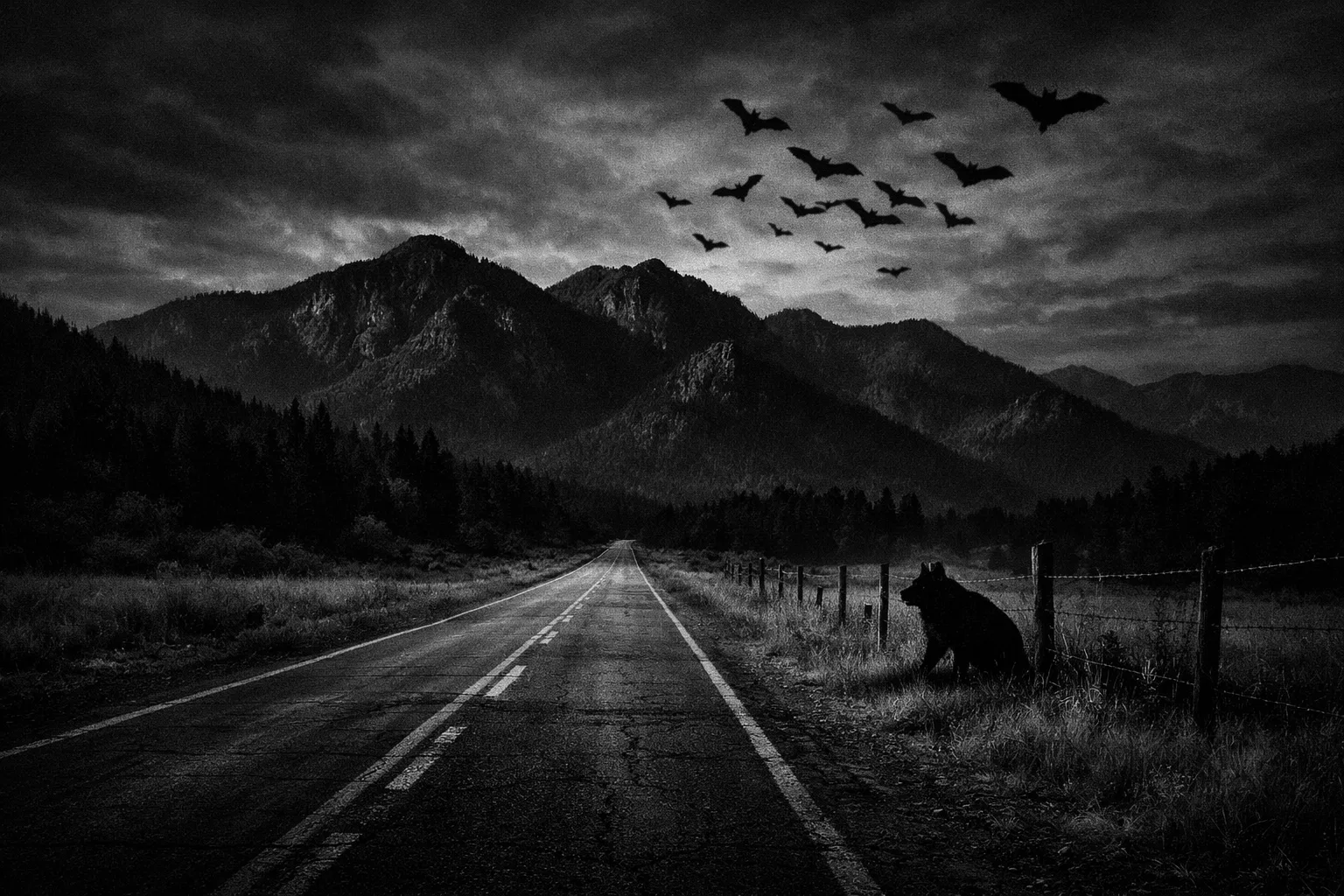
The state has the right ingredients for creature legends: lonely roads, high desert, rugged mountains, deep forests, working ranches, and a long oral tradition in which warnings about water, night travel, livestock, and wild places can become memorable stories. The Gila National Forest alone covers about 3.3 million acres of mountains, woodland and range in south-western New Mexico, while the Gila Wilderness is celebrated by the US Forest Service as the world’s first designated wilderness. That scale matters: for believers it creates “room” for unknown animals; for sceptics it explains why ordinary bears, cougars, elk, coyotes, owls, cranes and bats can become uncanny when seen briefly, at night, or far from help.[US Forest Service]fs.usda.govOpen source on usda.gov.
New Mexico also has real wildlife large enough to seed misidentifications. The New Mexico Department of Game and Fish notes that black bears in the state occur in several colour phases, including cinnamon, reddish and blonde, not just black. Mountain lions are also present, and conservation groups citing state estimates put the adult cougar population in the thousands. Add Mexican wolves in the Arizona–New Mexico recovery area, coyotes, large birds at refuges, and the spectacular bat flights at Carlsbad Caverns, and the state already contains plenty of animals that can look monstrous under the right conditions.[nm.gov]wildlife.dgf.nm.govOpen source on nm.gov.
That is why New Mexico cryptid history is best read in layers. Some accounts are direct “I saw a creature” claims. Some are campfire elaborations around known animals. Some are folklore with moral or spiritual weight. Some are internet-era retellings that turn older regional stories into shareable monster profiles. The most useful question is not simply “is it real?” but “what kind of story is this, and what evidence would actually support it?”
Is There a New Mexico Bigfoot?
New Mexico does have a Bigfoot tradition, though it is not as famous as the Pacific Northwest’s Sasquatch culture or Arizona’s Mogollon Monster. The Bigfoot Field Researchers Organization lists New Mexico as having 43 reports, with recent entries clustered around forested or semi-remote areas such as Catron County, Rio Arriba County and San Miguel County. One listed 2024 Catron County report describes a father and son claiming a close, well-lit encounter on a jeep trail in the Gila Mountains; another, from 2020, concerns possible wood knocks in a forested riverbed near Chama. These are claims, not verified biological records, but they show where the state’s modern Bigfoot lore tends to settle: wooded mountains, river corridors and back roads.[bfro.net]bfro.netOpen source on bfro.net.
The Gila is especially important because it gives New Mexico a natural Sasquatch stage without needing to import the misty forests of Oregon or Washington. It has steep terrain, dense woodland, large mammals, difficult access and a reputation for solitude. The US Forest Service describes the Gila as a vast landscape whose remote character gives visitors a feeling of solitude once they leave the main highways. In a cryptid context, that remoteness does two things at once: it makes the stories emotionally persuasive, and it makes ordinary verification difficult. A footprint, a night scream, a rock thrown near camp or a brief roadside sighting can remain a story because there may be no photo, specimen, follow-up trackway or independent observer.[US Forest Service]fs.usda.govOpen source on usda.gov.
The “Mogollon Monster” complicates the picture. It is usually treated as an Arizona Bigfoot associated with the Mogollon Rim, but the name “Mogollon” also belongs to New Mexico geography, including the Mogollon Mountains, Mogollon Baldy and the ghost town of Mogollon. Popular cryptid articles sometimes blur this into a New Mexico creature, while stronger summaries place the core legend in central and eastern Arizona along the Mogollon Rim. For a New Mexico page, the fairest reading is that the Mogollon Monster is a neighbouring Arizona legend whose vocabulary and landscape spill naturally into south-western New Mexico, rather than a creature that began as a clearly documented New Mexican tradition.[Wikipedia]WikipediaMogollon MonsterMogollon Monster
Sceptical explanations are straightforward but not dismissive. Bears can stand, walk briefly on hind legs, leave impressive tracks and appear in unexpected colour phases. Elk, feral livestock, humans in poor viewing conditions and ordinary nocturnal sounds can all become larger in memory. The scientific problem for a New Mexico Bigfoot is the same as elsewhere: repeated anecdotes have not produced a body, DNA sample, clear trail-camera sequence, nest site, scat sample or breeding population evidence that would be expected for a large primate living in North America.
Chupacabra: The Borderland Monster That Fits the Ranch Country
If Bigfoot belongs to New Mexico’s mountains, the chupacabra belongs to its ranch roads, goat pens, chicken coops and borderland imagination. The creature’s name means “goat-sucker”, and the standard legend says it attacks livestock and drains blood. The modern story first spread from Puerto Rico in the mid-1990s, then moved through Mexico and the US Southwest, changing shape as it travelled. Earlier descriptions leaned reptilian, spiny and almost alien; later US reports often described a hairless, dog-like animal with a strange back, pronounced teeth and grey or bluish skin.[Wikipedia]WikipediaOpen source on wikipedia.org.
New Mexico’s connection is partly cultural and partly ecological. A livestock-killing monster feels at home in a state with ranching traditions, coyotes, dogs, wolves and sparse rural settlement. It is also linked to a real investigative afterlife: Benjamin Radford’s book Tracking the Chupacabra: The Vampire Beast in Fact, Fiction and Folklore was published by the University of New Mexico Press, and Radford has argued that many North American chupacabra cases involve canids with mange rather than unknown predators. A 2015 report about a New Mexico investigator’s explanation of chupacabra sightings likewise emphasised that animals with advanced mange can look grotesque and may survive longer under warmer conditions.[Wikipedia]WikipediaTracking the ChupacabraTracking the Chupacabra
The strongest sceptical explanation is not that witnesses are foolish; it is that sick canids can look genuinely uncanny. Mange can strip hair, thicken skin, change an animal’s outline and expose the spine, tail and face in ways that make a coyote or dog look like something outside normal field guides. Mongabay summarised biologist Barry O’Connor’s view that many chupacabra sightings are probably linked to coyotes with mange, while Live Science reported that DNA-tested “chupacabra” carcasses from Texas and elsewhere have turned out to be mangy dogs or coyotes.[Mongabay News]news.mongabay.comOpen source on mongabay.com.
That does not make the chupacabra unimportant. It makes it a perfect modern cryptid: recent enough to track through media, flexible enough to absorb strange carcasses, and practical enough to attach to real livestock losses. In New Mexico, the chupacabra works because it sits exactly where folklore, animal disease, borderland storytelling and ranch frustration meet.
Giant Birds, Bats and the Sky-Monster Problem
New Mexico also attracts “giant bird” stories, usually folded into the wider thunderbird tradition. Here it is important to separate three things that often get mixed together: Indigenous thunderbird traditions, modern cryptid reports of oversized birds, and ordinary sightings of large birds exaggerated by distance or surprise. The thunderbird is a powerful supernatural being in many North American Indigenous traditions, not simply a big unknown animal, and reducing it to a cryptid can flatten its cultural meaning. Modern cryptozoology, by contrast, tends to treat “thunderbird” as a label for unusually large flying creatures reported by witnesses.[Wikipedia]WikipediaThunderbird (mythologyThunderbird (mythology
New Mexico gives such stories an unusually dramatic sky. Bosque del Apache National Wildlife Refuge, a 57,331-acre refuge along the Rio Grande, is famous for cranes, geese, ducks and other migratory birds, with the US Fish and Wildlife Service describing tens of thousands of wintering birds there. Large birds rising at dawn from wetlands or crossing a desert sky can look startling, especially to visitors unused to the scale of sandhill cranes or raptors in open country.[U.S. Fish and Wildlife Service]fws.govOpen source on fws.gov.
Then there are the bats. Carlsbad Caverns is not a cryptid site in the usual sense, but its evening bat flights show how real animal behaviour can feel supernatural. The National Park Service runs a seasonal Bat Flight Program from April through October, when visitors gather near the natural entrance to watch bats emerge. In folklore terms, this matters because New Mexico’s “monster country” is not empty scenery; it is full of actual mass animal movements, silhouettes and sounds that can seed stranger interpretations.[National Park Service]nps.govNational Park Service Bat Flight ProgramNational Park Service Bat Flight Program
The thunderbird question, then, is less “does New Mexico hide a prehistoric bird?” and more “how do people interpret the sky?” Known birds, forced perspective, gliders, drones, bats, shadows and memory can all enlarge a sighting. A credible giant-bird case would need more than astonishment: clear scale references, multiple independent witnesses, photographs or video with context, and preferably repeat observations in the same area.

Phantom Cats and Black Panthers in the High Desert
“Black panther” reports are common across the United States, and New Mexico’s mountains and desert edges provide plenty of room for them in local conversation. The usual claim is simple: someone sees a large, long-tailed black cat crossing a road, slipping through brush or moving along a ridge. The problem is biological. In North America, confirmed black “panthers” are not an established hidden population of melanistic cougars, and sceptical wildlife writers repeatedly point out that melanistic cougars have not been documented in the way they would need to be if they explained the volume of reports.[Higher Calling Wildlife]highercalling.netOpen source on highercalling.net.
New Mexico does have real large cats: mountain lions are part of the state’s wildlife, and they are elusive enough to generate surprise encounters. But mountain lions are usually tawny, not black. Poor light can darken a tan animal; a long-tailed dog, bobcat, house cat seen without scale, or even a shadowed cougar can become a “black panther” in memory. In the Southwest, jaguar and jaguarundi discussions also colour the imagination, but confirmed range, photographic evidence and agency records matter more than rumour. Recent Texas reporting on jaguarundi claims, for example, notes that extensive camera-trap efforts have not produced evidence for the species’ continued presence there, illustrating how hard it is for a real wildcat population to stay invisible in heavily watched habitat.[Mountain Lion Foundation]mountainlion.orgnew mexiconew mexico
For New Mexico, phantom-cat stories remain plausible as witness experiences but weak as evidence for an unknown animal. The state’s real cougars are already mysterious enough: silent, mostly nocturnal, wide-ranging and rarely seen well. That makes them excellent engines for folklore even without requiring a new species.
Lake Monsters Are Not New Mexico’s Strongest Tradition
Unlike Vermont, Scotland or parts of the Great Lakes region, New Mexico is not mainly a lake-monster state. Elephant Butte is the obvious candidate because it is New Mexico’s largest and most popular lake, and state tourism material presents it as a major site for boating, fishing and water sports. NASA’s Earth Observatory notes that Elephant Butte Reservoir was created in 1915 by the construction of Elephant Butte Dam and is fed by the Rio Grande. A large reservoir with boat traffic, fish stories, changing water levels and murky distance can certainly produce “monster” talk.[New Mexico]newmexico.orgOpen source on newmexico.org.
But there is no strong, widely documented New Mexico equivalent of Champ, Ogopogo or the Loch Ness Monster. What New Mexico has instead are “monster fish”, lake rumours, and the general tendency of large bodies of water to magnify logs, wakes, birds, carp, catfish or floating debris into something stranger. Elephant Butte belongs in the cryptid map as a place where a lake-monster legend could form, not as the centre of a deeply evidenced tradition.
That absence is useful. It shows that cryptid geography is not just about what landscapes exist; it is about which stories stick. New Mexico’s durable monster identity comes more from forests, roads, ranches, caves and borderland folklore than from lake serpents.
Folklore Creatures Are Not Always Cryptids
New Mexico’s creature lore includes figures that modern internet lists sometimes call cryptids, but many are better treated as folklore, ghost story or spiritual tradition. La Llorona, the weeping woman of Hispanic American folklore, is strongly associated with water, danger, grief and warnings to children. New Mexico versions often place her along the Rio Grande, ditches, rivers and lonely roads. That makes her central to New Mexican supernatural folklore, but she is not a mystery animal in the cryptozoological sense.[wikipedia.org]WikipediaLa LloronaLa Llorona
La Mala Hora and La Malogra occupy a similar border zone. La Mala Hora is usually described in New Mexico folklore as a night-road or crossroads spirit, sometimes a dark shape or female apparition that appears to lone travellers. La Malogra is described in regional retellings as a monster formed from cottonwood fluff, said to smother children, a striking example of how an environmental nuisance can become a cautionary creature. These stories are valuable because they show how New Mexico turns landscape features — ditches, crossroads, cottonwoods, night roads — into warnings. They should not be forced into the same evidence category as Bigfoot footprints or chupacabra carcasses.[americanfolklore.net]americanfolklore.netLa Mala HoraLa Mala Hora
The most sensitive example is the skinwalker. In Navajo tradition, the skinwalker is not a cryptid animal but a harmful witch figure tied to culturally specific beliefs, taboos and moral boundaries. Public summaries stress that many Navajo people are reluctant to discuss such traditions with outsiders, and that non-Native horror retellings often strip the subject of its context. Since parts of the Navajo Nation extend into New Mexico, the topic is geographically relevant, but a respectful New Mexico cryptid page should not treat skinwalkers as just another monster to collect beside Bigfoot or the chupacabra.[Wikipedia]WikipediaOpen source on wikipedia.org.
What Evidence Would Actually Change the Story?
Most New Mexico cryptid claims currently rest on eyewitness accounts, local retellings, strange carcass stories, online compilations and the state’s suggestive terrain. That is enough to sustain folklore, but not enough to establish a hidden animal. The evidence threshold depends on the claim.
For a Bigfoot-style animal, strong evidence would mean repeatable physical traces: clear tracks with stride and anatomical detail, hair or scat yielding unknown primate DNA, consistent trail-camera images, or a specimen. For a chupacabra, the key test is usually veterinary or genetic: many alleged carcasses can be checked against coyote, dog, fox, wolf hybrid, mange and decomposition. For phantom cats, the most useful evidence would be a clear trail-camera image with scale, a verified carcass, or agency-confirmed genetic material. For giant birds, scale is everything: a dramatic silhouette is weak; multiple images, known-distance references and expert bird identification would be much stronger.
New Mexico’s real animals also set the bar. Black bears, cougars, coyotes, wolves, cranes, raptors and bats are already documented, managed and studied in the state. The US Fish and Wildlife Service describes the Mexican wolf as the rarest subspecies of grey wolf in North America and notes that it was reintroduced to the wild in 1998 in the Blue Range Wolf Recovery Area within the Mexican Wolf Experimental Population Area. When real rare animals leave records, collars, conflicts, recovery plans and population counts, it becomes harder to argue that a breeding population of much larger unknown animals would leave only stories.[U.S. Fish and Wildlife Service]fws.govOpen source on fws.gov.
That does not drain the fun from the legends. It makes them sharper. New Mexico’s cryptids are most interesting when read as a conversation between place and perception: a bear glimpsed upright in the Gila, a mangy coyote recast as a goat-sucker, cranes and bats turning the sky theatrical, a dark roadside shape becoming La Mala Hora, and old warnings finding new life as internet monster lore.

The Takeaway for New Mexico’s Monster Map
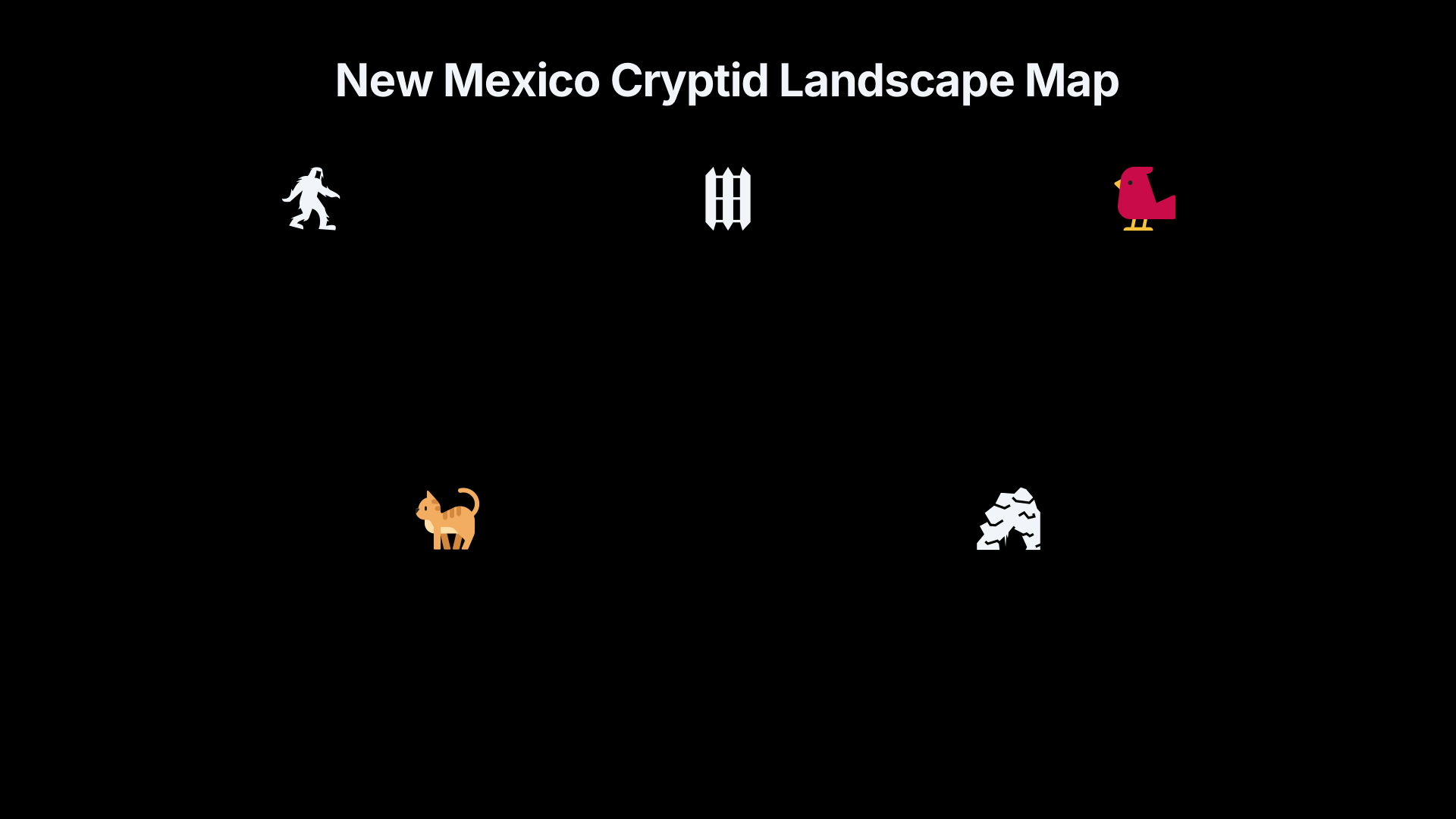
New Mexico’s strongest cryptid identity is a four-part map: Bigfoot-like claims in remote forests, chupacabra stories in ranch and borderland settings, sky-monster interpretations in a state of dramatic bird and bat spectacles, and folklore beings rooted in Hispano and Indigenous traditions. The evidence for unknown animals remains thin, but the stories are not random. They follow the state’s ecology: forests produce ape-men, ranchlands produce livestock predators, wetlands and caves produce winged spectacles, and roads, ditches and rivers produce warning spirits.
That is the key to reading New Mexico’s monsters well. They are not confirmed animals hiding just beyond the headlights, but they are also not meaningless curiosities. They are local ways of talking about wilderness, sickness, livestock loss, childhood danger, cultural memory, and the uneasy feeling that comes when a vast landscape refuses to explain itself neatly.
Amazon book picks
Further Reading
Books and field guides related to What Monsters Haunt New Mexico's Wild Places?. Use these as the next step if you want deeper reading beyond the article.
Weird U.S.
Collects regional legends and strange stories from across America, including the Southwest.
American Monsters
Covers many creature traditions relevant to New Mexico's mixed cryptid landscape.
Tracking the Chupacabra
Directly addresses a key creature associated with New Mexico folklore.
Monsters of the Gévaudan
Useful for understanding how monster stories emerge from real landscapes and fears.
eBay marketplace picks
Marketplace Samples
Live-tested eBay searches with available results related to this page.




Endnotes
1.
Source: bfro.net
Link:https://www.bfro.net/GDB/state_listing.asp?state=nm
2.
Source: news.mongabay.com
Link:https://news.mongabay.com/2010/10/mystery-of-the-chupacabra-monster-likely-solved/
3.
Source: wildlife.dgf.nm.gov
Link:https://wildlife.dgf.nm.gov/hunting/information-by-animal/big-game/bear/
4.
Source: bfro.net
Title: show report.asp
Link:https://www.bfro.net/GDB/show_report.asp?id=77610
5.
Source: bfro.net
Title: show report.asp
Link:https://www.bfro.net/GDB/show_report.asp?id=66089
6.
Source: Wikipedia
Title: Mogollon Monster
Link:https://en.wikipedia.org/wiki/Mogollon_Monster
7.
Source: Wikipedia
Link:https://en.wikipedia.org/wiki/Mogollon
8.
Source: Wikipedia
Title: Mogollon, New Mexico
Link:https://en.wikipedia.org/wiki/Mogollon%2C_New_Mexico
9.
Source: Wikipedia
Link:https://en.wikipedia.org/wiki/Chupacabra
10.
Source: Wikipedia
Title: Tracking the Chupacabra
Link:https://en.wikipedia.org/wiki/Tracking_the_Chupacabra
11.
Source: Wikipedia
Title: Thunderbird (mythology)
Link:https://en.wikipedia.org/wiki/Thunderbird_%28mythology%29
12.
Source: Wikipedia
Link:https://en.wikipedia.org/wiki/Phantom_cat
13.
Source: science.nasa.gov
Title: on this day in 2013 elephant butte reservoir 151549
Link:https://science.nasa.gov/earth/earth-observatory/on-this-day-in-2013-elephant-butte-reservoir-151549/
14.
Source: Wikipedia
Title: La Llorona
Link:https://en.wikipedia.org/wiki/La_Llorona
15.
Source: soundamerican.org
Link:https://www.soundamerican.org/issues/folk/la-llorona-noise-tale-rio-grande
16.
Source: americanfolklore.net
Title: La Mala Hora
Link:https://www.americanfolklore.net/la-mala-hora/
17.
Source: Wikipedia
Link:https://en.wikipedia.org/wiki/Skin-walker
18.
Source: Wikipedia
Title: List of cryptids
Link:https://en.wikipedia.org/wiki/List_of_cryptids
19.
Source: Wikipedia
Title: Mexican wolf
Link:https://en.wikipedia.org/wiki/Mexican_wolf
20.
Source: Wikipedia
Title: Gila National Forest
Link:https://en.wikipedia.org/wiki/Gila_National_Forest
21.
Source: Wikipedia
Title: Bosque del Apache National Wildlife Refuge
Link:https://en.wikipedia.org/wiki/Bosque_del_Apache_National_Wildlife_Refuge
22.
Source: Wikipedia
Title: Carlsbad Caverns National Park
Link:https://en.wikipedia.org/wiki/Carlsbad_Caverns_National_Park
23.
Source: bfro.net
Title: show report.asp
Link:https://www.bfro.net/GDB/show_report.asp?id=20011
24.
Source: bfro.net
Title: show report.asp
Link:https://www.bfro.net/gdb/show_report.asp?id=42364
25.
Source: bfro.net
Title: show county reports.asp
Link:https://www.bfro.net/GDB/show_county_reports.asp?county=Catron&state=NM
26.
Source: bfro.net
Link:https://www.bfro.net/gdb/
27.
Source: wilderness.net
Link:https://wilderness.net/visit-wilderness/?ID=205
28.
Source: mass.gov
Link:https://www.mass.gov/doc/mountain-lions-in-massachusetts-distinguishing-fiction-from-the-facts/download
29.
Source: naturalresources.house.gov
Link:https://naturalresources.house.gov/uploadedfiles/parsonstestimony05.21.08.pdf
30.
Source: fs.usda.gov
Link:https://www.fs.usda.gov/r03/gila
31.
Source: fws.gov
Link:https://www.fws.gov/refuge/bosque-del-apache
32.
Source: fs.usda.gov
Title: US Forest Service Wilderness
Link:https://www.fs.usda.gov/r03/gila/wilderness
33.
Source: mountainlion.org
Title: new mexico
Link:https://mountainlion.org/us/new-mexico/
34.
Source: fws.gov
Link:https://www.fws.gov/program/conserving-mexican-wolf
35.
Source: nps.gov
Title: National Park Service Bat Flight Program
Link:https://www.nps.gov/cave/planyourvisit/bat_flight_program.htm
36.
Source: fs.usda.gov
Title: gila wilderness
Link:https://www.fs.usda.gov/about-agency/features/gila-wilderness
37.
Source: mysanantonio.com
Title: New Mexico investigator looking into uptick in 6098433
Link:https://www.mysanantonio.com/news/local/article/New-Mexico-investigator-looking-into-uptick-in-6098433.php
38.
Source: nps.gov
Link:https://www.nps.gov/cave/
39.
Source: highercalling.net
Link:https://highercalling.net/2022/01/11/black-panthers-dont-exist-but-black-longtails-do-pt-2/
40.
Source: newmexico.org
Link:https://www.newmexico.org/places-to-visit/regions/southwest/elephant-butte-lake/
41.
Source: sofarfromgod.wordpress.com
Title: sofarfromgod The Malogra | sofarfromgod
Link:https://sofarfromgod.wordpress.com/the-malogra/
42.
Source: fws.gov
Title: mexican wolf population surpassing recovery goals united states
Link:https://www.fws.gov/press-release/2024-12/mexican-wolf-population-surpassing-recovery-goals-united-states
43.
Source: youtube.com
Title: The Mogollon Monster
Link:https://www.youtube.com/watch?v=7LlUdLkAnUM
44.
Source: facebook.com
Link:https://www.facebook.com/MelissaLaReinaVigil/posts/5-new-mexico-folk-tales-and-urban-legends1-la-llorona2-chupacabra3-la-malogra4-e/3435916963323298/
45.
Source: reddit.com
Link:https://www.reddit.com/r/NewMexico/comments/178juh2/new_mexico_game_fish_is_selling_out_mountain/
46.
Source: cryptidz.fandom.com
Link:https://cryptidz.fandom.com/wiki/Chupacabra
47.
Source: cryptidz.fandom.com
Title: Mogollon Monster
Link:https://cryptidz.fandom.com/wiki/Mogollon_Monster
48.
Source: cryptidz.fandom.com
Link:https://cryptidz.fandom.com/wiki/Thunderbird
49.
Source: rifqi-present-urban-legends.fandom.com
Title: La Mala Hora
Link:https://rifqi-present-urban-legends.fandom.com/wiki/La_Mala_Hora
50.
Source: hangar1publishing.com
Link:https://hangar1publishing.com/blogs/cryptids/new-mexico-cryptids?srsltid=AfmBOorODiwp1hfZDV8-WOsnZVj4dbvvlncdBV9xB2q5sOjs9fF4Vqle
51.
Source: hangar1publishing.com
Link:https://hangar1publishing.com/blogs/cryptids/new-mexico-cryptids?srsltid=AfmBOoqpN6FGBzqYhXVMzgwXbpp4V9tPYxl3l7UKcCsszVRsF-eRa1JS
52.
Source: hangar1publishing.com
Link:https://hangar1publishing.com/blogs/cryptids/new-mexico-cryptids?srsltid=AfmBOork7xEhPB8MMPwkmyCMMWnX-PKF5bNOgMpS_DyJnMm5EtydBq2x
53.
Source: newmexico.org
Link:https://www.newmexico.org/the-gila/
54.
Source: newmexico.org
Link:https://www.newmexico.org/places-to-visit/regions/southwest/bosque-del-apache/
55.
Source: mountainlion.org
Link:https://mountainlion.org/wp-content/uploads/2021/01/NM-A-NMDGF-2015-Bear-and-Cougar-Rule-Changes-for-Consideration.pdf
56.
Source: instagram.com
Link:https://www.instagram.com/reel/DCpjpp_Jjv_/
57.
Source: folkbestiary.com
Link:https://folkbestiary.com/new-mexico/
58.
Source: newmexicotravelguy.com
Link:https://newmexicotravelguy.com/carlsbad-caverns/
59.
Source: theepochtimes.com
Title: new mexico monsters in search of wonderfully bizarre beasts 6014120
Link:https://www.theepochtimes.com/bright/new-mexico-monsters-in-search-of-wonderfully-bizarre-beasts-6014120
60.
Source: science.howstuffworks.com
Link:https://science.howstuffworks.com/science-vs-myth/strange-creatures/skinwalker.htm
61.
Source: nps.gov
Link:https://www.nps.gov/gicl/learn/nature/wilderness.htm
Additional References
62.
Source: youtube.com
Title: Exploring New Mexico’s Weird Folklore: Myths and Legends and the United States
Link:https://www.youtube.com/watch?v=FX_TxSvHqJ8
Source snippet
Man-Eating Monster of Shiprock: Navajo Legend or Real Predator?...
63.
Source: youtube.com
Title: Man-Eating Monster of Shiprock: Navajo Legend or Real Predator?
Link:https://www.youtube.com/watch?v=XdbsjDCGRro
Source snippet
The legend of Bigfoot and New Mexico sightings; NM Strange...
64.
Source: cabq.gov
Link:https://www.cabq.gov/abq-wildlife-coexistence/be-a-friend-to-bears
65.
Source: usgs.gov
Link:https://www.usgs.gov/geology-and-ecology-of-national-parks/ecology-carlsbad-caverns-national-park
66.
Source: usgs.gov
Link:https://www.usgs.gov/publications/value-migratory-bird-recreation-bosque-del-apache-national-wildlife-refuge-new-mexico
67.
Source: researchgate.net
Link:https://www.researchgate.net/publication/265642006_A_study_of_black_bear_ecology_in_New_Mexico_with_models_for_population_dynamics_and_habitat_suitability_Federal_Aid_in_Wildlife_Restoration_Project_W-131-R_Final_Report
68.
Source: instagram.com
Link:https://www.instagram.com/reel/DWeW9nFgE9b/
69.
Source: onlyinyourstate.com
Link:https://www.onlyinyourstate.com/experiences/new-mexico/legendary-monsters-nm
70.
Source: facebook.com
Link:https://www.facebook.com/groups/1303732000019068/posts/2766049470453973/
71.
Source: tripadvisor.com
Link:https://www.tripadvisor.com/Attraction_Review-g47191-d137135-Reviews-Bosque_del_Apache_National_Wildlife_Refuge-San_Antonio_New_Mexico.html
Topic Tree
Follow this branch
Related pages 49
- Rhode Island Monsters
- Hawaii Monsters
- Illinois Cryptids
- Nebraska Cryptids
- Alabama Cryptids
- +44 more in sidebar