Within Washington Cryptids
Does Washington Have More Than Bigfoot?
Beyond Bigfoot, Washington's lake and sea-monster stories show how local waters gained their own strange creature traditions.
On this page
- The Lake Chelan Dragon tradition
- Salish Sea serpent stories
- Tourism, folklore and watery misidentifications
Page outline Jump by section
Introduction
Washington’s monster map is not only a Bigfoot map. It also has a watery side: the Lake Chelan Dragon, a deep-lake creature remembered in Indigenous oral tradition, settler-era newspaper stories, local history, tourism writing and modern cryptid retellings. The strongest answer is not that Washington has a proven lake monster, but that Lake Chelan gives monster stories unusually good conditions to survive: great depth, steep shores, sudden waves, tragic local memory, real large fish, remote travel routes and a long habit of explaining strange water through story. Lake Chelan’s creature is usually described as a dragon or serpent, while the coast has its own sea-serpent figure, Cadborosaurus, tied to the Salish Sea and Puget Sound. Both traditions are best read as layered folklore: part place memory, part eyewitness claim, part media invention, and part misidentified wildlife.[npshistory.com]npshistory.comNPS HistoryNPS History
Why Lake Chelan Became Washington’s Dragon Lake
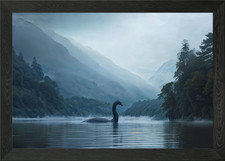
Lake Chelan is almost designed to feel mysterious. It stretches more than 50 miles from the town of Chelan towards Stehekin, is Washington’s largest natural lake, and has long, narrow, fjord-like scenery that makes distant wakes, floating logs and surface shadows hard to judge. The Washington Department of Fish and Wildlife describes it as running from Chelan to Stehekin, with major fisheries for kokanee, cutthroat trout, lake trout, landlocked Chinook and bass, while a National Park Service-linked history booklet gives its length as about 50.4 miles and its maximum depth as about 1,485 feet, making it one of the deepest natural lakes in the United States.[WDFW]wdfw.wa.govWDFWLake Chelan | Washington Department of Fish & WildlifeWDFWLake Chelan | Washington Department of Fish & Wildlife
That physical setting matters because lake monsters thrive where ordinary perception has room to fail. A long lake creates long sightlines. Steep banks can throw wind in odd patterns. Cold, deep water hides what is below the surface. Travellers see things from boats, docks and shorelines, often briefly and at a distance. Lake Chelan is also not a quiet pond in a suburb; its upper end is tied to Stehekin, Lucerne and the North Cascades, places that have historically felt remote and travel-dependent. The National Park Service booklet notes that Stehekin is reached by the waters of Lake Chelan, hiking and float planes, which helps explain why water travel became central to the lake’s imagination.[NPS History]npshistory.comNPS History
The dragon tradition also leans on the name and reputation of the lake itself. Local history material gives Tsi-Laan as “deep water”, and modern tourist and media accounts repeatedly treat depth as the first reason the monster sounds plausible. That does not make the creature real, but it does explain why this particular Washington lake, rather than a shallow recreational reservoir, became a natural home for a dragon story.[NPS History]npshistory.comNPS History
The Lake Chelan Dragon Tradition
The Lake Chelan Dragon is not one tidy modern sighting. It is a cluster of stories that have been braided together over time. In one version preserved in a National Park Service history booklet, a Chelan Indian oral tradition explains large waves on calm days by telling of a monster trapped beneath Lucerne Basin. The creature is said to have devoured animals, been fought by the Creator, and finally pinned beneath a stone dagger while the gorge was filled with water. The booklet gives names including N’hah’haut’q and Chelly, pronounced “Shelly”, and says the monster’s thrashing tail can send huge waves travelling down the lake.[NPS History]npshistory.comNPS History
Ella E. Clark’s Indian Legends of the Pacific Northwest, first published in the 1950s, helped put related traditions into wider print culture. Library and book records identify Clark’s collection as a major compilation of Pacific Northwest tribal tales and include “The Monster and Lake Chelan” among its contents; online text excerpts from the book recount a dragon-like lake spirit that seizes a fisherman near the Stehekin River and leaves the Chelan people afraid of the lake for many years.[google.it]books.google.itBooks Indian Legends of the Pacific NorthwestBooks Indian Legends of the Pacific Northwest
The important caution is that printed folklore collections are not the same as a direct, unbroken transcript of Indigenous belief. They pass through collectors, editors, translations, local informants and later retellings. The Lake Chelan Dragon, as most readers meet it today, is therefore already a blended figure: rooted in older place-based oral tradition, but reshaped by English-language folklore books, tourist writing, monster-hunter summaries and internet cryptid culture. That layering is part of the story rather than a flaw to ignore.

The 1892 “White Dragon” Newspaper Tale
The most dramatic settler-era Lake Chelan Dragon story is the 1892 newspaper account in which three men at the upper end of the lake supposedly encounter a white, winged, alligator-like monster. A Colorado historic newspaper database preserves a reprinted version of the story, describing a creature hanging to a man’s foot, with an alligator-like body, a serpent’s head and eyes, wings between its legs, and a scaly tail. Later cryptid summaries trace similar wording to late-1892 newspaper items such as “A Great White Dragon” and “An Idaho Sea Serpent”, though those retellings vary in date, location and detail.[Colorado Historic Newspapers]coloradohistoricnewspapers.orgOpen source on coloradohistoricnewspapers.org.
As evidence for an animal, the 1892 story is weak. It reads like a Victorian newspaper wonder tale: vivid, theatrical, hard to verify and full of details that do not fit any known Washington species. The wings are especially telling. Washington has large fish, large mammals and dramatic water conditions, but a white, winged, aquatic alligator-serpent that can attack a swimmer and take flight belongs more comfortably to the late-19th-century “sea serpent” press than to zoology.
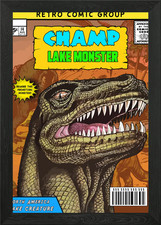
As folklore, however, the 1892 report is valuable. It shows how Lake Chelan’s monster moved into settler newspaper culture with a different flavour from the older lake-spirit traditions. The creature becomes less a being tied to waves, danger and place memory, and more a sensational physical beast: toothy, scaly, winged and almost comic-book visual. That shift is common in cryptid history. Oral tradition often explains why a place is dangerous or sacred; newspapers often turn the same setting into a thrilling incident with claws, teeth and named witnesses.
The 1945 Bus Tragedy and the Shadow in the Water
The saddest piece of Lake Chelan monster lore is attached to a real disaster. On 26 November 1945, a school bus went into Lake Chelan during a snowstorm. The National Park Service history booklet says five children and one adult escaped, while 15 children and driver Jack Randle did not. The bus came to rest on a rock shelf more than 200 feet below the surface, and Navy divers raised it six days later. During the underwater search, the booklet records that one diver reported seeing the shadow of a huge fish, and that some Native Chelan people regarded the account as proof of the lake monster.[NPS History]npshistory.comNPS History
This episode needs careful handling. The tragedy itself is documented local history; the monster element is a secondary tradition attached to it. It is not evidence that a dragon exists, but it does show how a real event can intensify a lake’s emotional power. Deep water, lost children, divers, darkness and an indistinct underwater shape make a haunting combination. In a community already carrying monster stories, a “huge fish” seen under such conditions could easily become part of the dragon’s afterlife.
It is also one of the more plausible monster-adjacent reports, precisely because it does not require wings or fire-breathing. A diver in cold, dark, stressful conditions could misjudge a large fish, a shadow, equipment, a log or the movement of suspended material. But the phrase “huge fish” also leaves room for something ordinary yet impressive. Lake Chelan has real large fish, including lake trout, and Washington waters more broadly have white sturgeon capable of reaching extraordinary size.[WDFW]wdfw.wa.govWDFWLake Chelan | Washington Department of Fish & WildlifeWDFWLake Chelan | Washington Department of Fish & Wildlife
Could Real Animals Explain the Dragon?
A sceptical explanation does not have to flatten the legend into “someone saw a log”. Several real candidates can explain parts of the story, though none explains all of it.
White sturgeon are the most tempting comparison because they look ancient, can grow to more than 10 feet, weigh hundreds of pounds and live for a century or more. The Washington Department of Fish and Wildlife describes them as native to Washington waters, including rivers, coastal areas, estuaries and Puget Sound, and notes their great size and long life. Sturgeon are not listed by WDFW among the species one might catch in Lake Chelan today, but they are exactly the kind of fish that can turn into a dragon in memory: armoured, long-bodied, pale below, bottom-haunting and startlingly large.[WDFW]wdfw.wa.govWDFWWhite sturgeon | Washington Department of Fish & WildlifeWDFWWhite sturgeon | Washington Department of Fish & Wildlife
Lake trout are a better fit for Lake Chelan’s confirmed modern fishery. WDFW says anglers seeking trophy fish may catch lake trout, and that the state lake-trout record has been broken several times at Lake Chelan, including a 35.63-pound fish in 2013. That is not a 75-foot serpent, but it is large enough to create a powerful underwater impression, especially in poor visibility or under stress.[WDFW]wdfw.wa.govWDFWLake Chelan | Washington Department of Fish & WildlifeWDFWLake Chelan | Washington Department of Fish & Wildlife
There are also non-animal explanations. The National Park Service booklet explicitly connects the monster tradition to large waves appearing on otherwise calm days, a phenomenon the oral tradition explains through the creature’s thrashing tail. Sudden waves can come from wind shifts, boat wakes, slope failures, seismic disturbance, pressure effects or simple misperception across a long water surface. The useful point is not that every wave has a neat explanation, but that the monster tradition is partly a way of making sense of a dangerous lake.[NPS History]npshistory.comNPS History
The least plausible features are the most spectacular ones: bat-like wings, alligator legs, flight and man-snatching. Those details belong more to newspaper entertainment and later dragon imagery than to the lake’s ecology. The more credible core is smaller and stranger: people on and under Lake Chelan have seen waves, shadows and fish that felt too large or too uncanny to dismiss in the moment.

Salish Sea Serpent Stories
Washington’s water-monster tradition does not stop at Lake Chelan. Along the coast and inland marine waters, sea-serpent stories cluster around the Salish Sea, Puget Sound, the Strait of Juan de Fuca and nearby British Columbia. The best-known name is Cadborosaurus, or “Caddy”, named after Cadboro Bay near Victoria. Cascade PBS summarises a long regional pattern of reported serpent-like creatures from the late 19th century onward, including claims in Puget Sound, Elliott Bay, Deception Pass and near Everett.[Cascade PBS]cascadepbs.orgOpen source on cascadepbs.org.
The coastal reports differ from the Lake Chelan Dragon in one major way: they belong to a marine world full of large known animals. Seals, sea lions, whales, swimming deer, oarfish-like shapes, basking shark remains, floating kelp and wave trains all have more room to operate in the Salish Sea than in a landlocked lake. That does not make every report simple, but it gives sceptics a stronger toolbox. Darren Naish’s review of Cadborosaurus argues that reports grouped under “Caddy” describe many different things rather than one consistent species, ranging from natural objects and swimming animals to large seals and other marine phenomena.[Tetrapod Zoology]tetzoo.comOpen source on tetzoo.com.
Cadborosaurus also shows how media timing changes monster legends. Naish notes that the name became fixed in 1933 through the Victoria Daily Times, the same year Loch Ness Monster fever exploded internationally. Cascade PBS likewise points to a 1933 burst of attention around Cadboro Bay sightings, after which reports multiplied and the creature acquired a modern public identity.[Tetrapod Zoology]tetzoo.comOpen source on tetzoo.com.
That makes the Salish Sea serpent a useful comparison for Lake Chelan. Chelan’s dragon is tied to depth, waves and an inland lake spirit. Caddy is tied to coastal traffic, carcasses, newspaper naming and the problem of identifying large marine animals at a distance. Both became more “cryptid-like” when older water fears passed through modern media.
Tourism, Folklore and Watery Misidentifications
Today, the Lake Chelan Dragon works as a local legend as much as a monster claim. Seattle Magazine’s short travel piece presents it as one of several “mythical lake monsters of the Northwest”, describing it as a winged alligator-snake in Washington’s deepest lake and placing it alongside Ogopogo, Wally and Sharlie. That kind of treatment is light, playful and tourism-friendly: the monster becomes part of the fun of visiting a beautiful lake, not a serious warning to avoid the water.[Seattle magazine]seattlemag.comSeattle magazine The Mythical Lake Monsters of the NorthwestSeattle magazine The Mythical Lake Monsters of the Northwest
This is where Washington’s water monsters differ from Bigfoot. Bigfoot often points inland, into timber, mountains and tracks in mud. The Lake Chelan Dragon points to boating, ferry routes, lake depth, summer holidays, tragic memory and local storytelling. Salish Sea serpents point to ferries, fishing, harbours and the way marine animals surface in fragments: a head here, a hump there, a wake that seems to move against the wind.
A useful way to read these stories is to separate their layers:
- Folklore layer: Lake spirits, dangerous waters, origin stories and explanations for strange waves.
- Newspaper layer: dramatic 19th- and early-20th-century reports shaped for surprise and entertainment.
- Witness layer: sincere claims of shadows, wakes, huge fish, serpentine movement or unknown animals.
- Ecological layer: real fish, marine mammals, carcasses, floating debris, weather and optical effects.
- Tourism layer: statues, nicknames, festival-friendly monsters and “local Nessie” comparisons.
The strongest evidence for Washington’s water monsters is evidence of a living tradition, not a hidden zoological population. Lake Chelan has produced enough story, geography and local memory to keep its dragon alive in public imagination. The Salish Sea has enough real biological drama to make serpent sightings feel possible at a glance. Neither has produced the kind of clear specimen, photograph, DNA sample or repeated scientific observation that would move a monster from folklore into accepted wildlife.
What the Lake Chelan Dragon Adds to Washington Cryptid History
The Lake Chelan Dragon matters because it broadens Washington’s strange-creature identity beyond forests. It shows that the state’s monster tradition is not only about hairy figures between trees; it is also about deep water, old travel corridors, Indigenous place stories, settler newspapers, local tragedies and the ambiguous life of lakes and inland seas.
It also gives readers a good test case for evidence-aware cryptid thinking. The 1892 winged dragon is colourful but zoologically implausible. The Lucerne Basin monster tradition is culturally significant but should not be treated as a field report for an animal. The 1945 diver’s shadow is emotionally powerful but ambiguous. Sturgeon and lake trout offer partial natural explanations, while sudden waves and optical effects explain why deep water keeps generating stories even when no creature appears.
So, does Washington have more than Bigfoot? In folklore, absolutely. Lake Chelan has its dragon, the Salish Sea has its serpent, and both remind us that monster legends often gather where landscape, memory and uncertainty meet. In evidence terms, the creatures remain unconfirmed. That is not a disappointing ending. It is the reason these stories still work: the water is real, the history is real, the fear is understandable, and the monster stays just below the surface.
Amazon book picks
Further Reading
Books and field guides related to Does Washington Have More Than Bigfoot?. Use these as the next step if you want deeper reading beyond the article.
Sasquatch: Legend Meets Science
Supports the broader Washington monster ecosystem when exact Lake Chelan books are commercially weak.
Abominable Science!
Gives readers tools to evaluate lake monsters, sea serpents and mistaken wildlife claims.
Cadborosaurus
Covers Cadborosaurus, the Salish Sea creature tradition tied to Washington’s coastal monster lore.
Bigfoot: The Life and Times of a Legend
Explains how regional monsters become persistent folklore and tourism symbols.
eBay marketplace picks
Marketplace Samples
Live-tested eBay searches with available results related to this page.
Endnotes
1.
Source: npshistory.com
Title: NPS History
Link:https://npshistory.com/publications/noca/brochures/deep-waters.pdf
2.
Source: cascadepbs.org
Link:https://www.cascadepbs.org/mossback/2021/12/mossbacks-northwest-kraken-what-lurked-salish-sea/
3.
Source: wdfw.wa.gov
Title: WDFWLake Chelan | Washington Department of Fish & Wildlife
Link:https://wdfw.wa.gov/fishing/locations/lowland-lakes/lake-chelan
4.
Source: books.google.it
Title: Books Indian Legends of the Pacific Northwest
Link:https://books.google.it/books?id=Z8-3KVL03UYC
5.
Source: wdfw.wa.gov
Title: WDFWWhite sturgeon | Washington Department of Fish & Wildlife
Link:https://wdfw.wa.gov/species-habitats/species/acipenser-transmontanus
6.
Source: pbs.org
Link:https://www.pbs.org/video/is-this-north-american-sea-serpent-real-or-a-hoax-oenfdz/
7.
Source: newspapers.com
Title: the des moines register nov 1945 lake ch
Link:https://www.newspapers.com/article/the-des-moines-register-nov-1945-lake-ch/8608730/
8.
Source: seattlemag.com
Title: Seattle magazine The Mythical Lake Monsters of the Northwest
Link:https://seattlemag.com/travel/mythical-lake-monsters-northwest/
9.
Source: catalog.spokanelibrary.org
Link:https://catalog.spokanelibrary.org/catalog/Record/f039401f-e86e-5c2d-9f98-f6218e9dc7a9
10.
Source: coloradohistoricnewspapers.org
Link:https://www.coloradohistoricnewspapers.org/?a=d&d=ADT18930226.2.27
11.
Source: tetzoo.com
Link:https://tetzoo.com/blog/2020/11/16/cadborosaurus-carcass-review
12.
Source: facebook.com
Link:https://www.facebook.com/WashingtonFishWildlife/photos/fishing-for-answers-how-wdfw-is-studying-coastal-and-puget-sound-white-sturgeon-/1435154631980082/
13.
Source: Wikipedia
Title: Lake Chelan
Link:https://en.wikipedia.org/wiki/Lake_Chelan
14.
Source: Wikipedia
Link:https://en.wikipedia.org/wiki/Cadborosaurus
15.
Source: wdfw.wa.gov
Link:https://wdfw.wa.gov/fishing/reports/creel/sturgeon
16.
Source: wdfw.wa.gov
Title: fish lake chelan
Link:https://wdfw.wa.gov/fishing/locations/lowland-lakes/fish-lake-chelan
17.
Source: wdfw.wa.gov
Link:https://wdfw.wa.gov/publications/00936
18.
Source: wdfw.wa.gov
Title: oncorhynchus nerka kokanee
Link:https://wdfw.wa.gov/species-habitats/species/oncorhynchus-nerka-kokanee
19.
Source: cryptidz.fandom.com
Title: Lake Chelan Dragon
Link:https://cryptidz.fandom.com/wiki/Lake_Chelan_Dragon
20.
Source: itsmth.fandom.com
Title: Lake Chelan Monster
Link:https://itsmth.fandom.com/wiki/Lake_Chelan_Monster
21.
Source: npshistory.com
Link:https://npshistory.com/publications/noca/index.htm
22.
Source: npshistory.com
Link:https://npshistory.com/brochures/trading-cards/npc/npc2-lach.pdf
23.
Source: usfolktales.com
Title: the lake chelan dragon
Link:https://usfolktales.com/the-lake-chelan-dragon/
24.
Source: openlibrary.org
Title: Indian legends of the Pacific Northwest
Link:https://openlibrary.org/works/OL6815482W/Indian_legends_of_the_Pacific_Northwest
25.
Source: catchrules.com
Title: white sturgeon
Link:https://www.catchrules.com/regulations/washington/white-sturgeon
Additional References
26.
Source: youtube.com
Link:https://www.youtube.com/watch?v=jCxuIN2wkSE
Source snippet
Is This North American Sea Serpent Real or a Hoax? | Monstrum...
27.
Source: youtube.com
Title: Is This North American Sea Serpent Real or a Hoax? | Monstrum
Link:https://www.youtube.com/watch?v=FZG4FJi8mRI
Source snippet
Best of Washington: Lake Chelan - Stehekin...
28.
Source: youtube.com
Title: The Tragedy of Lake Chelan
Link:https://www.youtube.com/watch?v=guW8MEq-hwk
Source snippet
Mysterious Lake Monster Causes Underwater Eruption | The Proof is Out There (Season 3)...
29.
Source: chelanjetskis.com
Link:https://chelanjetskis.com/about-lake-chelan/
30.
Source: facebook.com
Link:https://www.facebook.com/TravelChannel/posts/alaska-has-over-3-million-lakes-the-largest-covering-over-1000-square-miles-the-/1039622151530697/
31.
Source: instagram.com
Link:https://www.instagram.com/p/DNiuN0JOz8x/
32.
Source: facebook.com
Link:https://www.facebook.com/VisitChelanCounty/posts/this-is-lake-chelan-majestic-peaceful-and-always-worth-the-trip-visitchelancount/1142929531207736/
33.
Source: lakehub.com
Link:https://lakehub.com/lake-info/discover-lake-chelan-washington-states-deepest-lake/
34.
Source: explorewashingtonstate.com
Link:https://explorewashingtonstate.com/washington-cryptids/
35.
Source: facebook.com
Link:https://www.facebook.com/Drownedtownsandlakemysteries/posts/lake-chelan-is-the-third-deepest-lake-in-the-united-states-at-1486-feet-and-the-/958960590220255/
Topic Tree