Within Texas Monsters
Did Texas Turn the Chupacabra Into a Coyote?
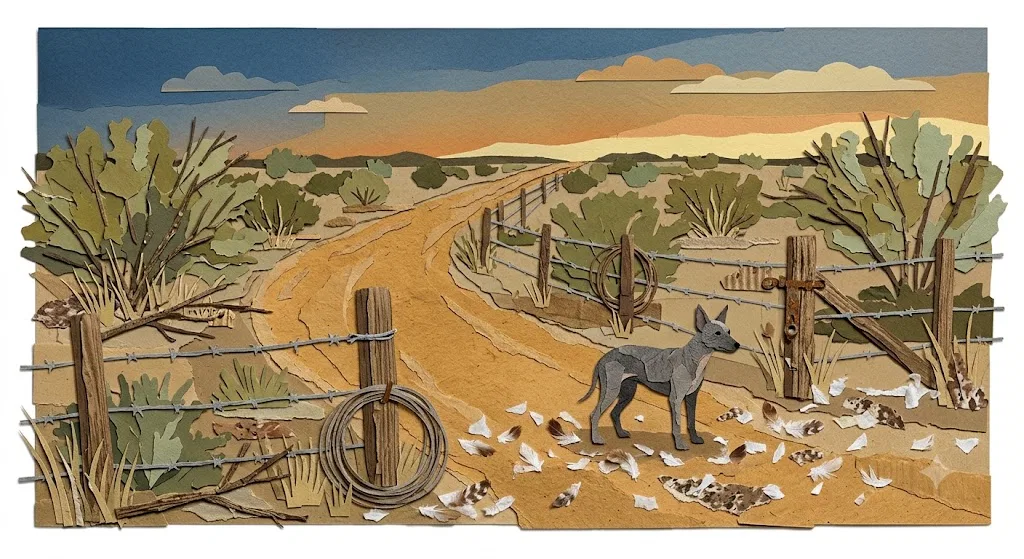
Texas helped turn the chupacabra into a hairless doglike roadside creature, usually explained as diseased coyotes, dogs or hybrids.
On this page
- From Puerto Rico's vampire beast to Texas ranch roads
- Cuero, Elmendorf and famous carcass claims
- Mange, hybrids and the sceptical animal explanation
Page outline Jump by section
Introduction
Texas did not invent the chupacabra, but it did help turn the creature into something very specific: a hairless, doglike animal found on ranch roads, under houses, beside chicken pens, or dead by the roadside. In Puerto Rico in the mid-1990s, the legend was usually a blood-draining, spiny-backed creature linked to livestock deaths. In Texas, especially from the 2000s onward, the story became a case-family of strange carcasses: Cuero, Elmendorf, Hood County and other reports where the “monster” often came with a body that could be photographed, preserved, tested and argued over. The strongest explanation is not a hidden new predator, but sick canids — coyotes, dogs or hybrids — made uncanny by severe mange, emaciation and secondary infection. DNA tests and wildlife expertise have repeatedly pointed in that direction, while local storytelling has kept the Texas chupacabra alive as folklore with teeth.[texasobserver.org]texasobserver.orgThe Texas Observer Chasing the Chupacabra, a Lone Star State LegendThe Texas Observer Chasing the Chupacabra, a Lone Star State Legend
From Puerto Rico’s vampire beast to Texas ranch roads
The original modern chupacabra story is usually traced to Puerto Rico in 1995, where reports described livestock found dead with puncture wounds and, in popular retellings, supposedly drained of blood. That early creature was often imagined as reptilian, spiny-backed or alien-like. By the time the legend moved through Latin America, Mexico and the southern United States, it had become unusually adaptable: sometimes a night predator, sometimes a livestock killer, sometimes a mystery animal glimpsed for a few seconds.[ScienceDaily]sciencedaily.comOpen source on sciencedaily.com.
Texas mattered because the legend changed shape there. Instead of relying only on night-time sightings or dead livestock, Texas produced alleged chupacabra bodies. The Texas Observer neatly captured the shift: most cryptids leave “blurred photographs or ambiguous tracks”, but Texas chupacabras keep leaving carcasses — or, more sceptically, Texas carcasses keep becoming chupacabras. In that version, the story no longer depends on proving a secret species. It depends on the shock of a recognisable animal made unrecognisable: long jaws, bare skin, exposed teeth, gaunt ribs and a stiff, almost prehistoric silhouette.[The Texas Observer]texasobserver.orgThe Texas Observer Chasing the Chupacabra, a Lone Star State LegendThe Texas Observer Chasing the Chupacabra, a Lone Star State Legend
That is why the Texas chupacabra is best understood as a mechanism, not just a monster. A sick coyote or dog is seen near livestock, found dead beside a road, filmed by a dashcam or pulled from under a house. The animal looks wrong enough to invite a legendary label. Local news amplifies the mystery. Biologists test or inspect it. The likely explanation arrives — mange, coyote, dog, hybrid, parasites — but the folklore survives because the body really did look strange.[The Texas Observer]texasobserver.orgThe Texas Observer Chasing the Chupacabra, a Lone Star State LegendThe Texas Observer Chasing the Chupacabra, a Lone Star State Legend

Cuero made the Texas chupacabra famous
The most important Texas case is the Cuero episode of 2007. Phylis Canion, a rancher near Cuero in DeWitt County, reported seeing a hairless blue-grey canine figure in daylight and linked it to chicken deaths on her South Central Texas ranch. Soon after, neighbours found strange carcasses along a road near her property. Canion photographed and preserved one of the animals, and the case became a media event, appearing in local and national coverage and feeding Cuero’s identity as a Texas chupacabra hotspot.[The Texas Observer]texasobserver.orgThe Texas Observer Chasing the Chupacabra, a Lone Star State LegendThe Texas Observer Chasing the Chupacabra, a Lone Star State Legend
The case had exactly the ingredients a modern monster story needs: a named witness, livestock deaths, a physical body, a memorable town, and photographs of an animal that looked familiar and impossible at the same time. CBS, reporting on Associated Press material in November 2007, said three 40-pound bodies had been found over four days near Canion’s ranch, and that Canion had saved the head of one animal for testing and mounting. The same report noted that Cuero High School students wore shirts with the creature’s picture during a “Chupacabra Day”, showing how quickly a gruesome carcass became local pop culture.[CBS News]cbsnews.comIt's Not "Chupacabra," Just A Coyote - CBS News…
The scientific result was much less monstrous. Texas State University biologists identified the Cuero animal as a coyote, with biologist Mike Forstner saying the DNA sequence was a virtually identical match to coyote DNA. Additional skin samples were taken to investigate the cause of the hair loss, but the central identity question had already moved strongly towards a known canid rather than a new cryptid.[CBS News]cbsnews.comIt's Not "Chupacabra," Just A Coyote - CBS News…
The dispute did not end there, which is part of why the case remains interesting. Canion continued to argue that her specimen was not an ordinary mangy coyote, while sceptical writers and biologists treated the DNA result as decisive. The Texas Observer later described Texas State’s result as a complete match for coyote and placed Canion’s specimen among several Central Texas carcasses from 2004, 2007 and 2009 that, when tested, resolved as sick coyotes or dogs. The legend survived not because the evidence was strong, but because the emotional force of the object — the mounted, leathery, toothy body — was stronger for many viewers than a lab result.[The Texas Observer]texasobserver.orgThe Texas Observer Chasing the Chupacabra, a Lone Star State LegendThe Texas Observer Chasing the Chupacabra, a Lone Star State Legend
Elmendorf and the earlier carcass pattern
Before Cuero became the best-known case, the Elmendorf Beast had already given South Texas a template. In 2004, near Elmendorf in southern Bexar County, farmer Devin McAnally shot a strange hairless animal on his property. Local reporting later remembered the incident as a community frenzy, with speculation ranging from chupacabra to escaped experiment to unknown animal. The MySA retrospective describes the creature as an inky grey-blue, hairless figure that many local people saw in newspaper photographs and remembered for years.[MySA]mysanantonio.comOpen source on mysanantonio.com.
Elmendorf matters because it shows how quickly the chupacabra label attached itself to an odd canid body in Texas. The animal did not need to be seen draining blood in a cinematic attack. It only needed to look wrong in a rural setting where livestock, coyotes, dogs and local legend already overlapped. Reports of similar “creepy” hairless animals followed, including a 2004 case in Pollok in East Texas, where a family killed a strange creature under a house and described it as hairless, fanged and clawed.[MySA]mysanantonio.comOpen source on mysanantonio.com.
The Elmendorf story also shows a key problem in carcass-based cryptid claims: once a body is buried, discarded, damaged or handled informally, evidence quality drops fast. Some accounts mention inconclusive testing or later disagreement, but the broader pattern is clearer than any single messy case. When Texas chupacabra bodies have been examined well enough to identify them, the answer has repeatedly landed inside the canid family, especially coyotes affected by disease.[The Texas Observer]texasobserver.orgThe Texas Observer Chasing the Chupacabra, a Lone Star State LegendThe Texas Observer Chasing the Chupacabra, a Lone Star State Legend

Why mange can make a coyote look like a monster
Mange is the central sceptical explanation for the Texas chupacabra because it changes both appearance and behaviour. Texas A&M AgriLife’s John Tomeček explains that the common descriptions — grey or scaly skin, a ridge or “spines”, fangs, boldness near homes, and attacks on small livestock — fit a coyote in the late stages of mange better than they fit an unknown predator. In canids, mange mites can cause irritation, lesions, fur loss, scabbing and thickened skin.[AgriLife Today]agrilifetoday.tamu.eduAgri Life Today From spooky lore to science fact: Unmasking the ‘chupacabra’AgriLife TodayFrom spooky lore to science fact: Unmasking the ‘chupacabra’ - AgriLife Today…
The “spines” or ridge are especially important. Tomeček notes that on canids, the last place fur is lost is often the ruff between the shoulder blades. That remaining strip can make a sick animal look as though it has a raised dorsal ridge. Add weight loss, exposed skin, a long snout and the low light of dawn or dusk, and an ordinary coyote can become a startling roadside creature.[AgriLife Today]agrilifetoday.tamu.eduAgri Life Today From spooky lore to science fact: Unmasking the ‘chupacabra’AgriLife TodayFrom spooky lore to science fact: Unmasking the ‘chupacabra’ - AgriLife Today…
Other wildlife health sources support the same mechanism. The Wildlife Center of Virginia describes sarcoptic mange as producing intense itchiness, hair thinning and loss, thickened skin and scabbing, with severe cases leading to thin, lethargic animals and sometimes foul-smelling secondary infections. Those symptoms match the “leathery”, “scaly”, “hairless” and “sickly” qualities commonly reported in Texas chupacabra carcasses.[Wildlife Center of Virginia]wildlifecenter.orgWildlife Center of Virginia Mange in Wildlife | Wildlife Center of VirginiaWildlife Center of Virginia Mange in Wildlife | Wildlife Center of Virginia
University of Michigan biologist Barry O’Connor offered a similar explanation for the wider chupacabra pattern. He argued that severe mange in wild canids can produce an “ugly, naked, leathery, smelly” animal because mites damage the skin, fur falls out, inflammation thickens the skin, and secondary infections may set in. He also noted that wild coyotes may suffer more dramatically than domestic dogs because the host-parasite relationship can be harsher in wild members of the dog family.[ScienceDaily]sciencedaily.comOpen source on sciencedaily.com.
Why sick canids may approach farms and chicken pens
The Texas chupacabra is not only a visual mystery. It is also a behaviour story: why would a strange animal come close to houses, barns, chickens or goats? The mange explanation helps here too. Tomeček argues that coyotes in late-stage mange can become bolder because they are weak, hungry and desperate for easier food. That does not mean they are unnaturally aggressive; it means they may take risks that healthy animals would usually avoid.[AgriLife Today]agrilifetoday.tamu.eduAgri Life Today From spooky lore to science fact: Unmasking the ‘chupacabra’AgriLife TodayFrom spooky lore to science fact: Unmasking the ‘chupacabra’ - AgriLife Today…
This matters for livestock claims. Small animals in cages, pens or corrals are easier targets than rabbits, deer or other wild prey. A debilitated predator that struggles to hunt may move towards poultry, goats or human food waste. That behaviour can feel uncanny to a witness because the animal is crossing the usual boundary between wild and domestic space — exactly the kind of boundary-crossing that produces monster stories.[AgriLife Today]agrilifetoday.tamu.eduAgri Life Today From spooky lore to science fact: Unmasking the ‘chupacabra’AgriLife TodayFrom spooky lore to science fact: Unmasking the ‘chupacabra’ - AgriLife Today…
The “drained of blood” detail also has a naturalistic explanation. Tomeček points out that coyotes kill by biting and re-biting around the neck, and punctures near major blood vessels can cause heavy bleeding. He also notes that blood settling and coagulating after death can make an animal appear to have been drained, even when no vampire-like feeding has occurred. O’Connor similarly argued that weakened coyotes may attack easier livestock, but that does not require a supernatural or unknown blood-drinking predator.[AgriLife Today]agrilifetoday.tamu.eduAgri Life Today From spooky lore to science fact: Unmasking the ‘chupacabra’AgriLife TodayFrom spooky lore to science fact: Unmasking the ‘chupacabra’ - AgriLife Today…
Hybrids, dogs and why “not a normal coyote” is not enough
Some Texas reports complicate the story by mentioning dog ancestry, wolf ancestry or hybrid canids. That can sound, at first, like a concession to the legend: perhaps the chupacabra is not a coyote but a rare hybrid. Yet hybrids are still known animals, not proof of a new cryptid. The important question is whether the unusual look requires an unknown species, and the strongest evidence says it does not.[The Texas Observer]texasobserver.orgThe Texas Observer Chasing the Chupacabra, a Lone Star State LegendThe Texas Observer Chasing the Chupacabra, a Lone Star State Legend
A hybrid label can also confuse the public discussion. Coyotes, dogs and related canids share enough features that a sick, hairless individual may look like a new category altogether. DNA may identify a coyote, a dog, or a mixture, while mange explains why the animal looked so far outside normal expectation. In other words, “not a typical healthy coyote” is not the same as “chupacabra”.[AgriLife Today]agrilifetoday.tamu.eduAgri Life Today From spooky lore to science fact: Unmasking the ‘chupacabra’AgriLife TodayFrom spooky lore to science fact: Unmasking the ‘chupacabra’ - AgriLife Today…
This is why Texas cases are best read as a family of explanations rather than a single debunking stamp. Some alleged chupacabras may be coyotes with sarcoptic mange. Others may be dogs, coyote-dog hybrids, raccoons with mange, badly decomposed carcasses, or animals photographed from poor angles. The shared mechanism is misrecognition under stress: disease, decay, darkness, livestock loss and local legend combine to make a known animal look like folklore.[AgriLife Today]agrilifetoday.tamu.eduAgri Life Today From spooky lore to science fact: Unmasking the ‘chupacabra’AgriLife TodayFrom spooky lore to science fact: Unmasking the ‘chupacabra’ - AgriLife Today…
What the Texas cases prove — and what they do not
The Texas carcasses prove that the legend is not just made of campfire talk. People really have found and photographed strange-looking animals. Some witnesses have had livestock losses. Some bodies were unusual enough to puzzle non-specialists and draw serious attention from news outlets, universities and wildlife experts. That physicality is why the Texas chupacabra differs from many cryptid traditions built mostly on fleeting sightings.[The Texas Observer]texasobserver.orgThe Texas Observer Chasing the Chupacabra, a Lone Star State LegendThe Texas Observer Chasing the Chupacabra, a Lone Star State Legend
They do not, however, prove a hidden blood-drinking species. The best-supported cases point towards diseased canids, and the mange mechanism explains the details that make the carcasses so memorable: hairless skin, gaunt frame, exposed teeth, ridge-like back, strange smell, bolder behaviour and attacks on easy prey. When the explanation accounts for both the look and the behaviour, the need for a separate monster becomes much weaker.[AgriLife Today]agrilifetoday.tamu.eduAgri Life Today From spooky lore to science fact: Unmasking the ‘chupacabra’AgriLife TodayFrom spooky lore to science fact: Unmasking the ‘chupacabra’ - AgriLife Today…
That does not make the story worthless. It makes it more Texan in a revealing way. The chupacabra became part of the state’s monster map not because Texas had the strongest evidence for an unknown animal, but because rural roads, ranches, coyotes, chickens, local news and a travelling Latin American legend met at the right moment. Cuero and Elmendorf show how folklore can settle onto real bodies — and how a sick coyote can become famous by looking, for one disturbing moment, like it wandered out of a completely different world.
Amazon book picks
Further Reading
Books and field guides related to Did Texas Turn the Chupacabra Into a Coyote?. Use these as the next step if you want deeper reading beyond the article.
The United States of Cryptids
Features famous American cryptid traditions including Southwestern legends.
Mysterious creatures : a guide to cryptozoology. 2. [N - Z]
Places the chupacabra within the broader world of mystery animals.
eBay marketplace picks
Marketplace Samples
Live-tested eBay searches with available results related to this page.

Endnotes
1.
Source: cbsnews.com
Title: CBS News
Link:https://www.cbsnews.com/news/its-not-chupacabra-just-a-coyote/
Source snippet
It's Not "Chupacabra," Just A Coyote - CBS News...
2.
Source: sciencedaily.com
Link:https://www.sciencedaily.com/releases/2010/10/101021190621.htm
3.
Source: cuero.in
Link:https://cuero.in/?srsltid=AfmBOop9GKbnh2GgJ-ZuIEsbhT7ekTvDxrs0ohTF4didbHcFesMUZK3s
4.
Source: wildlife.org
Title: mange might be causing more coyote human interactions
Link:https://wildlife.org/mange-might-be-causing-more-coyote-human-interactions/
5.
Source: texasobserver.org
Title: The Texas Observer Chasing the Chupacabra, a Lone Star State Legend
Link:https://www.texasobserver.org/chupacabra-legends-texas/
6.
Source: agrilifetoday.tamu.edu
Title: Agri Life Today From spooky lore to science fact: Unmasking the ‘chupacabra’
Link:https://agrilifetoday.tamu.edu/2024/10/15/unmasking-the-chupacabra/
Source snippet
AgriLife TodayFrom spooky lore to science fact: Unmasking the ‘chupacabra’ - AgriLife Today...
7.
Source: Wikipedia
Link:https://en.wikipedia.org/wiki/Chupacabra
8.
Source: mysanantonio.com
Link:https://www.mysanantonio.com/entertainment/article/san-antonio-chupacabra-elemendorf-beast-16350028.php
9.
Source: wildlifecenter.org
Title: Wildlife Center of Virginia Mange in Wildlife | Wildlife Center of Virginia
Link:https://wildlifecenter.org/help-advice/sick-and-injured-wildlife/mange-wildlife
10.
Source: Wikipedia
Title: Elmendorf Beast
Link:https://en.wikipedia.org/wiki/Elmendorf_Beast
11.
Source: spanishdict.com
Link:https://www.spanishdict.com/translate/cuero
12.
Source: cwhl.vet.cornell.edu
Link:https://cwhl.vet.cornell.edu/resource/mange
13.
Source: lairofmythics.com
Link:https://lairofmythics.com/blogs/cryptid-case-files/chupacabra
14.
Source: texnat.tamu.edu
Title: Diseases Chupacabra 2017
Link:https://texnat.tamu.edu/files/2021/10/Diseases-Chupacabra-2017.pdf
15.
Source: cryptidz.fandom.com
Title: Elmendorf Beast
Link:https://cryptidz.fandom.com/wiki/Elmendorf_Beast
Additional References
16.
Source: ncwildlife.gov
Link:https://www.ncwildlife.gov/connect/have-wildlife-problem/wildlife-conflicts/common-wildlife-diseases/mange
17.
Source: mass.gov
Link:https://www.mass.gov/info-details/mange-in-wildlife
18.
Source: cuerobyhac.com
Link:https://cuerobyhac.com/collections/all?srsltid=AfmBOoon-8zS23TPxu-Mp1p_fEOpIzOfXzBdBBvGdL3z6bnWJDS3w9aj
19.
Source: medium.com
Link:https://medium.com/%40eyegiene/benjamin-radfords-tracking-the-chupacabra-the-vampire-beast-in-fact-fiction-and-folklore-d7350760e8b0
20.
Source: giveshelter.org
Link:https://www.giveshelter.org/assets/documents/Fox-or-Coyote-with-mange.pdf
21.
Source: mammothoutlet.com
Link:https://www.mammothoutlet.com/blog/mystery-of-the-chupacabra/?srsltid=AfmBOopPLli0ZqG0sMipZ3gv9yfvI1DlVLoDQsz68AJf1z0PotPb9KAY
22.
Source: dwhc.nl
Link:https://dwhc.nl/en/ziekten/sarcoptic-mange-scabies/
23.
Source: facebook.com
Link:https://www.facebook.com/groups/142126849181880/posts/9925597390834728/
24.
Source: facebook.com
Link:https://www.facebook.com/katunews/posts/the-legend-of-the-chupacabra-is-much-bigger-than-the-state-of-texas-and-research/10159431733106448/
25.
Source: facebook.com
Link:https://www.facebook.com/EastFoundation2007/videos/this-week-dr-john-m-tome%C4%8Dek-explains-ongoing-project-that-studies-the-interactio/288021005735910/
Topic Tree