Inside Vermont's Cryptid Traditions
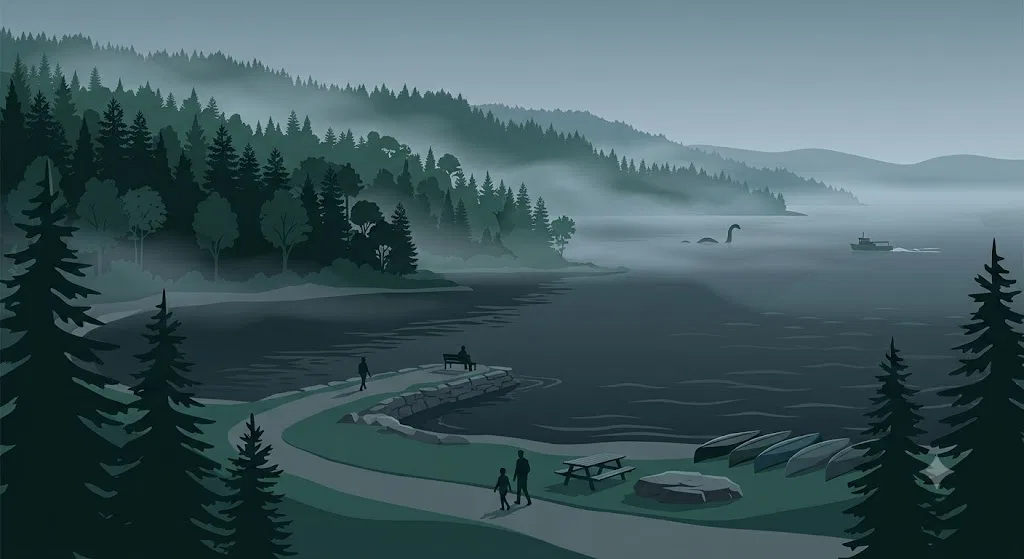
Vermont’s monster tradition is dominated by one creature: Champ, the long-necked lake monster said to live in Lake Champlain.
Page outline Jump by section
Champ is Vermont’s signature monster
Champ belongs to Lake Champlain, the long border lake shared by Vermont, New York and Quebec. The lake is large enough to invite imagination: the Lake Champlain Basin Program gives its length as about 120 miles, its greatest width as 12 miles, and its maximum depth as 400 feet, with the deepest water between Charlotte, Vermont, and Essex, New York. That geography matters. A small pond monster feels like a campfire joke; a deep international lake with fog, ferries, sturgeon, islands, historic battles and dark water gives a legend room to breathe.[Lake Champlain Basin Program]lcbp.orgOpen source on lcbp.org.
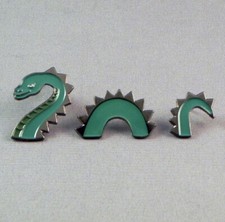
The familiar modern Champ is usually described as a serpentine or long-necked creature, sometimes compared with the Loch Ness Monster. Local tourism material treats Champ as a regional icon rather than a proven animal, while ECHO, Leahy Center for Lake Champlain in Burlington has built an exhibit around the legend’s mix of reported sightings, local history, hands-on science and playful belief. That is a good clue to Champ’s public role: the story is both a monster claim and a civic mascot, appearing in museums, lakeside towns, sports branding and children’s culture.[lakechamplainregion.com]lakechamplainregion.comOpen source on lakechamplainregion.com.
Champ’s origin story is more tangled than many short summaries suggest. Indigenous traditions around Lake Champlain include great-serpent stories, and the Lake Champlain Region tourism account connects these with Abenaki and Iroquois traditions of a horned serpent or giant snake in the lake. A University of Vermont Sea Grant article identifies Gitaskog, also rendered Tatoskok, as a great horned serpent associated with Abenaki traditions around Lake Champlain, or Pitawbagw. These traditions should not be flattened into “proof of Champ”; they are older spiritual and cultural stories that later writers and tourism promoters often fold into the modern lake-monster frame.[Lake Champlain Region]lakechamplainregion.comOpen source on lakechamplainregion.com.
The often-repeated claim that Samuel de Champlain personally saw Champ in 1609 is much shakier. The safer version is that Champlain wrote about large fish, and later writers retrofitted that passage into a monster sighting. This distinction matters because it shifts Champ’s evidential starting point from “European explorer recorded a monster” to “later readers reinterpreted an early natural-history note”. For a legend, that is still interesting; for evidence of an unknown animal, it is a much weaker foundation.[Wikipedia]WikipediaChamp (folkloreChamp (folklore
The newspaper monster began with tall tales
The most commonly cited early written Champ account is the 1819 “Captain Crum” report in the Plattsburgh Republican, published on the New York side of the lake. Later summaries describe a huge black, serpentine animal, absurdly long, with strange anatomical details. Even sympathetic retellings often preserve its tall-tale flavour: the creature is so oversized and over-described that it reads as much like nineteenth-century newspaper entertainment as zoological testimony.[New England Folklore]newenglandfolklore.blogspot.comthe monster of lake champlainthe monster of lake champlain
That does not make the report useless. It shows that Lake Champlain had become a stage for sea-serpent storytelling by the early nineteenth century, when American newspapers regularly printed marvels, hoaxes, jokes and exaggerated natural wonders. By the 1870s, Champ-like stories had become visible enough that P. T. Barnum was associated with a large reward for the capture of the Lake Champlain serpent; ECHO’s exhibit material places Barnum’s $50,000 offer in 1873, a sum it notes would be worth over $1 million today.[ECHO, Leahy Center for Lake Champlain]echovermont.orgOpen source on echovermont.org.
This newspaper-and-showmanship phase helped shape Champ’s later personality. The creature was not merely a frightening water beast; it became a public spectacle, a thing people could report, debate, market, protect and joke about. In 1981 Port Henry, New York, declared its waters a safe haven for Champ; in 1982 Vermont passed a House Resolution protecting Champ; and in 1983 New York state legislative resolutions followed. These gestures did not establish biological reality. They showed how a disputed monster had become a shared regional emblem.[Lake Champlain Region]lakechamplainregion.comOpen source on lakechamplainregion.com.
What counts as Champ evidence?
Champ’s best-known visual claim is the Sandra Mansi photograph, taken in 1977 and often promoted as one of the strongest lake-monster images. It appears to show a dark, neck-like form rising from the water. The problem is that the photograph has the same weakness as many famous cryptid images: it looks suggestive, but the supporting information is poor. Skeptical Inquirer’s review of later research into the image emphasised questions about the missing negative, uncertainty over the exact location and difficulty in determining scale or distance. Without those details, a striking photograph cannot carry the weight believers place on it.[Skeptical Inquirer]skepticalinquirer.orgOpen source on skepticalinquirer.org.
The most common natural explanations for Champ sightings are not exotic. They include floating logs, wave patterns, wakes from boats, lines of swimming birds, misjudged distances, large fish and the expectation effect created when people scan a famous “monster lake”. Vermont Historical Society material aimed at younger readers has presented possible explanations such as floating logs, schools of large sturgeon diving in a row, or flocks of blackbirds flying close to the water. Lake sturgeon are a particularly tempting candidate in some accounts because they are real, ancient-looking, large fish present in Lake Champlain, though that does not mean every Champ report is a sturgeon.[Vermont History Explorer]vermonthistoryexplorer.orgOpen source on vermonthistoryexplorer.org.
Recent media keeps renewing the story. In June 2026, the New York Post reported that filmmakers Richard Rossi and Kelly Tabor believed they had captured Champ-like footage while making a children’s film, with later attention from the History Channel programme The UnXplained. The report is useful as evidence that Champ remains culturally active, not as independent proof of a monster: it is a claim about footage, interpretation and publicity, and it still belongs in the long tradition of ambiguous lake images rather than in the category of confirmed wildlife documentation.[New York Post]nypost.comThe footage caught the attention of The History Channel's "The UnXplained," whose producers called it the most compelling evidence of Cha…
The fairest assessment is that Champ is a strong legend but a weak biological case. Lake Champlain is large, deep and ecologically rich enough to make unusual sightings plausible in the ordinary sense: people can genuinely see puzzling things there. But no carcass, DNA sample, clear repeatable footage, breeding population evidence or mainstream zoological confirmation has established a new large aquatic animal. The legend’s strength lies in its continuity, place-attachment and adaptability, not in proof.
Bigfoot in the Green Mountains
Vermont’s Bigfoot tradition is much less famous than Champ, but it fits the state’s terrain. The Green Mountains, the Northeast Kingdom, old logging roads and lightly populated forest corridors all provide the atmosphere that Bigfoot stories need. The Bigfoot Field Researchers Organization lists Vermont reports by county, including a daylight Class A report near the North Branch Lamoille River in Eden in 2019, a possible hunting encounter near Northfield Falls in 2015, and a road sighting outside Brattleboro the same year. BFRO is an advocacy-minded cryptid database rather than a neutral scientific authority, but it is a useful map of where believers and witnesses are placing their claims.[BFRO]bfro.netstate listing.aspstate listing.asp
The most folkloric Vermont Bigfoot variant is the Bennington Monster, attached to Glastenbury Mountain and the so-called Bennington Triangle. Popular retellings describe a large, hairy, human-like creature in the Glastenbury area, sometimes with an early stagecoach story in which enormous footprints appear in mud and a huge creature attacks the coach. This tale has become attached to a wider mystery package involving disappearances, abandoned settlements and eerie mountain atmosphere.[Legends of America]legendsofamerica.comOpen source on legendsofamerica.com.
A more sceptical reading is that the Bennington Monster may be a modern conflation. Sharon A. Hill’s analysis of the Bennington Triangle trope argues that some “wild man” stories from the area, including an 1867 account of an unkempt man alarming residents, were later absorbed into Bigfoot lore. That is a familiar process in monster history: a local crime scare, hermit story, misidentified animal or newspaper anecdote gets retold through whatever monster template is currently popular. In the twentieth and twenty-first centuries, that template is often Bigfoot.[Sharon A. Hill]sharonahill.comSharon A. Hill Triangle Trope of Vermont: BenningtonSharon A. Hill Triangle Trope of Vermont: Bennington
This does not mean every Vermont Bigfoot witness is lying. It means the reports sit in a difficult evidence zone: sincere experience, poor visibility, fear, expectation, bears, people, shadows and retold folklore can all overlap. Vermont’s current black bear population is substantial; Associated Press coverage of Vermont Fish and Wildlife data reported an estimated 6,800 to 8,000 bears in 2024, well above the state’s population objective. A standing or briefly glimpsed bear, especially in woodland half-light, can become a powerful “something upright” memory.[AP News]apnews.comOpen source on apnews.com.

Catamounts: the almost-cryptid with a real body
Vermont’s catamount stories are different from Champ and Bigfoot because the animal at the centre was unquestionably real. Catamounts — also called cougars, pumas, panthers or mountain lions — once lived in the region. Vermont History Explorer states that the last catamount killed in Vermont was shot in 1881 and is on display at the Vermont History Museum. The Vermont Historical Society likewise identifies the last known Vermont catamount as killed in 1881 and displayed in Montpelier.[Vermont History Explorer]vermonthistoryexplorer.orgthe last catamount in vermontthe last catamount in vermont
That preserved animal gives the legend unusual force. A lake monster has no specimen; the catamount does. Vermonters can stand in a museum and look at the body of a vanished predator, then drive home through forested hills where many people still feel such an animal ought to exist. It is easy to see why catamount sightings persist even when official documentation is absent.
The official conservation picture is cautious. The U.S. Fish and Wildlife Service removed the eastern cougar from the federal threatened and endangered list in 2018 because the subspecies was considered extinct, noting that it had likely disappeared many decades before the Endangered Species Act existed. The Federal Register rule likewise removed the eastern puma, or cougar, due to extinction. That does not mean a wandering western cougar could never pass through the Northeast; it means there is no recognised resident eastern cougar population.[U.S. Fish and Wildlife Service]fws.govU.S. Fish and Wildlife Service Long Extinct Eastern Cougar to be Removed fromU.S. Fish and Wildlife Service Long Extinct Eastern Cougar to be Removed from
Modern Vermont catamount reports are therefore best treated as a borderland category: not pure fantasy, not confirmed resident wildlife. Some may be bobcats, dogs, deer glimpsed badly, house cats seen at odd scale, or, more rarely, transient animals. Vermont’s own rare-furbearer reporting form includes mountain lion alongside species such as Canada lynx and wolf, which shows that officials are willing to receive and review reports rather than simply mock them. But a reviewed report is not the same as a confirmed breeding population.[ANR Web]anrweb.vt.govANR Web Rare Furbearer Reporting FormANR Web Rare Furbearer Reporting Form
The catamount also shows how a “cryptid” can become a conservation question. Recent discussions about possible mountain-lion return or reintroduction to the Northeast have revived the animal as an ecological symbol as well as a mystery beast. The Guardian reported in 2025 on advocacy for returning mountain lions to the Northeast, including Vermont, while noting that the nearest confirmed breeding population was far away and that Vermont’s historical predator had been gone since the nineteenth century.[The Guardian]theguardian.comMighty Earth’s campaign involves education and engagement through "catamount conversations," emphasizing how reintroducing this apex pred…
Smaller Vermont creatures and local oddities
Not every Vermont monster has Champ’s documentation or the catamount’s biological grounding. Some are closer to campfire lore, internet folklore or local Halloween tradition. They still matter because they show how monster stories attach to specific towns and landscapes.
The Northfield Pigman is usually described as a half-human, half-pig figure haunting the Northfield area. Online retellings often connect it to a vanished boy named Sam Harris and to mid-twentieth-century local legend, but strong primary documentation is difficult to find. It is best read as a town legend: memorable, place-specific, frequently retold, but not supported by the kind of dated newspaper trail or institutional record that Champ and the catamount possess.[Cryptid Wiki]cryptidz.fandom.comCryptid Wiki Northfield PigmanCryptid Wiki Northfield Pigman
The Awful, a reported winged creature associated with Richford and Berkshire in northern Vermont, is even thinner as evidence but interesting as a regional cousin to wider winged-monster traditions. Retellings describe a large flying creature frightening witnesses, with later claims of renewed sightings. The sourcing is mostly secondary and folklore-oriented, so the sensible treatment is to regard it as a local monster motif rather than a well-documented flap.[Preston Posits]preston-posits.comPreston Posits Cryptids of North America #2: VermontPreston Posits Cryptids of North America #2: Vermont
Vermont also sits within broader New England and Algonquian story-worlds that include little people, forest beings and dangerous spirits, but these should be handled carefully. It is easy for modern cryptid lists to borrow Indigenous figures and rebrand them as “monsters” stripped of cultural context. For Vermont, the strongest state-specific Indigenous connection is the Lake Champlain serpent tradition around Gitaskog or Tatoskok; other beings may belong more properly to neighbouring tribal traditions or wider regional folklore unless a careful source ties them directly to Vermont.[University of Vermont]uvm.eduwho is the serpent that calls lake champlain homewho is the serpent that calls lake champlain home

Why Vermont makes good monster country
Vermont’s cryptid map follows its physical map. Lake Champlain produces water-monster claims because it is vast, deep in places, historically important and visually deceptive. The Green Mountains produce Bigfoot and wild-man stories because forested slopes, old trails, abandoned settlements and low population density make encounters feel possible. Catamount stories persist because the real animal is gone but not forgotten, and because Vermont’s recovering forests make people wonder what else might return.
The state’s known wildlife also supplies raw material for misidentification. Vermont has black bears, bobcats, coyotes, moose and occasional rare-species reports; the University of Vermont reported that Vermont has especially rich focal wildlife occurrence within New England, with relatively high black bear occurrence in central Vermont, slightly more bobcats than other parts of New England, high coyote occurrence and stronger moose occurrence than southern New England states. In a state with real large mammals, mystery-beast reports do not have to begin with invention. They can begin with a brief, frightening, half-seen animal.[University of Vermont]uvm.eduvermont supports richest wildlife occurrence new englandvermont supports richest wildlife occurrence new england
Canada lynx adds another useful example. Vermont Center for Ecostudies notes that lynx can be mistaken for bobcats, while recent Vermont reporting has described confirmed lynx photos and videos after years without sightings. That is not evidence for catamounts or cryptids, but it is a reminder that rare, elusive animals do sometimes appear and that ordinary observers may struggle to identify them quickly. The sceptical lesson is not “people never see anything unusual”; it is “unusual does not automatically mean unknown”.[Vermont Ecostudies]vtecostudies.orgVermont Ecostudies Canada Lynx on the move in VermontVermont Ecostudies Canada Lynx on the move in Vermont
What Vermont’s cryptids really tell us
Vermont’s monster lore is strongest when read as a conversation between place and perception. Champ turns Lake Champlain into a living mystery and gives Burlington, Port Henry and the wider lake region a shared mascot. Bigfoot stories make the Green Mountains feel older, wilder and less fully mapped. Catamount sightings keep alive the memory of a predator that really did vanish from the state. Smaller legends such as the Bennington Monster, Pigman and the Awful show how local stories grow around roads, hills, bridges and town rumours.
The evidence for confirmed unknown animals is thin. Champ has continuity but no decisive biological proof. Vermont Bigfoot reports exist, but they rely on eyewitness accounts and advocacy databases rather than physical confirmation. Catamounts are the most biologically plausible mystery in one sense, because cougars are real animals and once lived in Vermont, but the present-day claim of a resident population remains unconfirmed by mainstream wildlife authorities.[fws.gov]fws.govU.S. Fish and Wildlife Service Long Extinct Eastern Cougar to be Removed fromU.S. Fish and Wildlife Service Long Extinct Eastern Cougar to be Removed from
That does not make the stories worthless. Their value is cultural, historical and ecological. They preserve older fears of deep water and dark forest, record how newspapers and tourism reshape local wonders, and reveal how people interpret wildlife in a landscape that still feels capable of surprise. Vermont’s cryptids are not proven monsters hiding in plain sight. They are stranger than that: legends with roots in real geography, real vanished animals, real sightings of uncertain things, and a state identity that has always left a little room for the unexplained.
Amazon book picks
Further Reading
Books and field guides related to What Haunts Vermont's Lakes and Mountains?. Use these as the next step if you want deeper reading beyond the article.
Weird New England
Explores strange legends and folklore across New England including Vermont.
Mysterious America
Covers many American monster traditions including lake monsters and Bigfoot reports.
Cryptozoology A To Z
Provides background on lake monsters, wild men and related creatures.
eBay marketplace picks
Marketplace Samples
Live-tested eBay searches with available results related to this page.

Endnotes
1.
Source: Wikipedia
Title: Champ (folklore)
Link:https://en.wikipedia.org/wiki/Champ_%28folklore%29
2.
Source: bfro.net
Title: state listing.asp
Link:https://www.bfro.net/GDB/state_listing.asp?state=vt
3.
Source: bfro.net
Link:https://www.bfro.net/gdb/
4.
Source: preston-posits.com
Title: Preston Posits Cryptids of North America #2: Vermont
Link:https://www.preston-posits.com/blog/cryptids-of-north-america-2-vermont
5.
Source: Wikipedia
Link:https://en.wikipedia.org/wiki/Pukwudgie
6.
Source: Wikipedia
Link:https://en.wikipedia.org/wiki/Vermont
7.
Source: Wikipedia
Title: Eastern cougar
Link:https://en.wikipedia.org/wiki/Eastern_cougar
8.
Source: legislature.vermont.gov
Title: H 0473 As Introduced
Link:https://legislature.vermont.gov/Documents/2026/Docs/BILLS/H-0473/H-0473%20As%20Introduced.pdf
9.
Source: wildlife-species.canada.ca
Link:https://wildlife-species.canada.ca/species-risk-registry/virtual_sara/files/cosewic/sr_Lake%20Sturgeon_2017_e.pdf
10.
Source: vermont.com
Link:https://vermont.com/
11.
Source: lakechamplainregion.com
Link:https://www.lakechamplainregion.com/heritage/champ
12.
Source: lcbp.org
Link:https://www.lcbp.org/about-the-basin/facts/
13.
Source: vermonthistoryexplorer.org
Title: the last catamount in vermont
Link:https://vermonthistoryexplorer.org/the-last-catamount-in-vermont
14.
Source: echovermont.org
Link:https://www.echovermont.org/animals-exhibits/champ-americas-lake-monster/
15.
Source: uvm.edu
Title: who is the serpent that calls lake champlain home
Link:https://www.uvm.edu/seagrant/2024/11/26/who-is-the-serpent-that-calls-lake-champlain-home/
16.
Source: newenglandfolklore.blogspot.com
Title: the monster of lake champlain
Link:https://newenglandfolklore.blogspot.com/2017/12/the-monster-of-lake-champlain.html
17.
Source: nypost.com
Link:https://nypost.com/2026/06/07/us-news/filmmakers-claim-theyve-caught-americas-loch-ness-monster-on-video-my-eyes-were-popping-out/
Source snippet
The footage caught the attention of The History Channel's "The UnXplained," whose producers called it the most compelling evidence of Cha...
18.
Source: skepticalinquirer.org
Link:https://skepticalinquirer.org/2013/05/new-information-surfaces-on-worlds-best-lake-monster-photo-raising-question/
19.
Source: vermonthistoryexplorer.org
Link:https://vermonthistoryexplorer.org/client_media/files/GreenMountaineer/vermontsveryown.pdf
20.
Source: legendsofamerica.com
Link:https://www.legendsofamerica.com/bennington-triangle-vermont/
21.
Source: sharonahill.com
Title: Sharon A. Hill Triangle Trope of Vermont: Bennington
Link:https://sharonahill.com/triangle-trope-of-vermont-bennington/
22.
Source: apnews.com
Link:https://apnews.com/article/b83fb859b80f68bd54f50f766ce9c11f
23.
Source: vermonthistory.org
Title: last catamount in vermont
Link:https://vermonthistory.org/last-catamount-in-vermont
24.
Source: fws.gov
Title: U.S. Fish and Wildlife Service Long Extinct Eastern Cougar to be Removed from
Link:https://www.fws.gov/press-release/2018-01/long-extinct-eastern-cougar-be-removed-endangered-species-list-correcting
25.
Source: anrweb.vt.gov
Title: ANR Web Rare Furbearer Reporting Form
Link:https://anrweb.vt.gov/FWD/FW/FurbearerReportingForm.aspx
26.
Source: theguardian.com
Link:https://www.theguardian.com/us-news/2025/nov/18/mountain-lions-push-comeback-north-east
Source snippet
Mighty Earth’s campaign involves education and engagement through "catamount conversations," emphasizing how reintroducing this apex pred...
27.
Source: cryptidz.fandom.com
Title: Cryptid Wiki Northfield Pigman
Link:https://cryptidz.fandom.com/wiki/Northfield_Pigman
28.
Source: obscurban-legend.fandom.com
Title: Obsc Urban Legend The Awful
Link:https://obscurban-legend.fandom.com/wiki/The_Awful
29.
Source: uvm.edu
Title: vermont supports richest wildlife occurrence new england
Link:https://www.uvm.edu/rsenr/news/vermont-supports-richest-wildlife-occurrence-new-england
30.
Source: vtecostudies.org
Title: Vermont Ecostudies Canada Lynx on the move in Vermont
Link:https://vtecostudies.org/blog/canada-lynx-in-vermont
31.
Source: facebook.com
Link:https://www.facebook.com/vermontexplored/photos/did-you-know-whether-champ-makes-his-home-in-lake-champlain-or-only-in-our-imagi/1644312861037486/
32.
Source: facebook.com
Link:https://www.facebook.com/vtfishandwildlife/photos/weve-just-released-our-updated-bear-population-estimate-based-on-2024-data-our-m/1190481726449326/
33.
Source: darntough.com
Title: northfield pigman
Link:https://darntough.com/blogs/the-alternate-stitch/northfield-pigman
34.
Source: reddit.com
Link:https://www.reddit.com/r/Cryptozoology/comments/zhgs7r/champ_photographed_on_lake_champlain_1977/
35.
Source: lcbp.org
Link:https://www.lcbp.org/
36.
Source: newengland.com
Title: mountain lions
Link:https://newengland.com/today/mountain-lions/
37.
Source: newengland.com
Title: champ sighting
Link:https://newengland.com/yankee/champ-sighting/
38.
Source: cryptidz.fandom.com
Link:https://cryptidz.fandom.com/wiki/Champ
39.
Source: cryptozoologycryptids.fandom.com
Link:https://cryptozoologycryptids.fandom.com/wiki/Champ
40.
Source: cryptidz.fandom.com
Link:https://cryptidz.fandom.com/wiki/Pukwudgie
41.
Source: homespunhaints.com
Title: bennington triangle
Link:https://homespunhaints.com/bennington-triangle
42.
Source: anrweb.vt.gov
Title: lp lcmlakelinelakechamplain
Link:https://anrweb.vt.gov/PubDocs/DEC/WSMD/lakes/docs/lp_lcmlakelinelakechamplain.pdf
43.
Source: vermonthistory.org
Title: what we talk about when we talk about catamounts
Link:https://vermonthistory.org/what-we-talk-about-when-we-talk-about-catamounts
44.
Source: vermonthistory.org
Link:https://vermonthistory.org/client_media/files/Learn/2020%20resources/ChampActivity.pdf
45.
Source: epscor.w3.uvm.edu
Title: eduvermont journal of environmental law
Link:https://epscor.w3.uvm.edu/judy/documents/LAKECHAMPLAINBASIN.pdf
46.
Source: sharonahill.com
Title: Location and imagination equals cryptid
Link:https://sharonahill.com/location-and-imagination-equals-cryptid/
47.
Source: fairleeforest.org
Link:https://www.fairleeforest.org/wildlife
48.
Source: vermonthistoryexplorer.org
Title: the whole truth
Link:https://vermonthistoryexplorer.org/the-whole-truth
Additional References
49.
Source: timesunion.com
Link:https://www.timesunion.com/living/article/new-york-mysterious-creatures-folklore-22302735.php
Source snippet
The article features other regional legends, such as Champ, the playful, serpent-like monster of Lake Champlain, and Old Greeny of Cayuga...
50.
Source: federalregister.gov
Link:https://www.federalregister.gov/documents/2000/03/24/00-7145/endangered-and-threatened-wildlife-and-plants-determination-of-threatened-status-for-the-contiguous
51.
Source: federalregister.gov
Link:https://www.federalregister.gov/documents/2018/01/23/2018-01127/endangered-and-threatened-wildlife-and-plants-removing-the-eastern-puma-cougar-from-the-federal-list
52.
Source: facebook.com
Link:https://www.facebook.com/groups/281886105961506/posts/1646827949467308/
53.
Source: coldhollowtocanada.org
Link:https://www.coldhollowtocanada.org/fileadmin/files/Uncategorized/KTMP_2016-2019_Report.pdf
54.
Source: facebook.com
Link:https://www.facebook.com/groups/281886105961506/posts/1789944198489015/
55.
Source: facebook.com
Link:https://www.facebook.com/groups/220365061802020/posts/2047035449134963/
56.
Source: protectourwildlifevt.org
Link:https://www.protectourwildlifevt.org/bears
57.
Source: facebook.com
Link:https://www.facebook.com/groups/BenningtonBlotter/posts/26188015120803662/
58.
Source: commonsnews.org
Link:https://www.commonsnews.org/issue/657/Bobcats-and-coyotes-do-not-need-human-interference-to-manage-their-population-levels
Topic Tree
Follow this branch
Related pages 49
- Rhode Island Monsters
- Hawaii Monsters
- Illinois Cryptids
- Nebraska Cryptids
- Alabama Cryptids
- +44 more in sidebar