Within Palmetto Monsters
Is There a Monster in Lake Murray?
The Lake Murray 'Messie' legend shows how reservoirs can turn ripples, wakes and local jokes into monster lore.
On this page
- What the Messie story claims
- Reservoir landscapes and strange water sightings
- Why lake monsters thrive as local legends

Page outline Jump by section
Introduction
Lake Murray’s monster is usually called “Messie”, South Carolina’s home-grown answer to the Loch Ness Monster. The claim is not that a proven unknown animal lives in the reservoir, but that generations of boaters, anglers and local storytellers have turned strange wakes, big fish, broken tackle and half-seen shapes into a persistent lake-monster rumour. The legend is said to begin in 1933, only a few years after the reservoir was created, and later accounts describe either a huge serpent-like creature or an unusually large fish. The evidence is thin: mostly retellings, witness claims, local folklore pages and a modern book collecting reports. What makes Messie interesting is the setting. Lake Murray is large, deep, busy with boats and full of submerged history — exactly the kind of water where ordinary uncertainty can grow into a monster story.[richlandlibrary.com]richlandlibrary.comRichland Library The Lake Murray Monster | Richland LibraryRichland Library The Lake Murray Monster | Richland Library
What the Messie story claims
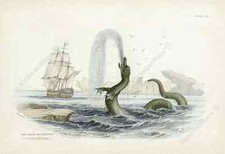
The core Lake Murray monster story is fairly simple: people on or near the water see something too large, too fast or too strange to fit their expectations. In the older “Messie” tradition, the creature is described as long and serpent-like, sometimes compared with a prehistoric animal, an eel-like body, a giant snake, a sturgeon or another oversized fish. One archived folklore page says the first famous sighting came in 1933 near Irmo and Ballentine, and that a 1980 article in The Independent News described the creature as “a cross between a snake and something prehistoric”.[Geocities]geocities.wsOpen source on geocities.ws.
The most dramatic strand of the legend involves alleged aggression. In one often-repeated account, Buddy Browning, Shirley Browning and Kord Brazell were fishing in a cove when something reportedly came towards their boat. The archived account has Buddy Browning rejecting alligator, eel and sturgeon explanations, while Shirley Browning is quoted as saying the creature tried to climb into the boat and was beaten off with a paddle. This is folklore evidence, not a verified zoological record, but it explains why Messie is sometimes presented as more alarming than the usual distant “hump in the water” lake monster.[Geocities]geocities.wsOpen source on geocities.ws.
Another recurring version is less monstrous and more angling-focused: a large fin, a violent tug, broken fishing gear, or a big animal rolling just below the surface. The same archived page records an unidentified 1996 WNOK caller who claimed that a two-foot fin appeared near Shell Island and that something broke his rod. Those details matter because they place Messie at the boundary between lake monster and fish story. The legend does not depend only on a single famous creature description; it also survives as a way to talk about anything in Lake Murray that feels bigger than expected.[Geocities]geocities.wsOpen source on geocities.ws.
Why Lake Murray is such a good monster setting
Lake Murray is not a remote mountain loch or an ancient natural lake. It is a twentieth-century reservoir west of Columbia, built in the late 1920s for hydroelectric power. South Carolina’s Department of Natural Resources describes it as a lower Piedmont reservoir of about 48,579 acres, with roughly 620 miles of shoreline, an average depth of 41.5 feet and a maximum depth of about 200 feet. It sits across Lexington, Newberry, Richland and Saluda counties, giving the story a broad local footprint rather than one isolated sighting point.[SCDNR]dnr.sc.govDNRSC Lakes and WaterwaysDNRSC Lakes and Waterways
That geography helps the rumour. A lake with many coves, islands, boat wakes, fishing spots and long sightlines creates endless opportunities for ambiguous observations. A floating log can seem alive when it rolls. A group of birds, fish feeding near the surface, or crossing boat wakes can form a moving “hump”. A large fish seen briefly in glare can look like a serpent. Lake Murray’s official fishing profile also matters: SCDNR says the reservoir is known for largemouth bass and striped bass and also hosts bluegill, redear sunfish, crappie and catfish. These are real animals, not monsters, but a large fish glimpsed badly can do a lot of folklore work.[SCDNR]dnr.sc.govDNRSC Lakes and WaterwaysDNRSC Lakes and Waterways
The reservoir’s human history gives the water a second layer of mystery. Lake Murray Country describes the lake as stretching around 41 miles long and 14 miles wide at its widest point, with about 650 miles of shoreline and a depth of about 190 feet at full pool. The same regional history notes submerged communities, old structures, graves, wartime debris and B-25 bomber history beneath the surface. Those facts do not prove a monster, but they make the lake feel storied: a modern recreation lake with a hidden world underneath.[Lake Murray Country]lakemurraycountry.comLake Murray Country The History of Lake MurrayLake Murray Country The History of Lake Murray
What evidence exists, and what is missing
The strongest evidence for Messie is not physical evidence. It is continuity: a cluster of repeated local claims, a named creature, a loose chronology and enough public memory for Richland Library to catalogue a recent local-author book, The Lake Murray Monster: Reports and Sightings of South Carolina’s Lake Monster. The library’s description repeats the familiar claims that the monster was first sighted in 1933, that Lake Murray is around 200 feet deep, and that “Messie” is South Carolina’s most famous water creature.[Richland Library]richlandlibrary.comRichland Library The Lake Murray Monster | Richland LibraryRichland Library The Lake Murray Monster | Richland Library
The weakness is equally clear. The public record available online is dominated by summaries, folklore pages and second-hand retellings rather than original dated newspaper scans, official biological reports, photographs, specimens or clear video. The archived Messie page says a file was opened in 1990 by South Carolina’s fish and wildlife authorities and names Lake Murray biologist Lance Harper as someone who kept track of reports, but that same account also says Harper never saw the monster himself. Its most balanced line is Harper’s reported view that some witnesses were startled by something, but that the identity remained unknown.[Geocities]geocities.wsOpen source on geocities.ws.
That distinction is important. “Unknown to the witness” is not the same as “unknown to science”. A credible person can misjudge scale, distance, species or movement on water, especially from a moving boat or at low light. Messie’s evidence works best as folklore evidence: it shows that people around Lake Murray have repeatedly told stories about a strange water creature. It does not establish that a breeding population of giant reptiles, serpents or prehistoric survivors inhabits the reservoir.
The most likely natural explanations
A sceptical reading of Messie does not require assuming witnesses lied. It asks what real features of Lake Murray might produce monster-like impressions.
Large fish are the first place to look. SCDNR’s Lake Murray materials name striped bass, largemouth bass, crappie and catfish among the lake’s managed or popular fish, and the brochure says SCDNR uses electrofishing, gill nets and trap nets to monitor fish populations. A big striper or catfish at the surface is not a 40-foot serpent, but it can be startling, especially if seen briefly or if it hits tackle hard.[SCDNR]dnr.sc.govOpen source on sc.gov.
Gar are another plausible confusion source, though with limits. South Carolina’s native longnose gar has a narrow snout, inhabits sluggish waters including rivers and reservoirs, and averages about 2.5 to 3 feet, according to SCDNR. It can look strange and ancient to someone unfamiliar with it, but its normal size does not match the most extravagant Messie claims. Alligator gar are much larger — the U.S. Fish and Wildlife Service lists them among North America’s largest freshwater fish, with a maximum reported length of 10 feet — but its range is centred on the Mississippi drainage and Gulf coastal plain, not Lake Murray as a normal native home.[SCDNR]dnr.sc.govOpen source on sc.gov.
Alligators complicate the story because South Carolina genuinely has them, but Lake Murray sits near the edge of where casual assumptions can mislead. SCDNR says American alligators are typically found south of the fall line, that there is no evidence of reproducing populations north of it, and that some individuals can still appear outside the usual range through natural movement or illegal relocation. A 2021 WLTX report likewise said SCDNR considered it possible for alligators to be seen on the Lexington and Saluda county side of Lake Murray. That makes an occasional small alligator plausible, but it does not explain decades of huge serpent descriptions.[SCDNR]dnr.sc.govDNRAlligator Hunting GuideDNRAlligator Hunting Guide
Then there are non-animal explanations: boat wakes crossing, floating logs, swimming deer, diving birds, schools of fish breaking the surface, wind lanes, storm debris and reflections. Lake monsters often thrive in the gap between “I saw something” and “I had enough time, distance and evidence to identify it”. Lake Murray has enough size, glare, boat traffic and submerged objects to keep that gap open.
Reservoir rumours are different from ancient lake legends
Messie is especially revealing because Lake Murray is artificial and young. The dam was built in the late 1920s, and SCDNR describes the lake as constructed to produce hydroelectric power. That means the legend cannot honestly be framed as an ancient creature tradition tied to an old natural lake. If the 1933 origin claim is accurate, the monster story began almost immediately after the reservoir became part of local life.[SCDNR]dnr.sc.govDNRSC Lakes and WaterwaysDNRSC Lakes and Waterways
That timing is part of the charm. Reservoir folklore often grows from disruption: valleys are flooded, communities move, old roads disappear, familiar land becomes deep water. Lake Murray Country’s history of submerged communities, graves, bridges, wartime aircraft and other remnants gives residents a reason to imagine the lake as hiding more than fish and silt. A monster rumour turns engineered water into enchanted water.[Lake Murray Country]lakemurraycountry.comLake Murray Country The History of Lake MurrayLake Murray Country The History of Lake Murray
This is also why the story fits South Carolina’s wider monster map without copying the Lizard Man. The Lizard Man belongs to swamp roads, heat, car damage and a sudden 1988 media flare. Messie belongs to recreational water: fishing coves, boat ramps, family outings, rumours passed between anglers, and the uneasy feeling that a lake built by people can still contain something people do not control.
How the legend has changed over time
The earliest Messie frame is “large unknown creature in a new reservoir”. Later retellings make it more recognisably cryptid-like by linking it to Nessie, giving it a nickname and repeating the serpent-or-prehistoric description. The archived Messie page calls it the “Loch Murray Monster”, while the Richland Library catalogue uses “Messie” and “Lake Murray Monster” as the public-facing identity of the story.[Geocities]geocities.wsOpen source on geocities.ws.
Over time, the creature seems to split into three overlapping versions:
- The serpent: a long, snake-like form, sometimes exaggerated into 40-to-60-foot descriptions.
- The giant fish: a sturgeon, catfish, gar-like animal or other big-bodied creature seen near the surface.
- The local joke with teeth: a tourist-friendly rumour that lets people talk about the lake’s weirdness without fully believing in a monster.
The 2002 “Save Messie” petition mentioned on the archived folklore page shows the playful side clearly. It was tied to planned lake-level reductions by SCE&G and framed the drawdown as a danger to Messie. That is not sober wildlife evidence; it is local monster humour, the kind of affectionate performance that keeps a legend alive even when sightings are scarce.[Geocities]geocities.wsOpen source on geocities.ws.
Why lake monsters thrive as local legends
Lake monsters are durable because they let people keep two thoughts at once. Most readers know there is no strong evidence for a prehistoric beast in Lake Murray. At the same time, anyone who has watched a dark shape move under choppy water understands why the story keeps working. A lake does not need a real monster to feel temporarily unknowable.
Messie also has practical cultural value. It gives Lake Murray a story beyond boating, fishing and real estate. It offers anglers a way to dramatise the one that got away. It gives children a thrilling reason to stare at the water. It gives local writers, libraries and folklore collectors a creature that belongs specifically to central South Carolina rather than to the better-known swamp-monster tradition.[Richland Library]richlandlibrary.comRichland Library The Lake Murray Monster | Richland LibraryRichland Library The Lake Murray Monster | Richland Library
The most honest answer, then, is neither “yes, there is a monster” nor “no, the story is worthless”. Lake Murray almost certainly contains real animals, optical tricks, big wakes and exaggerated memories rather than a confirmed unknown species. But as a reservoir rumour, Messie is doing exactly what a good local monster does: turning a familiar body of water into a place where the next ripple might deserve a second look.
Amazon book picks
Further Reading
Books and field guides related to Is There a Monster in Lake Murray?. Use these as the next step if you want deeper reading beyond the article.
Field Guide to Lake Monsters, Sea Serpents, and Other Mystery...
Directly matches a lake-monster folklore topic.
eBay marketplace picks
Marketplace Samples
Live-tested eBay searches with available results related to this page.

Endnotes
1.
Source: geocities.ws
Link:https://www.geocities.ws/scuagh/messie.html
2.
Source: dnr.sc.gov
Link:https://www.dnr.sc.gov/lakes/murray/docs/murraybrochure.pdf
3.
Source: dnr.sc.gov
Title: DNRAlligator Hunting Guide
Link:https://www.dnr.sc.gov/wildlife/alligator/pdf/AlligatorHuntingGuide.pdf
4.
Source: wltx.com
Link:https://www.wltx.com/article/news/local/are-there-alligators-or-caimans-in-lake-murray/101-ec4cd068-eacb-4963-a1cd-253397782fb8
5.
Source: richlandlibrary.com
Title: Richland Library The Lake Murray Monster | Richland Library
Link:https://www.richlandlibrary.com/catalog/detail/2040086
6.
Source: dnr.sc.gov
Title: DNRSC Lakes and Waterways
Link:https://www.dnr.sc.gov/lakes/murray/description.html
7.
Source: lakemurraycountry.com
Title: Lake Murray Country The History of Lake Murray
Link:https://www.lakemurraycountry.com/the-history-of-lake-murray/
8.
Source: dnr.sc.gov
Link:https://www.dnr.sc.gov/fish/species/longnosegar.html
9.
Source: lakemurraycountry.com
Link:https://www.lakemurraycountry.com/listing-categories/outdoor-recreation/fishing/
10.
Source: dnr.sc.gov
Link:https://www.dnr.sc.gov/freshwater.html
11.
Source: dnr.sc.gov
Link:https://www.dnr.sc.gov/wildlife/herps/alligator.html
12.
Source: dnr.sc.gov
Link:https://www.dnr.sc.gov/swap/supplemental/reptilesandamphibians/americanalligator2015.pdf
13.
Source: dnr.sc.gov
Title: Modern day dinosaurs
Link:https://www.dnr.sc.gov/wildlife/alligator/pdf/Modern-day-dinosaurs.pdf
14.
Source: dnr.sc.gov
Link:https://www.dnr.sc.gov/wildlife/alligator/index.html
15.
Source: cryptidz.fandom.com
Link:https://cryptidz.fandom.com/wiki/Messie
16.
Source: srelherp.uga.edu
Link:https://srelherp.uga.edu/alligators/
17.
Source: debordieucolony.org
Title: SCDNR The American Alligator 2020
Link:https://www.debordieucolony.org/wp-content/uploads/2021/05/SCDNR-The-American-Alligator-2020.pdf
18.
Source: foxsylvania.blog
Title: the lake murray monster
Link:https://foxsylvania.blog/2013/12/12/the-lake-murray-monster/
19.
Source: gopaddlesc.com
Title: lake murray
Link:https://www.gopaddlesc.com/waterways/trail/lake-murray
Additional References
20.
Source: fws.gov
Link:https://www.fws.gov/sites/default/files/documents/Ecological-Risk-Screening-Summary-Alligator-gar.pdf
21.
Source: fws.gov
Link:https://www.fws.gov/species/alligator-gar-atractosteus-spatula
22.
Source: youtube.com
Title: Catching giant (Prehistoric) fish Lake Murray S.C
Link:https://www.youtube.com/watch?v=m14lNBO0WuE
Source snippet
Fishing for Lake Murray monster GAR fish {catch clean n cook} is it good?...
23.
Source: youtube.com
Title: Lost City of Lake Murray WLTX News 19
Link:https://www.youtube.com/watch?v=wvYEVgQcgsA
Source snippet
Lost towns of Lake Murray SC WLTX 19 Segment on Scuba Diving Exploration in South Carolina...
24.
Source: fishdatabase.com
Link:https://www.fishdatabase.com/South-Carolina
25.
Source: facebook.com
Link:https://www.facebook.com/groups/64413932176/posts/10162693411767177/
26.
Source: facebook.com
Link:https://www.facebook.com/groups/168242701960709/posts/1006356088149362/
27.
Source: facebook.com
Link:https://www.facebook.com/groups/168242701960709/
28.
Source: scparc.org
Link:https://scparc.org/american-alligator-2/
29.
Source: facebook.com
Link:https://www.facebook.com/groups/473820080378300/posts/1032822464478056/
Topic Tree